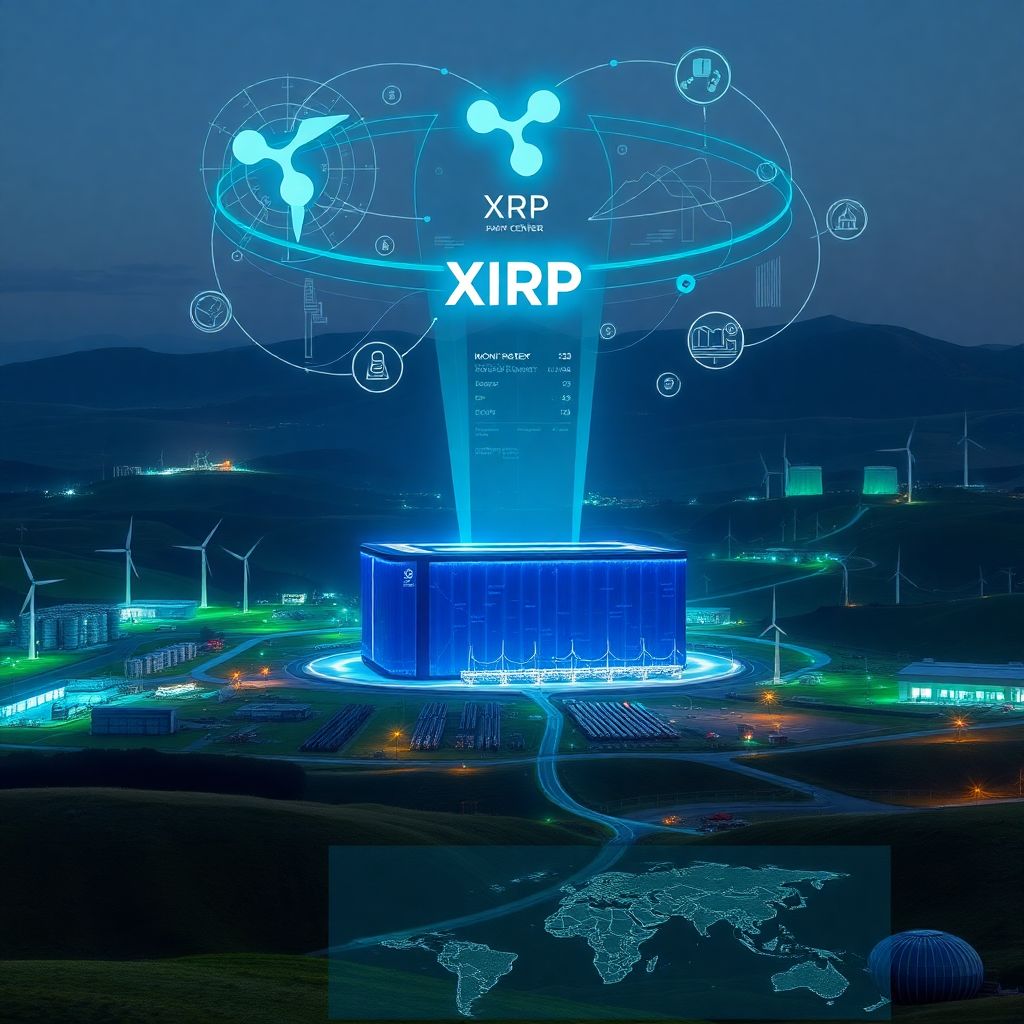
AMT DeFi develops a next-generation XRP yield model rooted in renewable energy, offering an alternative to speculative crypto products and unstable mining schemes. As digital asset markets mature, capital is increasingly flowing toward yield strategies tied to tangible infrastructure, provable cash flows, and verifiable on-chain logic rather than hype-driven price swings.
1. From clean energy infrastructure to digital asset yields
AMT DeFi evolved from a traditional renewable energy infrastructure background into a digital asset yield platform. Established in 2016 and headquartered in West Yorkshire, England, the company has spent years building and integrating physical clean energy facilities before expanding into blockchain-based financial products.
Over time, AMT concentrated on renewable generation and related infrastructure, including:
– Hydropower stations
– Wind farms
– Solar power plants
– Geothermal energy projects
These assets form the backbone of the platform’s digital products. Instead of treating crypto yield as an abstract financial construct, AMT DeFi anchors returns in measurable energy production and computing capacity. The result is a suite of yield strategies that aim to be more resilient to crypto market noise and more connected to real-world output.
Today, AMT DeFi operates as a global platform for renewable-energy-powered digital investments and intelligent computing, serving users in more than 180 countries and claiming over 8 million registered users. Behind the scenes is a relatively mature operational framework that combines energy management, data centers, and blockchain infrastructure.
2. Core product logic: Renewable energy–backed XRP contract yield
2.1 Real-world energy as the yield foundation
Most crypto yield mechanisms either depend on:
– Pure token price speculation
– Inflationary rewards with unclear long-term sustainability
– Hash-rate competitions where only the lowest-cost operators survive
AMT DeFi approaches the problem differently. Its XRP contract products are structured around the output of renewable energy assets. The basic logic is:
1. Clean energy facilities generate electricity.
2. That electricity powers computing infrastructure optimized for blockchain-related workloads.
3. The resulting computing and operational capacity is tied to XRP-denominated contracts via smart contracts.
4. Investors participate in these contracts and receive yields based on predefined rules linked to energy-backed operations rather than short-term token pumps.
By tying returns to physical infrastructure and energy production, AMT DeFi seeks to provide:
– Greater predictability compared with purely speculative yield products
– A more transparent connection between underlying operations and user rewards
– A pathway to long-term viability that is less exposed to single-asset price crashes
2.2 AI-driven computing and yield optimization
At the center of this model is an AI-based management layer. AMT DeFi runs an intelligent computing system that continuously analyzes:
– Real-time energy production from different renewable sources
– Regional electricity costs and grid conditions
– Hardware utilization rates and performance metrics
– Network conditions and contract parameters impacting XRP yields
Based on these inputs, the AI system dynamically distributes computing tasks across various facilities and time windows. The goals are:
– Maximize the efficiency of energy usage
– Reduce operational waste and downtime
– Balance performance with stability and risk control
– Optimize the risk–reward profile of XRP yield contracts over time
Instead of manually reconfiguring operations or relying on static allocation rules, the platform’s AI layer adjusts in near real time, seeking the best energy and computing mix available within set risk parameters.
3. Product portfolio: Multi-tier renewable energy contract solutions
AMT DeFi structures its offerings into a variety of contract types designed to appeal to different kinds of investors. While specific parameters may vary over time, the contracts generally differ along the following dimensions:
– Contract duration – from short-term trial or test contracts to longer-term allocations designed for more patient capital.
– Minimum investment size – lower thresholds for new or retail users, higher tiers for experienced or institutional participants.
– Expected yield profile – conservative plans focusing on stability vs. more aggressive configurations targeting higher returns with slightly higher variability.
– Asset support – all contracts are designed around XRP, but many also accept other major digital assets as deposit options.
Key characteristics:
– Daily automated settlement: Contract yields are calculated and settled automatically each day according to predetermined rules encoded in smart contracts.
– Renewable backing: Each contract is associated with renewable energy–powered computing operations, aiming to align yield with green infrastructure output.
– Transparent parameters: Contract duration, fees, and target yield ranges are clearly defined up front to reduce ambiguity for users.
By offering a layered portfolio, AMT DeFi aims to serve a spectrum of participants—from users testing the waters with trial credits to investors building a longer-term, energy-backed yield strategy.
4. Why investors gravitate toward AMT DeFi
Investors who choose AMT DeFi typically do so for a combination of reasons:
– Asset-backed approach
Returns are not solely dependent on speculative trading or token issuance. They are anchored to renewable energy infrastructure and computing operations that can be measured and audited at the operational level.
– Focus on sustainability
Powering digital asset yields with hydropower, wind, solar, and geothermal sources allows investors to participate in the crypto economy while supporting the build-out of clean energy capacity.
– Structural transparency
Smart contracts define how yields are generated, distributed, and settled. While every investment carries risk, clear rules and on-chain logic increase transparency compared with opaque off-chain schemes.
– Global accessibility with relatively low barriers
The platform is designed so both individuals and institutions can participate without needing to own or operate physical energy infrastructure themselves.
– AI-enhanced risk management
The AI management system is not just a performance tool but a risk control mechanism, redirecting resources away from inefficient or unstable configurations.
5. Registration and participation: Simple and streamlined
AMT DeFi emphasizes a low-friction onboarding process so users can move from registration to yield generation in a few steps.
Step 1: Account creation
Users create an account on the AMT DeFi platform by completing a short registration process with an email address and basic information as required by the platform’s policies.
Step 2: New user trial credit
After successful registration, new users receive a trial credit equivalent to 15 USD, which can be allocated to a renewable energy “experience” contract. This allows them to test the basic mechanics of the platform and see how yields are calculated and settled without committing their own capital initially.
Step 3: Contract selection
With a live account, users can explore different XRP renewable-energy-backed contracts. They select a plan based on:
– Budget and capital size
– Preferred holding period
– Yield expectations and personal risk tolerance
Step 4: Activation and yield accrual
Once a contract is activated, the AI system assigns corresponding energy resources and computing capacity. From that point, yields accumulate according to the contract’s terms, and settlements occur automatically, typically on a daily cycle.
6. How AMT DeFi’s model differs from conventional crypto mining
Traditional mining or staking-focused platforms often live or die by:
– Market prices of the mined asset
– Hardware competition and electricity costs
– Network difficulty adjustments
AMT DeFi’s approach reframes the equation. Instead of selling hash rate directly or inviting users to participate in single-chain mining pools, it packages energy-backed computing and yield logic into structured contracts. This creates a more productized experience, where investors focus on contract terms rather than granular technical configurations.
The emphasis on renewable energy also means:
– Reduced reliance on fossil-fuel-heavy grids
– Potentially more predictable long-term energy pricing
– Alignment with environmental, social, and governance (ESG) considerations, which are increasingly important to institutional capital
7. The role of XRP in the AMT DeFi ecosystem
XRP plays a central role in AMT DeFi’s product design thanks to its:
– Fast settlement times
– Relatively low transaction costs
– Established network liquidity
By using XRP as the primary settlement and yield unit:
– Contracts can be structured for frequent, automated payouts without prohibitive on-chain costs.
– Cross-border participation becomes simpler, as XRP is widely listed and accessible across jurisdictions.
– The platform can integrate seamlessly with other XRP-based tools and ecosystems, enabling future interoperability.
While AMT DeFi supports other major digital assets, positioning XRP at the heart of its yield contracts allows for consistent, blockchain-native accounting and distribution of returns.
8. Risk considerations and investor responsibilities
Despite its focus on transparency and real-world backing, AMT DeFi is not risk-free. Investors should carefully evaluate:
– Smart contract risk – Any blockchain-based product can be exposed to code vulnerabilities or operational errors.
– Market risk – Even if yields are generated from energy-backed operations, the market value of XRP and other digital assets can fluctuate significantly.
– Regulatory developments – Rules governing digital assets and energy-backed financial products are evolving in many jurisdictions.
– Operational risk – Energy production, hardware maintenance, and data center operations can all be affected by technical, environmental, or geopolitical factors.
Prudent investors:
– Review all available documentation on contract terms and risk factors.
– Avoid allocating more capital than they can afford to lose.
– Treat yields as variable and subject to market and operational conditions.
No yield platform, renewable-backed or otherwise, can guarantee profits. The strength of AMT DeFi’s model lies not in eliminating risk but in making the mechanics of value generation more traceable and rational.
9. How renewable energy improves long-term yield resilience
Renewable energy integration is not just a marketing angle; it directly impacts the structural resilience of yield generation:
– Cost stability: Once built, many renewable energy facilities (especially hydropower and solar) have relatively low and predictable operating costs, which can help stabilize long-term margins.
– Scalability: As new renewable projects come online, they can be incrementally integrated into the computing and yield infrastructure.
– Regulatory alignment: Governments and institutions increasingly favor clean energy projects, which may create supportive environments for infrastructure expansion.
For yield-seeking investors, this combination can translate into:
– More consistent operational foundations
– A clearer path to sustainable scaling
– Lower sensitivity to short-term energy price shocks compared with fossil-fuel-based mining operations
10. A long-term digital energy yield infrastructure
AMT DeFi is positioning itself not as a short-lived yield opportunity, but as a foundational infrastructure layer where:
Renewable Energy × AI Computing × Blockchain Smart Contracts × XRP Yield
operate as a unified system. The long-term vision is a digital energy grid for finance—where clean power plants, intelligent data centers, and programmable contracts interact to create ongoing streams of on-chain income.
For investors who prioritize:
– Stability over quick speculation
– Tangible backing over purely synthetic yield
– Environmental sustainability alongside financial returns
– Transparent, rules-based mechanisms instead of opaque promises
AMT DeFi’s renewable-energy-backed XRP contracts aim to represent a forward-focused alternative at the intersection of clean technology and decentralized finance.
—
Disclaimer: This text is for educational and informational purposes only and does not constitute financial, investment, or trading advice. Digital asset investments involve risk, including the possible loss of principal. Always conduct your own research and consider your financial situation and risk tolerance before participating in any investment product or platform.