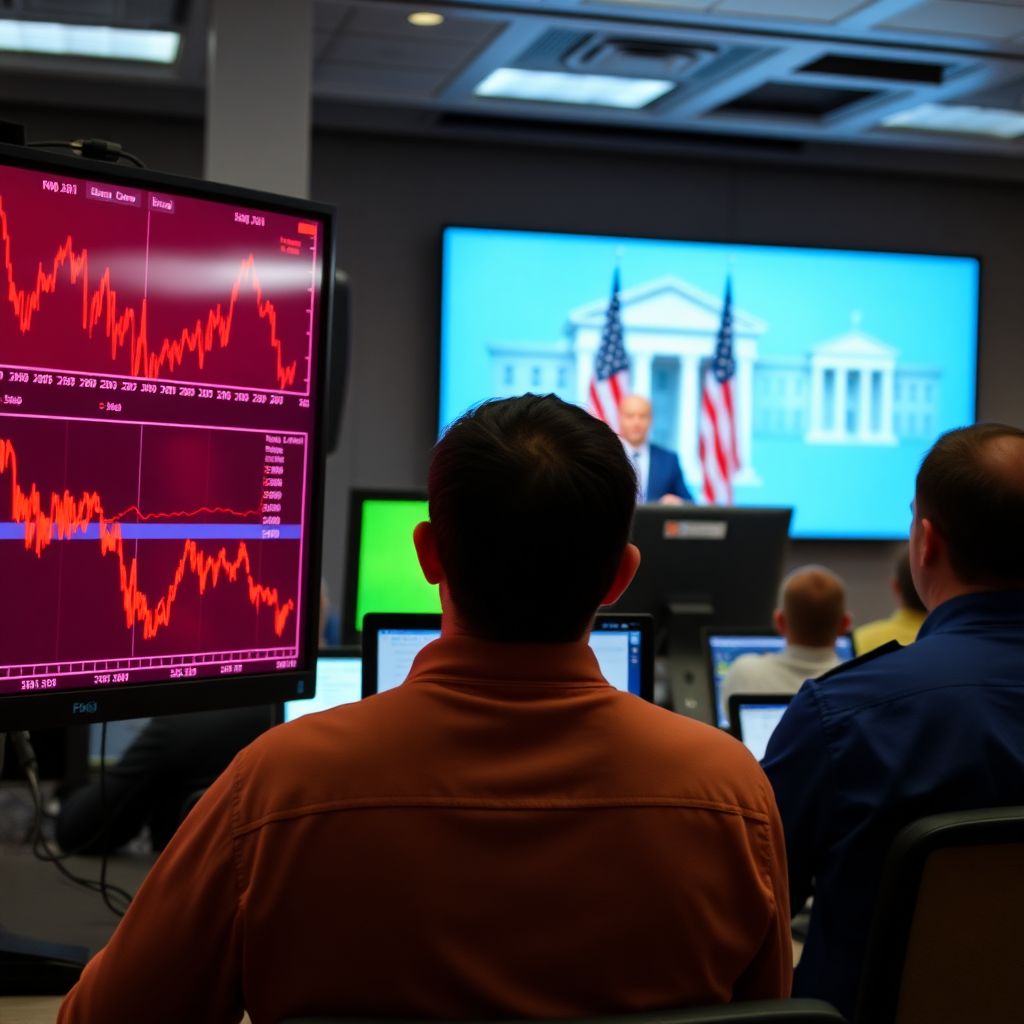
Morning Minute: Crypto Buckles After a Hawkish Fed Surprise
Bitcoin slipped back to the mid‑$64,000s overnight as traders digested a sharply more hawkish Federal Reserve-and tried to decide whether it was Fed Chair Kevin Warsh or crypto whales who really pulled the trigger on the selloff.
Across the board, major tokens traded heavy. BTC briefly tagged the $64,000 area, Ethereum sank toward the mid‑$1,700s, and most large caps spent the session in the red. Stablecoins held their pegs, but risk appetite clearly didn’t.
This latest slide hit just as the Fed wrapped up its first policy meeting under Warsh. The central bank kept its benchmark rate unchanged at 3.50% to 3.75% on Wednesday, marking a fourth consecutive pause. That decision itself was widely anticipated. What caught markets off guard was the tone-and the updated projections behind it.
Ahead of the press conference, the Fed released a fresh “dot plot,” showing where individual officials expect interest rates to be over the next few years. The median year‑end 2026 rate jumped to 3.8%, up from 3.4% in the March projection. In plain English, policymakers now envision a tighter stance lasting longer, and they are penciling in at least one additional rate hike this year instead of the gentle easing path traders had been hoping for.
Warsh leaned into that message at his first press conference as chair. He emphasized that inflation progress has been “uneven,” signaled that the committee is not yet convinced price pressures are fully tamed, and refused to rule out further tightening. Markets had spent months pricing in a clean pivot to cuts; instead, they heard a warning that rates could move higher before they move lower.
Rate‑sensitive assets reacted almost instantly. Fed funds futures quickly repriced, pushing up the implied odds of a hike later this year. Treasury yields climbed, the dollar strengthened, and equities lost momentum into the close. In that environment, highly speculative corners of the market-crypto included-had nowhere to hide.
Bitcoin’s drop to around $64,000 fits a now familiar pattern. When real yields and the dollar jump together, liquidity drains away from the riskiest trades first. Crypto, which thrives on cheap money, leverage, and abundant liquidity, tends to underperform as funding costs rise and investors demand higher returns for taking on volatility.
Still, macro wasn’t the only narrative doing the rounds. As prices started to slip, traders pointed to on‑chain data hinting at large BTC transfers from long‑term holders to exchanges and speculated about potential selling from high‑profile Bitcoin bulls. That fueled the question making the rounds in trading chats: was it really Warsh’s hawkish debut that broke the market-or a well‑timed move by whales and celebrity holders.
From a market‑structure perspective, both forces can coexist. A hawkish Fed shift can act as the catalyst that flips sentiment, while concentrated selling from big players accelerates the move and triggers liquidations. Order books thinned out as volatility picked up, making it easier for relatively modest flows to push prices around.
Altcoins felt the pressure even more acutely. High‑beta names that had outperformed in recent weeks gave back a chunk of their gains, with many mid‑caps and meme coins sliding multiple percentage points more than Bitcoin. That’s consistent with classic risk‑off behavior: when macro turns hostile, traders first dump the most speculative exposures and flee toward relative safety in BTC, stablecoins, or cash.
For long‑term crypto investors, the Fed’s new dot plot is a reminder that the macro cycle isn’t finished. A policy path that keeps rates elevated into 2026 challenges the idea that a sustained “everything rally” is just around the corner. It also undercuts some of the more optimistic timelines for a rapid surge in institutional inflows, particularly from players who are highly sensitive to the cost of capital.
On the other hand, Bitcoin’s reaction-painful but not catastrophic-also shows how the asset has matured. A few years ago, this kind of hawkish surprise might have triggered double‑digit percentage losses in hours. This time, the move, while sharp, stayed within a range that active traders would still describe as “manageable volatility.”
Going forward, the key question for crypto is whether the Fed’s stance becomes a trend or a one‑off shock. If incoming inflation and labor data justify Warsh’s hawkish talk, markets may have to digest the idea that high real yields are here for longer. In that world, crypto could remain choppy, with rallies repeatedly fading as macro traders sell into strength.
If, instead, economic data begins to soften and inflation retreats decisively, the Fed’s current projections could prove conservative. That would give risk assets, including digital tokens, fresh room to run-especially if investors start to see Bitcoin less as a pure liquidity bet and more as a long‑term portfolio diversifier.
In the near term, traders will be watching a few levels. For Bitcoin, the low‑$60,000s zone, which has previously attracted strong dip‑buying, will be a key test of conviction. A convincing bounce from that area would suggest that long‑term holders still view macro shocks as opportunities rather than exit signals. A clean break lower, especially on high volume, would hint at a deeper de‑risking cycle.
For anyone navigating this environment, the takeaway is straightforward: macro is back in the driver’s seat. Warsh’s first meeting has re‑anchored markets around the idea that central banks are not yet done fighting inflation, and crypto is reacting like any other risk asset. Position sizing, leverage, and time horizon matter more than ever when policy uncertainty is this high.
Morning Minute remains focused on that intersection of macro and crypto: how decisions in Washington set the tone for trading screens worldwide, from Bitcoin at $64,000 to the smallest altcoin. Today, those decisions skew hawkish-and the entire digital asset market is feeling the weight.