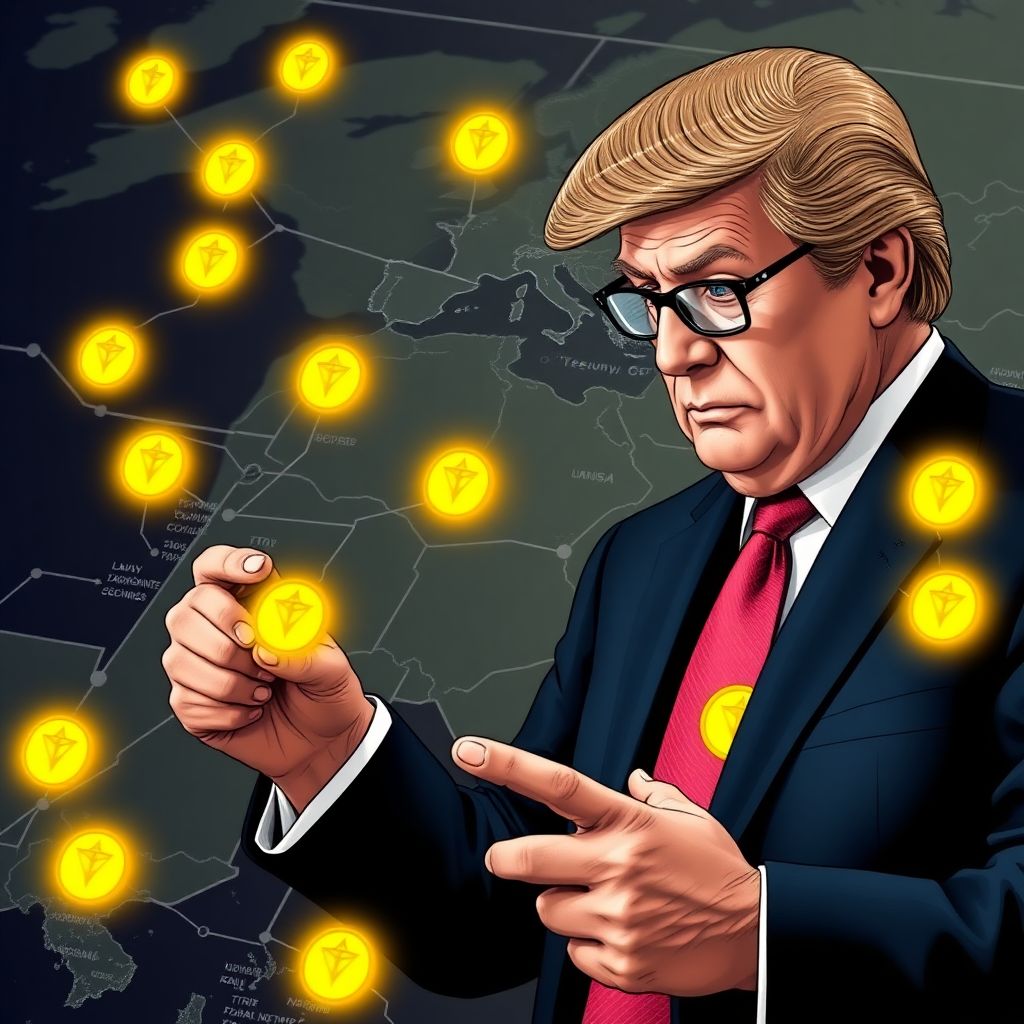
Treasury Department Blocks Over 130 ISIS-Linked Crypto Wallets on Tron
The U.S. Treasury Department has moved to disrupt a key financial channel for the Islamic State’s regional affiliate in Central Asia, sanctioning more than 130 cryptocurrency wallets-almost all of them running on the Tron blockchain.
The Treasury’s Office of Foreign Assets Control (OFAC) added 134 crypto wallet addresses to its existing sanctions list targeting ISIS-K, the Islamic State faction active in Afghanistan, Pakistan, and across Central Asia. Out of those 134 designated addresses, 131 are hosted on Tron, while the remaining three are on the privacy-focused cryptocurrency Monero.
According to blockchain analytics firm Chainalysis, the sanctioned Tron wallets have collectively received more than $1.4 million in digital assets since 2023 and have sent over $880,000 during the same period. These flows highlight how quickly extremist organizations have adapted to the speed and reach of modern crypto infrastructure.
Stablecoin issuer Tether has already taken decisive action in response to the sanctions. The company froze balances linked to all 131 Tron-based wallets named by OFAC, effectively cutting off the sanctioned addresses from moving the USDT they held. This kind of issuer-level intervention illustrates how centralized stablecoins can be used to enforce international sanctions, even when assets reside on permissionless public blockchains.
The newly sanctioned wallets are tied to ISIS-K operations and media activities. The group’s propaganda and communication arm, the al-Azaim Media Foundation, has been associated with some of the fundraising and dissemination efforts that rely on digital assets to bypass traditional financial oversight.
Why Tron Is at the Center of the Crackdown
The dominance of Tron among the sanctioned addresses is not accidental. Over the past several years, Tron has become a favored network for high-volume, low-cost transfers of stablecoins such as USDT. Its low transaction fees, fast confirmation times, and broad exchange support have made it especially attractive for users in regions where banking access is limited or where oversight is weak.
Those same characteristics also appeal to bad actors. Extremist groups and illicit networks increasingly use Tron-based stablecoins to move and store value outside the conventional banking system, betting that the mix of global liquidity and decentralized infrastructure will make enforcement more difficult.
The presence of three addresses on Monero underscores another trend: the appeal of privacy coins for entities seeking to hide transaction trails. While the majority of funds in this case moved through Tron, the inclusion of Monero wallets suggests that some ISIS-K operatives experiment with more anonymous tools to cover their tracks.
How Sanctions on Crypto Wallets Actually Work
When OFAC designates a crypto wallet, that address is added to the Specially Designated Nationals (SDN) list. U.S. persons and entities-including exchanges, financial institutions, and many crypto service providers-are prohibited from dealing with those wallets. Any funds that come under the control of U.S.-based entities, or intermediaries that comply with U.S. law, must be frozen.
In practice, sanctions on wallets trigger a chain reaction:
– Centralized exchanges flag the addresses and block deposits or withdrawals linked to them.
– Compliance tools ingest the OFAC data and automatically screen transactions for exposure.
– Issuers of centralized stablecoins, such as Tether, can blacklist the addresses on-chain, rendering the tokens in those wallets unusable.
Although sanctioned wallets can technically still receive funds, their ability to interact with major platforms, cash out, or move through compliant infrastructure is sharply restricted. The reputational and legal risks for any intermediary that touches these addresses are significant.
The Growing Intersection of Terrorist Financing and Crypto
The designation of more than 130 wallets linked to ISIS-K is part of a broader evolution in terrorist financing. Traditional routes-hawala networks, bulk cash smuggling, and informal banking-remain central, but digital assets now play an increasingly visible role in fundraising, cross-border transfers, and value storage.
Terrorist organizations use crypto for several reasons:
– It enables fast, cross-border transfers that bypass formal banking controls.
– It allows them to reach sympathizers and donors in other countries more directly.
– It can be used in relatively small, frequent transactions that are harder to detect through conventional anti-money laundering systems.
However, the same transparency that underpins most blockchains also creates vulnerabilities for these groups. Investigators can analyze transaction histories, map networks of addresses, and trace flows back to exchanges or cash-out points. The latest OFAC designations are a visible result of that kind of forensic work.
What This Means for Crypto Exchanges and Service Providers
The scale of this sanctions action sends another clear message to the crypto industry: regulators expect real-time, sophisticated sanctions and AML compliance.
Exchanges, over-the-counter desks, wallet providers, and payment processors will now be expected to:
– Immediately integrate the newly sanctioned addresses into their screening systems.
– Monitor for indirect exposure-such as funds that pass through intermediaries connected to those wallets.
– Report suspicious activity and cooperate with law enforcement investigations tied to extremist financing.
Failure to comply can trigger fines, enforcement actions, or even criminal liability in extreme cases. For platforms operating globally, the practical result is tighter monitoring of Tron-based stablecoin transfers, more rigorous onboarding of high‑risk users, and increased use of blockchain analytics tools.
Implications for Legitimate Tron Users
For everyday users who rely on Tron for cheap and fast transfers, the designations are a reminder that convenience does not insulate a network from regulatory scrutiny. While the overwhelming majority of Tron activity is lawful, the concentration of illicit flows on a single chain invites sharper oversight from international regulators, banks, and compliance teams.
This could translate into:
– Stricter checks on large or high‑risk Tron transactions.
– More frequent freezing of assets suspected of links to sanctioned actors.
– Heightened due diligence for Tron-related projects seeking banking relationships.
Legitimate users and developers may need to demonstrate stronger compliance controls and transparent operational practices to maintain trust with partners and regulators.
The Role of Stablecoins in Sanctions Enforcement
The quick freeze of funds in the sanctioned wallets underscores the unique position of stablecoin issuers in the financial ecosystem. Unlike Bitcoin or other fully decentralized assets, centralized stablecoins are governed by companies that can intervene at the token-contract level.
This gives them a powerful lever:
– They can blacklist individual addresses at the smart contract layer, making tokens unspendable.
– They can coordinate with regulators and law enforcement to respond rapidly to new designations.
– They provide a bridge between the traditional banking world and on-chain infrastructure, making it harder for sanctioned entities to cash out without detection.
At the same time, this centralization raises broader debates inside the crypto community about censorship, control, and the trade‑offs between regulatory compliance and the original vision of permissionless finance.
Privacy Coins Under the Microscope
The inclusion of Monero wallets, even in small numbers, highlights a persistent concern for regulators: fully privacy‑preserving cryptocurrencies. While public blockchains like Tron and Bitcoin allow forensic tracing, privacy coins attempt to conceal transaction amounts, sender and receiver details, or both.
From an enforcement perspective, that makes investigations far more difficult. As a result, authorities increasingly scrutinize:
– Exchanges that list privacy coins.
– Mixing and tumbling services that obfuscate transaction trails.
– Bridges and cross‑chain tools used to move value from transparent chains into privacy‑enhanced environments.
This latest action signals that even small-scale use of privacy coins by terrorist organizations can trigger targeted designations and intense regulatory attention.
A Signal of What’s Coming Next
The sweeping move against more than 130 ISIS‑linked wallets shows how far crypto-focused enforcement has evolved. Regulatory agencies now routinely use blockchain intelligence to identify, map, and disrupt financial networks associated with terrorist organizations and other sanctioned entities.
Going forward, we can expect:
– More frequent batch designations of wallets tied to extremist groups, ransomware gangs, and state-backed actors.
– Closer international coordination on crypto sanctions, as other jurisdictions align with OFAC’s lists.
– Increasing pressure on platforms to not only freeze clearly sanctioned wallets, but also to identify and report suspicious patterns before they make it onto public lists.
For the digital asset ecosystem, the message is clear: crypto is no longer on the periphery of global financial regulation. It is firmly at the center of the conversation about national security, terrorist financing, and the future architecture of the financial system.
The Bottom Line
The U.S. Treasury’s decision to sanction more than 130 ISIS‑affiliated crypto wallets-almost all on Tron-illustrates both the risks and the strengths of digital assets. Extremist groups are clearly exploiting fast, low‑cost networks and stablecoins to move money. At the same time, the transparency of most blockchains, combined with centralized control over major stablecoins, gives regulators and law enforcement powerful tools to identify, track, and ultimately disrupt those flows.
For users, builders, and investors, the environment is shifting toward one where compliance, traceability, and cooperation with authorities are no longer optional side concerns but fundamental components of a sustainable crypto ecosystem.