Trezor Discloses Safe 7 Hardware Wallet Flaw, Insists User Funds Are Protected
Trezor has publicly acknowledged a security weakness in its flagship Safe 7 hardware wallet, stressing that the issue does not expose users’ funds under normal conditions and that assets “remain protected” in real‑world use.
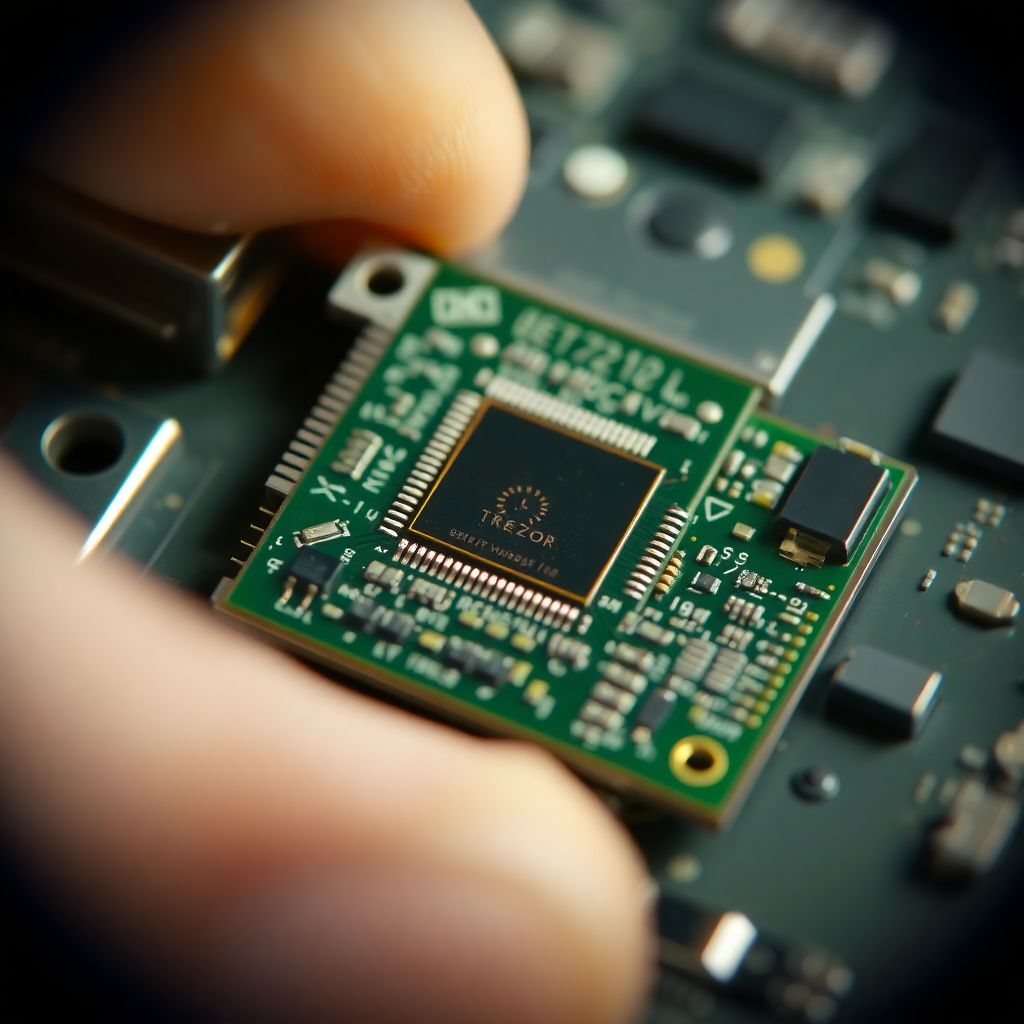
The flaw lies not in the wallet’s software, but in the TROPIC01 Secure Element chip that underpins one of its core security layers. The problem was identified during an independent security audit performed by the Ledger Donjon research team, which specializes in offensive security testing of hardware wallets and secure chips.
What exactly was discovered?
According to the findings, researchers were able to successfully carry out a *laser fault injection* attack on the TROPIC01 Secure Element. This is a highly specialized, lab‑grade technique in which a focused laser is used to momentarily disturb the chip’s internal operations at precisely timed moments.
By doing so, the attackers managed to extract one of three internal “secrets” stored inside the chip. These secrets are cryptographic elements that collectively protect the user’s PIN and overall access to the wallet. In other words, instead of three layers of protection, a very capable attacker could, in theory, cut that down to two.
Crucially, this does *not* equal an instant compromise of the wallet:
– The attacker must still overcome at least two remaining layers of defense.
– The attack requires physical possession of the device.
– It demands costly equipment, specialized skills, and careful preparation.
Trezor emphasized that the Safe 7 hardware wallet itself has not been remotely “hacked,” and that the vulnerability is bound to extremely rare, controlled scenarios.
Role of Tropic Square and the TROPIC01 chip
The Secure Element in question, TROPIC01, is designed by Tropic Square, a company focused on open, auditable secure chips. Following the audit, Tropic Square confirmed and disclosed the vulnerability in the chip used by Trezor Safe 7.
The issue stems from the internal implementation of how secrets are stored and protected against fault attacks. The laser fault injection allowed researchers to bypass some of the chip’s safeguards and read one of the otherwise inaccessible secret values.
From a cryptographic standpoint, this reduces the complexity of fully breaking the device’s protections-but does not make it trivial. The remaining secrets and safeguards continue to resist attacks, keeping the overall difficulty of fund theft extremely high.
Why Trezor says your funds are still safe
Trezor’s core argument is that, despite the academic success of the attack, it does not translate into a credible threat for the vast majority of users. The company stresses several key points:
1. Physical access is mandatory
The attacker must have the actual Safe 7 device in hand. This means remote, over‑the‑internet attacks are off the table for this specific vulnerability.
2. The PIN remains protected
Even with one secret extracted, the user’s PIN is not automatically revealed. An attacker still faces multiple obstacles before being able to unlock the wallet or derive the seed.
3. High cost and complexity
Laser fault injection is not a casual technique. It requires expensive lab equipment, deep understanding of chip internals, and significant trial‑and‑error. This kind of attack is usually associated with well‑funded, highly motivated adversaries rather than everyday thieves.
4. No mass‑exploitation vector
This is not a vulnerability that allows an attacker to compromise many devices at once. Each attack must target one specific wallet, making it impractical for large‑scale or automated theft.
Because of these conditions, Trezor maintains that for regular users-particularly those who keep physical control of their devices and use a strong PIN-funds remain secure.
What this means for Safe 7 owners in practice
For current Safe 7 users, the immediate takeaway is that there is no emergency migration or critical patch required to prevent remote attacks. However, the disclosure is a useful reminder of hardware wallet best practices:
– Guard physical access: Treat your Safe 7 like you would a physical safe or a bank card with its PIN. Avoid leaving it in easily accessible locations, especially around people you do not fully trust.
– Use a strong PIN: A longer, non‑trivial PIN dramatically increases resistance to brute‑force attempts and complements the chip’s internal protections.
– Store seed phrases securely: The recovery seed remains the ultimate key to your funds. As long as your seed phrase is safely stored offline and never exposed, even a compromised or stolen device cannot permanently deprive you of your assets.
– Monitor Trezor’s updates: Firmware improvements, security notices, and hardware revisions are part of the long‑term mitigation strategy, so staying informed is beneficial.
How realistic is a laser fault injection attack for regular users?
While the term “laser fault injection” sounds alarming, this attack class is typically seen in academic research and specialized labs, not in common criminal activity. To realistically execute such an attack, an adversary would need:
– Advanced equipment capable of finely targeting specific areas of the chip.
– Knowledge of the internal layout and timing of TROPIC01 operations.
– Enough time with the device to experiment, repeat attempts, and fine‑tune the attack.
This is a far cry from someone picking up a lost wallet and instantly draining it. The expected threat profile is closer to a targeted operation against high‑value individuals or organizations, and even then, success is not guaranteed.
For the overwhelming majority of everyday holders, the risk from this specific vulnerability is several orders of magnitude lower than risks like phishing, malware on their computer, or careless handling of the recovery seed.
Why disclosing vulnerabilities still makes sense
Some users might wonder why Trezor would publicly reveal a technical weakness if exploitation is so difficult. The answer lies in responsible security culture:
– Transparency builds trust: Modern security practice accepts that no system is perfect. Openly acknowledging limitations and collaborating with independent researchers is often safer than secrecy.
– Independent review is valuable: External teams like Ledger Donjon approach devices with a different mindset, often uncovering edge‑case issues manufacturer testing may miss.
– Incremental hardening: Each discovered flaw provides input for the next generation of chips and firmware, steadily raising the bar for attackers.
By disclosing the issue, Trezor and Tropic Square allow the broader security community to understand the chip’s behavior, explore potential mitigations, and improve future designs.
How this compares to other hardware wallet risks
Hardware wallets, including Trezor Safe 7, routinely face scrutiny regarding:
– Side‑channel attacks (power analysis, electromagnetic observations)
– Fault attacks (such as voltage glitching and laser injections)
– Supply chain tampering (devices altered before reaching the customer)
The TROPIC01 vulnerability falls squarely in the fault‑attack category. While this may sound severe, it also demonstrates that the device has survived extensive testing before anything noteworthy was found-and even then, the result is only a partial weakening of one defensive layer.
In the broader landscape of crypto security, human‑centric weaknesses (phishing, fake apps, social engineering, and insecure backups) typically result in far more losses than sophisticated hardware chip attacks. That does not diminish the importance of fixing such flaws, but it does help contextualize the actual risk level.
What steps users can take right now
For Safe 7 and other hardware wallet owners, some concrete steps can further reduce exposure to any physical‑attack scenario:
1. Limit travel with your primary wallet
Consider using separate wallets or smaller balances when traveling or when there is a higher risk of device loss or theft.
2. Use a passphrase if supported and understood
An additional passphrase on top of the seed can provide another layer of protection-though it must be managed carefully to avoid lockouts or loss.
3. Regularly review threat model
Ask yourself who might realistically target you, and adjust your security posture accordingly. Most users do not face nation‑state‑level or laboratory‑grade adversaries.
4. Document an emergency plan
Keep clear, offline instructions for trusted heirs or partners on how to recover funds from the seed if something happens to you or the device.
Future implications for the TROPIC01 chip and hardware design
The discovery in TROPIC01 will likely influence the roadmap for secure elements used in upcoming devices. Hardware vendors and wallet manufacturers can:
– Reinforce internal checks to better detect and resist fault injection attempts.
– Add redundant verification mechanisms so that extracting a single secret provides no practical advantage to attackers.
– Improve tamper‑evident features, making physical attacks more detectable.
For users, this means that each generation of hardware should gradually become more resilient, not because flaws never exist, but because they are systematically found and addressed.
Bottom line for Safe 7 owners
The audit‑discovered weakness in the TROPIC01 Secure Element chip reduces one defensive layer in extremely constrained conditions, but does not equate to an open door to your funds. Trezor asserts that:
– The Safe 7 wallet has not been compromised by any known real‑world attack.
– Your assets remain secure as long as you maintain control of your device, use a solid PIN, and protect your recovery seed.
– The company and its chip partner are aware of the issue and can incorporate the findings into future updates and hardware revisions.
For everyday users, there is no immediate need to panic or migrate funds solely due to this disclosure. Instead, it should be viewed as another reminder that security is a moving target-and that combining robust hardware with disciplined personal practices remains the best defense for long‑term self‑custody of digital assets.