House Republican Introduces Bill to Block Lawmakers From Betting on Prediction Markets
A senior Republican in the U.S. House of Representatives has put forward new legislation that would prohibit members of Congress and their families from making money by betting on political events through prediction markets.
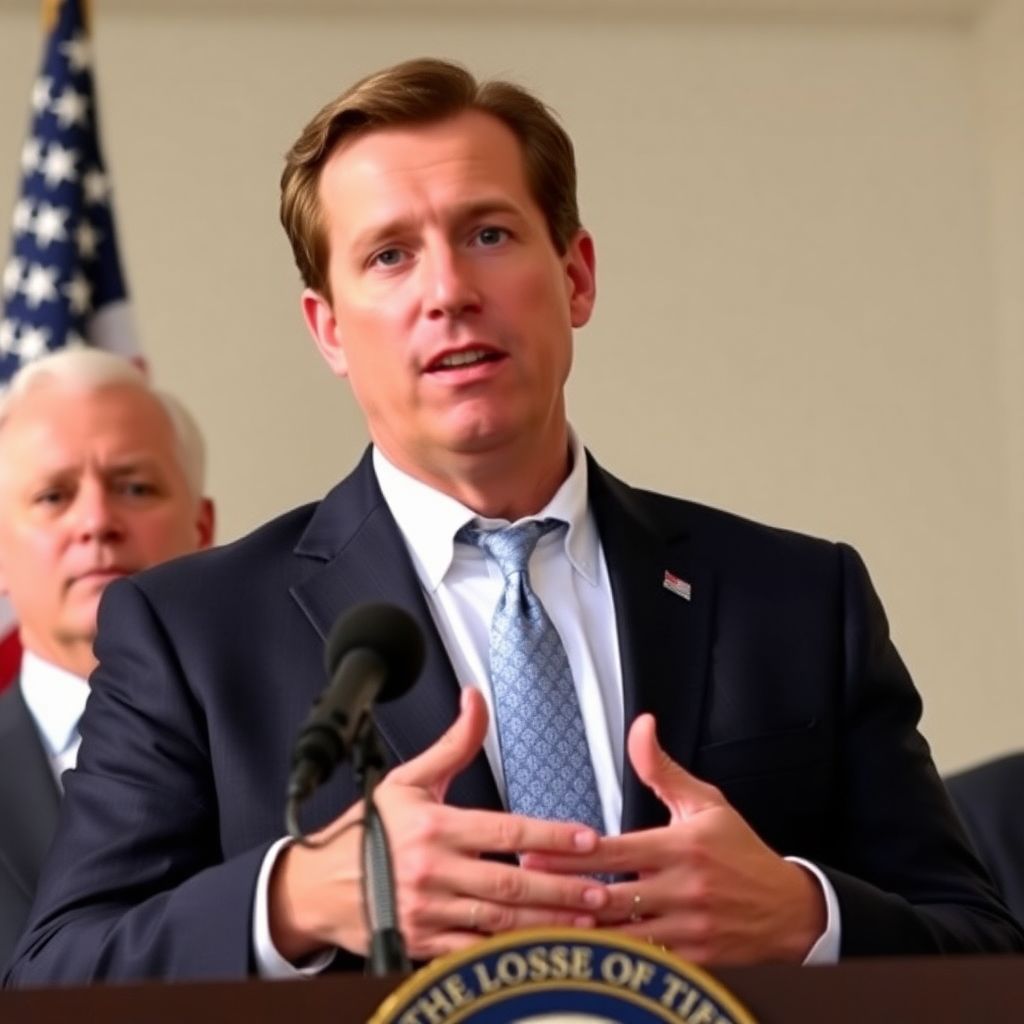
Rep. Bryan Steil, a Republican from Wisconsin and chair of the House Administration Committee, has introduced the “Stop Lawmakers from Predicting Act.” The bill is designed to prevent lawmakers, their spouses, and their dependent children from placing wagers on prediction markets linked to legislation, government decisions, or election outcomes.
According to Steil, the measure is aimed squarely at potential insider trading by elected officials who have access to non-public information about future policy moves, regulatory actions, or political developments that could influence the outcome of such markets.
He argued that the public must be confident that their representatives are not personally profiting from privileged information obtained through their official roles. In his statement announcing the bill, Steil said that Americans “deserve to know” that their members of Congress are not turning insider knowledge into private gains. The legislation, he argued, is intended to help repair and strengthen public trust in federal officeholders.
The core idea behind the Stop Lawmakers from Predicting Act is straightforward: if a prediction market is tied to the work of government-such as whether a bill will pass, how a regulatory agency will act, or who will win an election-then lawmakers and their immediate family members should be barred from betting on it. The bill effectively treats these markets as another potential avenue for insider trading, similar to buying or selling stocks based on non-public information.
Steil framed the bill as a basic ethical reform. Rather than allowing members of Congress to speculate on the outcomes of the very processes they influence, he argued, their focus should be on making policy in the public interest. In essence, elected officials should be crafting laws, not trying to cash in on how those laws-and related political events-play out.
Why Prediction Markets Are a Concern for Lawmakers
Prediction markets allow users to buy and sell contracts based on the future outcome of events-such as whether a specific bill will pass, a policy will be implemented, or a candidate will win an election. Prices of these contracts reflect the market’s collective belief about the likelihood of each outcome.
For ordinary participants, these markets are often framed as a tool for forecasting, hedging risk, or even as a form of entertainment. But for members of Congress, the situation is different. Lawmakers can have early access to draft legislation, confidential briefings, and behind-the-scenes negotiations that can dramatically change the probabilities of certain outcomes long before the public knows about them.
If legislators or their families were to place bets on prediction markets that depend on these outcomes, they could potentially profit from that privileged information-raising serious questions about fairness, corruption, and public confidence in democratic institutions.
A New Front in the Insider Trading Debate
For years, public debate around insider trading in Washington has focused mainly on stock trading by members of Congress. Numerous proposals have sought to restrict or outright ban lawmakers from buying and selling individual stocks, given their access to information that might move markets.
Steil’s bill extends that conversation to a newer and, in some ways, more opaque arena: prediction markets, including those that may operate on digital platforms, in some cases involving cryptocurrency or decentralized finance tools. While prediction markets are often praised by economists for their forecasting accuracy, they also create a new channel through which insider information can be monetized.
By directly targeting wagers related to government action and elections, the proposed law treats prediction markets as another financial vehicle that can be manipulated using non-public knowledge.
Who Would Be Covered Under the Bill
The Stop Lawmakers from Predicting Act takes an expansive view of who should be restricted. It is not limited to members of Congress alone. The prohibition would also apply to:
– Their spouses
– Their dependent children
This structure reflects a concern that, even if a member of Congress does not personally place a bet, a close family member might do so on their behalf or based on information shared within the household. Including immediate family attempts to close off potential loopholes and prevent indirect profiteering.
How the Bill Fits Into Broader Ethics and Transparency Efforts
Public frustration over perceived conflicts of interest in Washington has intensified in recent years. Reports of lawmakers profiting from timely trades in stocks affected by government policy decisions have led to bipartisan calls for stricter rules.
Steil’s bill sits within that broader push to separate policymaking from personal financial gain. If enacted, it would join other ethics requirements, disclosure rules, and conflict-of-interest provisions that seek to hold members of Congress to higher standards than ordinary citizens.
However, this particular proposal focuses less on traditional financial markets and more on a fast-growing niche: speculative activity around political and policy outcomes, often facilitated by online platforms that can be accessed from anywhere and can be difficult to monitor.
Potential Impact on Prediction Markets and Political Betting
If the Stop Lawmakers from Predicting Act becomes law, prediction market platforms would need to ensure that members of Congress and their covered family members do not participate in political or policy-related contracts. That could require:
– Enhanced identity verification and screening
– Clear terms of service barring participation by covered officials
– Cooperation with regulators or ethics bodies if suspicious activity is detected
While the bill does not seek to shut down prediction markets for the general public, it would carve out a category of individuals-those holding federal legislative power-who are formally barred from using them in ways that intersect with their official duties.
In practice, enforcement details would matter. Regulators and congressional ethics offices would need to coordinate with platforms and financial intermediaries to detect potential violations. The use of pseudonymous accounts, crypto wallets, or offshore platforms could complicate oversight, making the design of enforcement mechanisms an important part of any follow-up rules.
Arguments For and Against the Proposal
Supporters of such a ban are likely to argue that the risks to public trust outweigh any benefits of allowing lawmakers to participate in these markets. If the public suspects that representatives are literally betting on policy outcomes they can influence, confidence in the integrity of the legislative process could erode even further.
Critics, on the other hand, might warn that the bill adds another layer of restriction on the financial activity of public officials, potentially raising questions about personal freedom or enforcement overreach. Some may argue that robust disclosure and transparency could be sufficient, rather than outright bans.
Others might point out the difficulty of defining exactly which prediction markets are “covered.” For example, would a general economic forecast contract fall under the ban if it is indirectly related to policy? The bill’s final language and regulatory interpretation would be critical in drawing those lines.
The Crypto and Web3 Angle
Many modern prediction markets run on blockchain infrastructure, using tokens and smart contracts to create and settle bets. These decentralized systems can operate globally and are often resistant to traditional forms of regulation.
By targeting participation rather than the technology itself, Steil’s bill attempts to sidestep the question of how to police decentralized platforms. It does not need to shut them down; it only needs to make it illegal for a specific group-members of Congress and their families-to use them for certain types of bets.
Still, enforcing such a rule in a decentralized environment is challenging. Lawmakers might be technically able to access these platforms using pseudonymous wallets. Detecting and proving violations would likely depend on a combination of digital forensics, whistleblowers, and financial disclosures.
Public Trust and the Optics of “Betting on Democracy”
One of the most politically sensitive aspects of prediction markets is the perception that people in power could be wagering on the outcomes of elections and legislative battles. Even the appearance that a senator or representative might profit if a bill fails-or if a particular candidate loses-could be deeply damaging to democratic legitimacy.
Steil’s proposal appears tailored to that concern. By cutting off the option of placing such bets, the bill is meant to reassure voters that lawmakers are not on both sides of the table: shaping events on one hand, and speculating on their outcomes on the other.
In an era where institutional trust has been steadily eroding, even modest reforms that address obvious conflict-of-interest risks can become politically significant. Whether or not prediction markets are widely used by lawmakers today, blocking that path up front is framed as a preventive move rather than a reactive one.
What Comes Next for the Stop Lawmakers from Predicting Act
For the bill to become law, it will need to gain support from both Republicans and Democrats, pass through committee consideration, and be approved by both chambers of Congress before being signed by the president. Ethics and transparency reforms sometimes draw bipartisan backing, especially when they can be presented as common-sense anti-corruption measures.
Debate over the bill may also intersect with a broader legislative discussion about how to regulate prediction markets, online political betting, and crypto-based financial tools more generally. Lawmakers will have to decide not only whether they are willing to restrict their own conduct, but also how far Congress should go in overseeing a rapidly evolving digital financial landscape.
Regardless of its legislative fate, the Stop Lawmakers from Predicting Act underscores a growing recognition in Washington: as financial innovation creates new ways to speculate on political and policy outcomes, the rules governing the people who make those policies may need to evolve just as quickly.