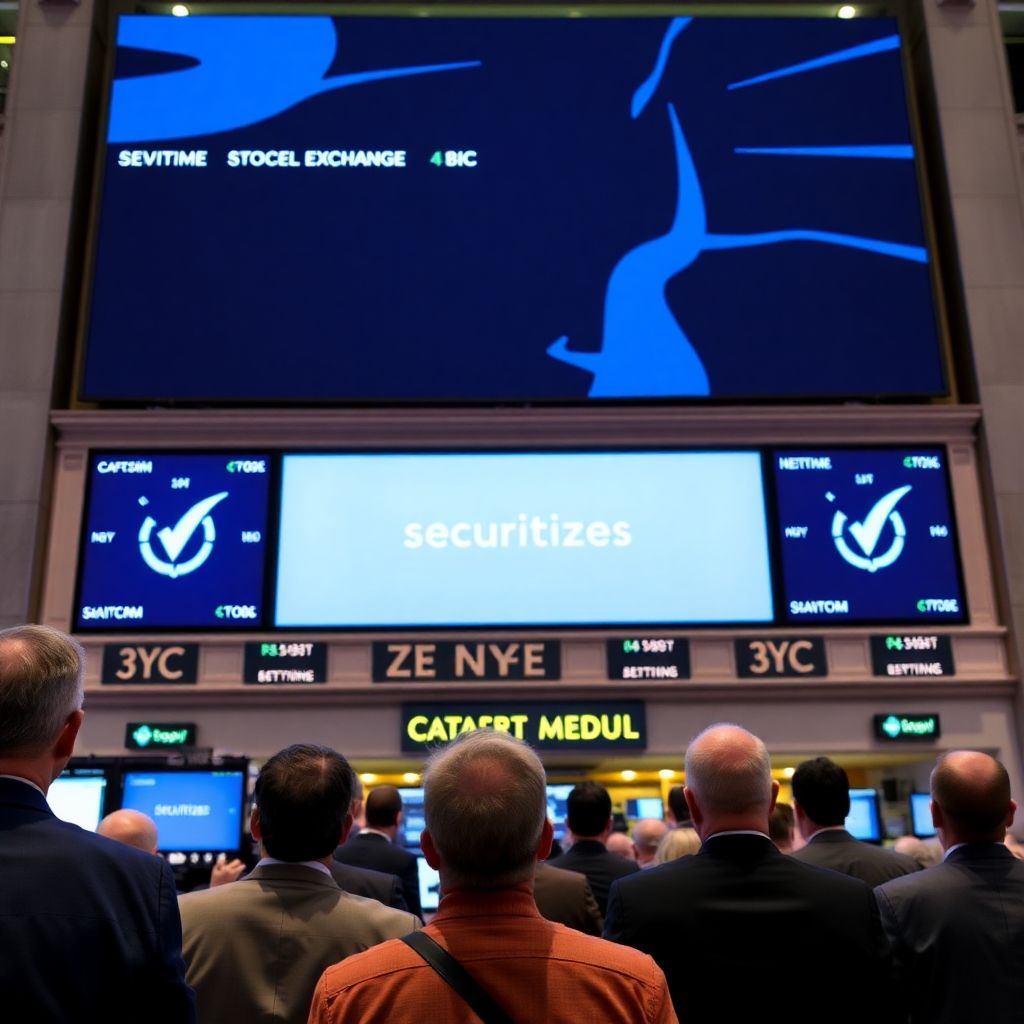
Wall Street’s Next Big Tokenization Trial: Securitize Heads for NYSE Listing
Whether Wall Street’s growing fascination with tokenization can convert into real investor appetite for companies powering the technology will be put to the test next week. All eyes are on Securitize, a BlackRock-backed platform for digital securities, as it prepares to make its public market debut.
The company, which focuses on creating digital representations of real-world assets on blockchain, plans to list on the New York Stock Exchange under the ticker “SECZ”. The move comes after Securitize agreed to merge with a special purpose acquisition company (SPAC) sponsored by Cantor Fitzgerald, known as Cantor Equity Partners II.
SPAC Merger Clears a Crucial Hurdle
A key milestone for the deal was reached this week. Shareholders of Cantor Equity Partners II were given the option to redeem their common shares rather than roll them into the combined company. Investors holding less than 30% of the SPAC’s common stock chose to redeem.
In SPAC transactions, high redemption rates often drain the capital that the target company expects to receive, forcing renegotiations or additional financing. By contrast, a redemption level below 30% is relatively favorable and suggests sufficient trust in Securitize’s prospects among SPAC investors.
As a result of the lower-than-feared redemptions and related private financing arrangements, Securitize now expects to receive around $400 million in gross proceeds from the merger and associated deals. That war chest is intended to fund expansion, product development, regulatory work, and strategic partnerships as the firm attempts to position itself as a leader in the tokenization of real-world assets.
BlackRock’s Backing: A Strategic Signal
Securitize’s most eye-catching credential is its backing from BlackRock, the world’s largest asset manager. BlackRock has been increasingly vocal about the long-term potential of tokenization-using blockchain to represent ownership of traditional assets like bonds, funds, or real estate as digital tokens.
This support gives Securitize two key advantages:
1. Validation of the Business Model: BlackRock’s involvement signals that tokenization is not just a crypto-native experiment, but a technology traditional finance is taking seriously.
2. Potential Distribution and Product Synergies: Asset managers exploring tokenized funds or on-chain share classes may view Securitize as a natural infrastructure partner, boosting its commercial relevance.
For public market investors, the BlackRock connection may make Securitize an early “pure play” on the tokenization theme, much like how certain companies became flagship bets on cloud computing or electric vehicles in earlier cycles.
Why Tokenization Matters to Wall Street
Tokenization promises to reshape capital markets by putting conventional financial instruments on blockchain rails. In practice, this can mean:
– Fractional ownership of assets that were historically hard to divide, such as private equity, real estate, or infrastructure.
– 24/7 trading and faster settlement, reducing counterparty and operational risks.
– Programmable compliance, where restrictions on who can buy, sell, or hold securities are embedded in the token itself.
– Broader accessibility, potentially lowering minimum investment sizes and opening markets to a wider set of investors, where regulations allow.
For Wall Street, the attraction is less about speculation on cryptocurrencies and more about efficiency, cost reduction, and new distribution models for existing products. Securitize aims to occupy the infrastructure layer of this evolving landscape.
From Niche Infrastructure to Public Company
Securitize has built its business around issuing and managing digital securities-tokens that represent equity, debt, or other claims on real-world assets in a regulated framework. The company provides:
– A platform for issuers to create and distribute tokenized securities.
– Investor onboarding, including identity verification and regulatory checks.
– Cap table and ownership management on-chain.
– Secondary trading solutions for eligible investors.
Listing on the NYSE under the ticker SECZ is more than a financing event-it’s a test of how public equity markets value a company so tightly tied to tokenization at a time when digital assets remain politically controversial and heavily scrutinized by regulators.
A Market Test for Tokenization Hype
A core question the Securitize debut may answer is whether institutional enthusiasm for tokenization will be matched by public equity investors:
– If SECZ trades strongly, it could be interpreted as a vote of confidence not just in Securitize, but in the broader thesis that tokenization will become a mainstream feature of capital markets.
– If the reception is lukewarm or negative, it may indicate that investors still see tokenization as too early-stage, too dependent on regulatory clarity, or too vulnerable to swings in crypto sentiment.
This makes the listing a symbolic barometer for the next phase of blockchain adoption in traditional finance.
SPAC Route: Opportunity and Risk
Going public via a SPAC merger, rather than a traditional IPO, also shapes investor perception. Over the last few years, SPACs have experienced:
– Boom-and-bust cycles, with periods of intense enthusiasm followed by notable underperformance for many de-SPACed companies.
– Heightened scrutiny from regulators and investors about projections, governance, and deal structures.
At the same time, SPACs can offer advantages to a company like Securitize:
– Faster and more flexible path to public markets, especially for emerging sectors where comparables are limited.
– Upfront negotiation of valuation and capital commitments, including additional private financing alongside the SPAC cash.
– Strategic partners: Being tied to a Cantor Fitzgerald-backed vehicle potentially brings capital markets expertise and distribution relationships.
The relatively low redemption rate in Cantor Equity Partners II suggests that, at least among this set of investors, there is conviction that Securitize’s story is credible enough to merit staying in the deal.
Tokenization vs. Crypto Speculation
One nuance likely to influence how SECZ is received is the difference between tokenization and traditional crypto trading:
– Tokenization is about infrastructure and rails: It aims to improve how existing regulated assets are issued, traded, and settled.
– Crypto speculation is about native digital assets: These are often unbacked, highly volatile tokens whose value is driven by narratives, network effects, and speculative flows.
Securitize is firmly in the first camp. Its success is less likely to hinge on the price of Bitcoin and more on adoption by issuers, financial institutions, and regulators. That could make the stock attractive to investors who are bullish on blockchain’s long-term impact but wary of pure crypto exposure.
Regulatory and Adoption Challenges Ahead
Despite the momentum, Securitize operates in a space that is far from frictionless:
– Regulatory uncertainty around digital securities remains a challenge, with different jurisdictions moving at different speeds.
– Integration with legacy systems at banks, brokers, and custodians can be complex and slow.
– Market education is still needed; many institutional players are exploring tokenization pilots but have not yet scaled deployment.
– Competition from other infrastructure providers, including large incumbents building in-house solutions, could intensify.
Public market investors will be weighing these risks against the potential upside of being early to a foundational shift in market plumbing.
What Securitize’s Debut Could Mean for the Broader Market
If Securitize’s listing succeeds and SECZ attracts sustained investor interest, several downstream effects are possible:
– More tokenization-focused firms may be encouraged to pursue public listings or large private funding rounds.
– Traditional asset managers and banks may accelerate the launch of tokenized funds, bonds, and private market products, seeing clear market validation.
– The narrative around blockchain in finance could shift further away from “crypto trading” toward infrastructure and efficiency, potentially drawing in new types of investors and partners.
Conversely, a poor reception could lead to a more cautious environment, slowing the pace at which similar companies attempt to tap public markets.
A Pivotal Moment for Real-World Asset Tokenization
Securitize’s expected debut on the NYSE under the ticker SECZ, backed by BlackRock and fueled by approximately $400 million in anticipated proceeds from its Cantor Fitzgerald-sponsored SPAC merger and related financings, marks a pivotal moment for the tokenization narrative on Wall Street.
The deal will not only determine how one company is valued, but also how public markets currently price the promise-and the uncertainty-of bringing real-world assets onto blockchain rails. In that sense, Securitize’s first days of trading will serve as an early verdict on whether tokenization is ready to move from pilot projects and boardroom decks into the core of mainstream capital markets.