Republican Proposal Would Extend Congressional Stock Trading Ban to Prediction Markets
A leading House Republican wants to ensure that members of Congress cannot sidestep a potential stock trading ban by speculating on politics through prediction markets.
Rep. Bryan Steil of Wisconsin, chair of the House Administration Committee, said he plans to modify a pending congressional stock ban bill so that it also covers platforms such as Polymarket and Kalshi. His comments signal that lawmakers are increasingly focused not just on traditional equities, but on newer, more opaque avenues for wagering on political events and policy outcomes.
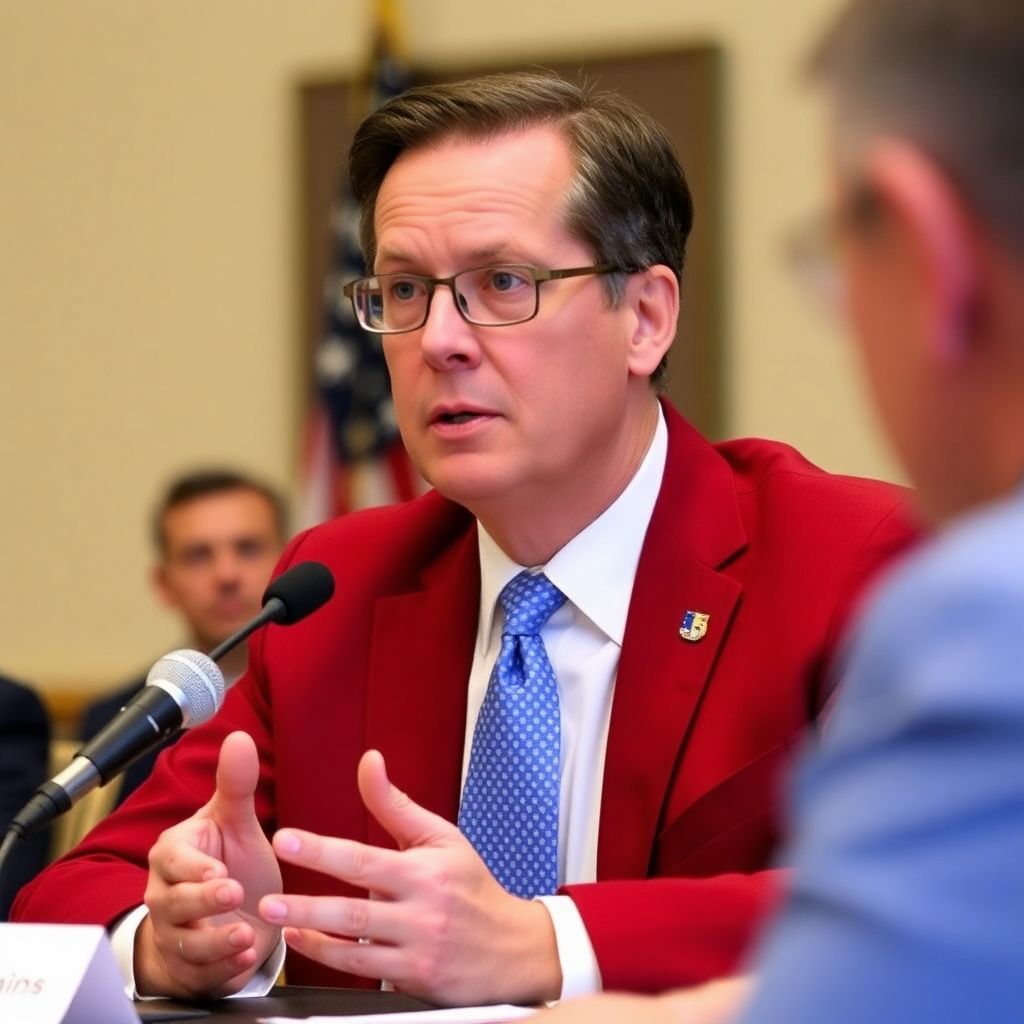
Speaking to reporters during a roundtable, Steil argued that the public expects elected officials to steer clear of any form of financial betting on the very events they help shape.
“In my conversations with members and the broad public, I don’t think anyone believes that members of Congress should be making trades on elections or making trades on public policy,” he said, referencing both conventional securities and prediction market contracts.
From Stock Trades to Political Bets
The bill at the center of the effort, known as H.R. 7008, is designed to sharply restrict how members of Congress and their families can participate in financial markets. As drafted, it would impose a sweeping prohibition on lawmakers, their spouses, and their dependent children purchasing publicly traded stocks. The measure also contemplates a disclosure system that would require public “intent to sell” notices before covered officials unwind existing positions, increasing transparency around when and why they are divesting.
Steil’s new push would expand that framework further. Instead of limiting the ban to corporate equities and similar instruments, it would explicitly rope in prediction markets-online platforms that allow users to buy and sell contracts tied to the probability of future events, from election outcomes to economic data releases or Supreme Court decisions.
Platforms like Polymarket and Kalshi have built sizable user bases by offering markets on questions such as which party will control Congress after the next election, whether a particular bill will pass, or where inflation will land at a given date. Prices in those markets function as a crowdsourced forecast: if a contract on “Candidate X wins” trades at 70 cents, traders are implicitly assigning a 70% probability to that outcome.
For an ordinary user, that is a speculative bet. For a member of Congress-who might shape the relevant legislation, sit in closed-door briefings, or possess nonpublic information about negotiations-such trading can look a lot like monetizing insider access.
Closing the Loopholes Before They Open
Ethics advocates have long warned that any narrow ban on traditional stock trading would be incomplete if it ignores emerging financial products that achieve the same effect. If a member of Congress is barred from buying shares of a defense contractor before a classified military contract is announced, but can instead buy a prediction contract that pays out if the contract is awarded, the core conflict of interest remains.
By signaling that prediction markets will be folded into H.R. 7008, Steil is attempting to preempt that kind of end run. The goal is to make clear that public officials should not profit-directly or indirectly-from knowledge or influence over elections, regulatory decisions, or legislative outcomes.
For prediction markets that use cryptocurrencies or blockchain-based settlement, the issue becomes even more complex. Many of these platforms operate in a cross-border, partially decentralized manner, raising questions about jurisdiction and enforcement. If the law only addresses U.S.-regulated exchanges, it risks pushing congressional trading activity onto offshore or less transparent venues. Lawmakers therefore face the challenge of writing rules that are technologically broad enough to cover tokenized markets, derivatives, and similar instruments without unintentionally sweeping in unrelated financial activity.
Why Prediction Markets Are Uniquely Sensitive for Lawmakers
While insider trading concerns exist for all asset classes, prediction markets linked to politics occupy a particularly sensitive category. These contracts are often structured explicitly around questions that legislators and regulators can substantially influence:
– Will a certain bill clear committee by a given date?
– Will a regulatory agency approve a high-profile merger?
– Will a government shutdown occur this fiscal year?
If a sitting lawmaker can profit from a shutdown that they help trigger, or from a bill’s failure that they help engineer, the appearance of corruption is obvious-even if no laws on classic insider trading are technically broken. This reputational risk is one reason Steil emphasized public discomfort with elected officials “making trades on elections or public policy.”
Moreover, congressional offices routinely receive nonpublic briefings from intelligence agencies, central bank officials, or regulators. Those briefings might not always be “material nonpublic information” under securities law, but they can still provide a meaningful edge in predicting which policies are likely to succeed, how geopolitical events may unfold, or when major economic announcements might surprise markets. Turning that informational advantage into profit via prediction markets would deepen the perception that public service is being used as a financial tool.
How an Expanded Ban Could Work in Practice
If prediction markets are expressly included in H.R. 7008, the statute would need to define the types of contracts and platforms that fall under the ban. Lawmakers could, for instance, prohibit covered individuals and their immediate families from:
– Buying or selling contracts tied to election outcomes, legislative milestones, or government policy decisions
– Using intermediaries, shell entities, or blind trusts to place such wagers on their behalf
– Participating in any derivative product that is economically equivalent to a political prediction contract-even if it’s structured through a crypto token or off-exchange agreement
The same “intent to sell” disclosure model contemplated for stocks could be adapted to prediction contracts, though some ethics experts might argue that a complete prohibition is simpler and more enforceable. Because many prediction markets settle quickly around a specific event date, delayed disclosure alone might not meaningfully reduce the risk of conflicts.
Enforcement would likely fall to the Office of Congressional Ethics, the House and Senate Ethics Committees, and potentially federal regulators if the contracts are deemed commodity or securities derivatives. Documenting flows of funds into crypto-native markets, however, may require updated reporting forms and more sophisticated financial forensics.
Balancing Innovation and Integrity
Supporters of prediction markets often argue that they improve public understanding by aggregating dispersed information into a single, probabilistic signal. In their view, allowing knowledgeable participants-including political insiders-to trade makes these markets more accurate and thus more socially valuable.
But when the “knowledgeable participants” are the very people crafting laws and overseeing agencies, the calculus changes. Congress’s primary obligation is to the public interest, not to maintaining the informational efficiency of a niche financial product. Steil’s proposal reflects a judgment that, for members of Congress and their families, the integrity of the institution outweighs the potential informational benefits of participation.
That stance does not necessarily require shutting down prediction markets broadly. Instead, it carves out a specific class of individuals-elected officials and those closest to them-who must accept stricter limits on their financial freedoms in exchange for the public trust they hold.
A Broader Push to Rebuild Public Trust
The effort to restrict trading by lawmakers comes after a series of high-profile controversies involving members of both parties who bought or sold stocks around sensitive events, such as the early days of the COVID-19 pandemic or major regulatory decisions affecting particular industries. Even when investigations cleared some of those officials of legal wrongdoing, public opinion polls showed deep skepticism about whether members of Congress use inside information to guide their investments.
H.R. 7008 aims to respond to that skepticism by taking a more categorical approach: dramatically limiting what covered officials can buy, rather than relying solely on after-the-fact enforcement of insider trading laws. Adding prediction markets into the mix broadens that response from the world of traditional equities to the growing ecosystem of speculative platforms that sit at the intersection of finance, technology, and politics.
If enacted with robust enforcement mechanisms, such a ban could make it significantly harder for lawmakers to profit directly from market-sensitive knowledge acquired through their official duties. It would not eliminate every perceived conflict of interest-lobbying, revolving-door employment, and campaign contributions would still raise questions-but it would close off some of the most visible channels for financial speculation tied to policy choices.
Partisan Dynamics and Prospects for Passage
Steil’s position as chair of the House Administration Committee gives him influence over how ethics and transparency rules are drafted and advanced. However, the future of H.R. 7008 will ultimately depend on broader bipartisan negotiations. Some lawmakers have expressed concerns that overly rigid bans could discourage qualified people from running for office or unfairly penalize spouses with independent careers and investments.
Others counter that blind trusts, diversified funds, and similar tools already provide ways to separate personal financial decisions from official duties. From that perspective, extending the restrictions to prediction markets is a logical next step rather than a radical leap.
Prediction markets themselves may also become a political flashpoint. To some members, they represent a form of regulated financial innovation that should not be demonized. To others, wagering on elections looks uncomfortably like a legal veneer over gambling on democracy’s outcomes-an activity public officials should categorically avoid.
What Comes Next for Prediction Markets and Congress
As Steil and his colleagues work new language into the stock trading bill, prediction market operators will be watching closely. Explicit restrictions on congressional participation would not necessarily harm their overall business, since politicians are a tiny fraction of their user base. But the debate could reshape how regulators classify and oversee such platforms, especially where they intersect with digital assets and derivatives law.
For lawmakers, the emerging consensus appears to be that the safest course is simple: they should not bet, in any form, on the elections they run in, the policy battles they wage, or the government decisions they influence. By extending the stock trading ban to cover political prediction markets, Congress is inching toward a more comprehensive, technology-neutral standard of ethical conduct-one intended to reassure voters that legislative decisions are not being made with a trader’s ledger in mind.