NJ Special Election Tightens the Screws on House GOP Majority
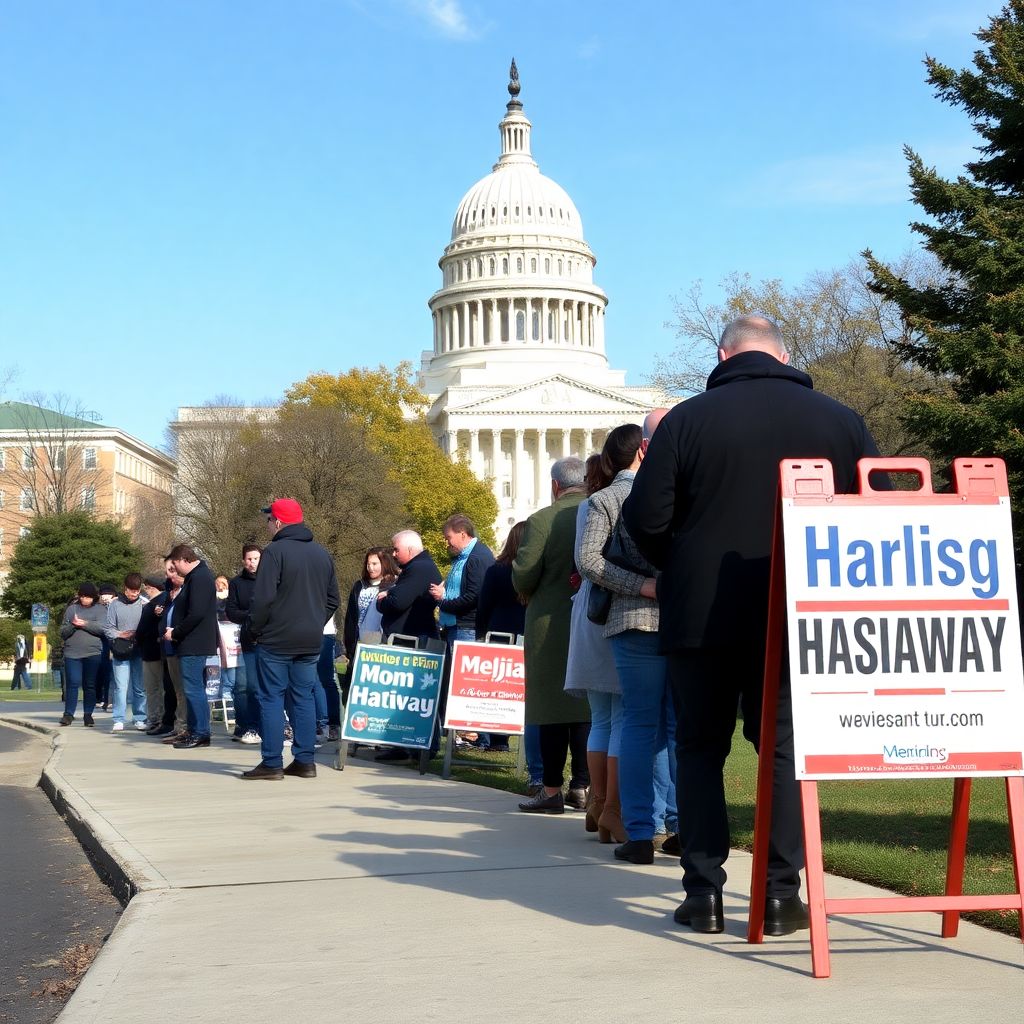
Voters in New Jersey’s 11th Congressional District are casting ballots in a special election that could push the Republican majority in the House of Representatives to the brink. The race, between progressive Democrat Analilia Mejia and Republican Joe Hathaway, is unfolding in a suburban district Democrats carried by 9 points in 2024 and where registered Democrats outnumber Republicans by roughly 65,000.
The stakes go well beyond who will represent this North Jersey district. With the House already governed by one of the narrowest majorities in modern history, the outcome will shape how much room Speaker Mike Johnson has to maneuver on controversial legislation in the run‑up to the midterms.
A Vacancy with Outsized Consequences
The seat became open when Democrat Mikie Sherrill resigned in November 2025 after winning the New Jersey governorship. Her departure turned what had been a safe Democratic hold into an immediate test of national party strength and voter enthusiasm.
Nonpartisan handicappers rated the special election as strongly favorable to Democrats, with the district’s recent voting history and partisan registration giving them a built‑in edge. A March poll by Democratic pollster GBAO showed Mejia leading Hathaway 53 percent to 36 percent, reinforcing the perception that Republicans are fighting uphill.
Yet in a House where a single race can shift the governing equation, national strategists in both parties are watching the turnout and margin almost as closely as the winner’s name.
The House Math: How Much Slack the Speaker Has
Republicans currently control 218 House seats, aided by one independent who caucuses with them. Democrats hold 213, with four vacancies, including New Jersey’s 11th.
If Mejia captures the seat, the GOP’s effective margin shrinks further, leaving Speaker Johnson able to lose only two Republican votes on any party-line bill before needing Democratic help to pass it. That is already close to the functional limit of party discipline in a polarized chamber where a handful of hardliners and moderates routinely pull in opposite directions.
The practical result: every absence, every ideological protest vote, every personal feud inside the GOP conference becomes more dangerous. With fewer votes to spare, leadership has to negotiate more, threaten more, and compromise more, often simultaneously.
A Congress Already Straining Under a Thin Majority
The fragility of the Republican majority has already been on display in 2026. Internal disputes have snarled efforts to reauthorize key national security authorities under FISA, and budget reconciliation talks have exposed deep rifts over spending, taxes, and regulatory priorities.
These fights have had a knock‑on effect on other legislative priorities, including financial and technology regulation. Supporters of the CLARITY Act, a high‑profile attempt to standardize rules around digital assets and crypto markets, have warned that the House’s internal paralysis could make it harder to move complex bills through both chambers before campaign season freezes the legislative calendar. A still‑narrower majority would give small factions even more leverage to stall or reshape such measures.
In that context, one additional Democrat from a suburban New Jersey district won’t rewrite the agenda on its own, but it could limit Republicans’ ability to push partisan bills and force more bipartisan bargaining on anything that must pass.
Who Is Analilia Mejia?
Analilia Mejia, 48, is running as an unapologetically progressive Democrat. A longtime organizer and policy advocate, she previously served as national political director for Senator Bernie Sanders’ 2020 presidential campaign. That background has made her a known quantity on the national left and helped her quickly consolidate support from progressive leaders.
Mejia emerged from a contentious Democratic primary in February, narrowly defeating former Congressman Tom Malinowski. Malinowski, once seen as the establishment favorite, was widely viewed as damaged by a roughly $2 million advertising blitz from a super PAC aligned with pro‑Israel interests. The ads, intended to weaken Mejia, appeared to backfire among many Democratic primary voters who bristled at heavy outside spending and rallied to Mejia’s side.
Her endorsers reflect her ideological lane: Sanders, Elizabeth Warren, and Alexandria Ocasio‑Cortez all lined up behind her campaign. On the trail, she has campaigned on taxing billionaires, pursuing universal healthcare, aggressively defending abortion rights, holding Donald Trump and his allies accountable, and advancing policies aimed at making housing, childcare, and education more affordable in high‑cost regions like northern New Jersey.
Who Is Joe Hathaway?
On the Republican side, 38‑year‑old Joe Hathaway, a councilman and former mayor of Randolph Township, has tried to carve out a profile as a pragmatic, suburban‑friendly conservative. Branding himself a “commonsense, independent” Republican, Hathaway has repeatedly tried to distance his campaign from Donald Trump, a move tailored to a district where Trump is unpopular and moderate voters often decide general elections.
“I won’t be a rubber stamp,” he said at an April debate, promising to buck party leadership where he believes they are out of line with his district. Trump has notably not endorsed Hathaway, underscoring both the candidate’s arm’s‑length posture and the national party’s recognition that overt Trump ties could be a liability here rather than an asset.
Fundraising figures reveal a resource gap. By the end of March, Hathaway had brought in about $500,000, while Mejia had raised roughly $1 million. Around 70 percent of Hathaway’s contributions came from donors giving $1,000 or more, signaling strong backing from wealthier supporters and party donors but potentially less grassroots energy than Democrats hope to demonstrate.
A Test of Progressive Appeal in Affluent Suburbs
New Jersey’s 11th District is emblematic of the kind of well‑educated, relatively affluent suburban territory that has been drifting toward Democrats over the past decade. Once more reliably Republican, it has grown increasingly blue as college‑educated voters, particularly women, shifted away from Trump‑style politics.
Mejia’s candidacy stretches that trend in a new direction: she is not a centrist technocrat but a movement progressive. Political strategists are closely watching whether her policy agenda and rhetoric resonate with suburban professionals who may favor abortion rights and gun control but bristle at talk of “socialism” or sweeping tax hikes.
If Mejia runs significantly ahead of the district’s 9‑point Democratic lean from 2024, party operatives may view it as evidence that full‑throated progressive campaigns can succeed in upper‑middle‑class suburbs that were once targeted primarily with moderate, business‑friendly messaging. If she underperforms, it may reinforce the argument that Democrats in similar districts should tack toward the center on economic issues while staying progressive on social ones.
Measuring Democratic Energy Before the Midterms
Special elections are often treated as barometers of voter intensity heading into major national contests. In recent years, Democrats have repeatedly overperformed their expected margins in special races, especially in suburban and exurban areas, suggesting that their voters were more eager to turn out between presidential cycles than the models predicted.
The New Jersey 11th race will feed into that data set. Analysts will not only look at whether Mejia or Hathaway wins, but at turnout levels, the size of the margin compared with past results, and how each candidate performs among key demographic blocs such as independents, college‑educated voters, and older suburban homeowners.
A robust Mejia victory could bolster Democratic claims that abortion rights, concerns about Trump’s return to national politics, and economic anxiety about healthcare and housing are still powerful motivators. A closer‑than‑expected race, even if Democrats hold the seat, might be interpreted as a warning that discontent with inflation or frustration with Washington gridlock is cutting into their edge.
What a Democratic Win Would Mean in Washington
If Mejia prevails, Democrats will gain another voice aligned with the party’s progressive wing, potentially strengthening their hand in internal debates over economic policy, regulation, and oversight of the financial and tech sectors. On issues like Wall Street oversight, healthcare expansion, and the regulation of fast‑evolving sectors such as crypto, artificial intelligence, and digital markets, she is likely to push for aggressive rules and robust consumer protections.
For Republicans, losing the seat would make the job of managing their conference even more intricate. With such a slim margin, factions on the right and center of the GOP could each threaten to sink legislation unless their specific demands are met, complicating efforts to move must‑pass bills like government funding, debt‑limit measures, and national security reauthorizations.
A narrower majority would also give Democrats more leverage in negotiations over any bipartisan packages, including those dealing with technology, financial markets, or national security, where public pressure often demands that Congress act.
What a Republican Upset Would Signal
If Hathaway manages to flip the district despite its Democratic tilt, the political narrative heading into November would change overnight. Republicans would claim that concerns about inflation, crime, border security, and cultural issues are starting to outweigh anti‑Trump sentiment in key suburban battlegrounds.
Such an upset would likely embolden GOP leaders to pursue more aggressively partisan legislation in the short term and could encourage more recruitment of candidates in similar suburban districts who mirror Hathaway’s profile: locally rooted, rhetorically independent, but aligned with core Republican economic and security priorities.
Strategists would also scrutinize whether Hathaway’s deliberate distance from Trump was a central ingredient in such a victory, a question with direct implications for how the party campaigns in swing districts nationwide.
Beyond One District
No single special election can fully predict the midterms, but New Jersey’s 11th offers a sharp snapshot of the political forces shaping 2026: a fragile House majority, a Democratic Party balancing its progressive and moderate wings, a Republican Party struggling to calibrate its relationship with Trump in the suburbs, and a Congress grappling with complex policy fights under constant electoral pressure.
Whether the district sends Analilia Mejia or Joe Hathaway to Washington, the result will be read not just as a local verdict, but as an early clue to how voters may reshape the House map – and the balance of power – in the months ahead.