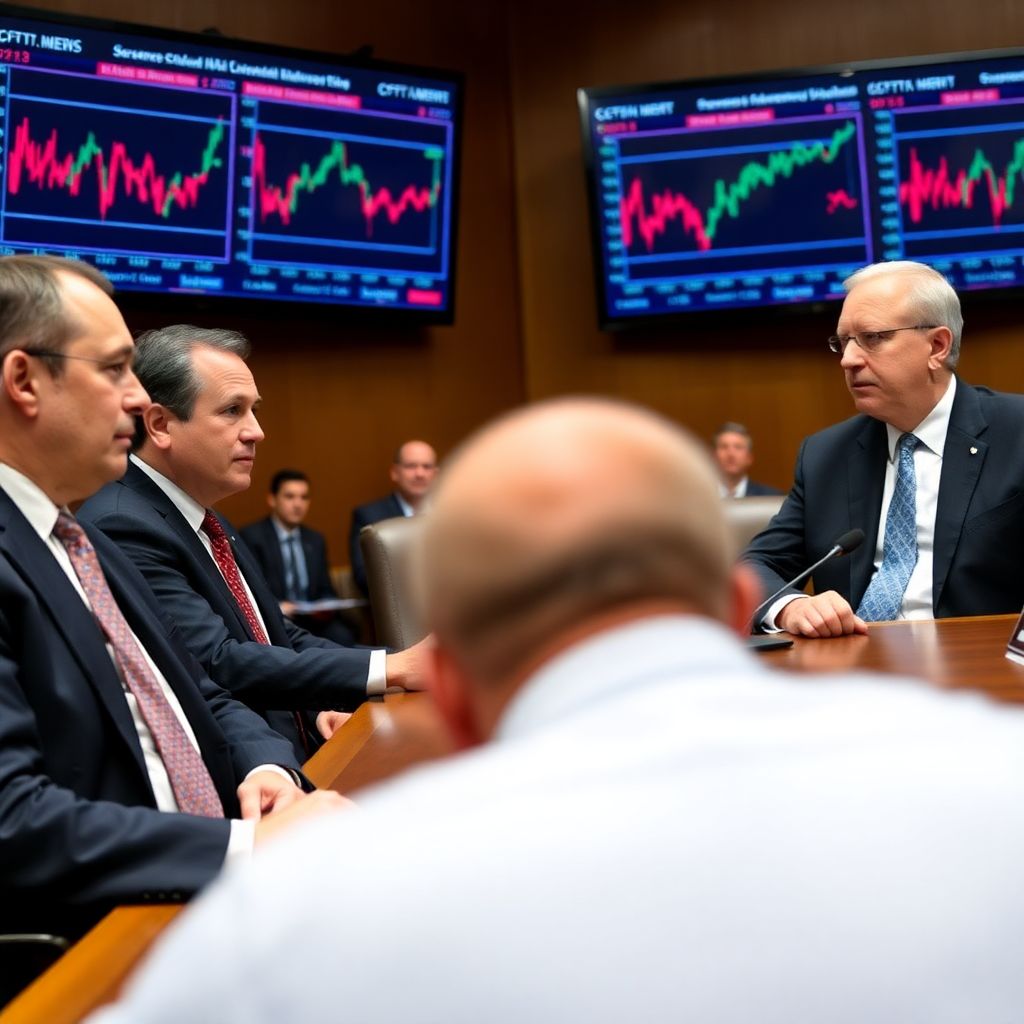
Senators Adam Schiff and John Curtis are pressing the U.S. Commodity Futures Trading Commission (CFTC) for clear answers after allegations that prediction market platform Polymarket orchestrated a deceptive marketing campaign involving roughly $1.9 million in fake bets.
The concerns stem from a report claiming that Polymarket funded and staged non-genuine trades to make its platform appear more active and attractive to users. According to the report, the goal was to showcase large, eye-catching wagers on political and current-events markets, even though those positions were not placed by real customers risking their own money.
In response, Senators Schiff (D‑CA) and Curtis (R‑UT) sent a formal letter to CFTC Chairman Michael Selig, demanding clarity on what the regulator knows, what it is doing, and whether it can adequately protect retail users from such tactics. The lawmakers posed six specific questions, focusing on both the immediate allegations and the broader regulatory framework around prediction markets and event contracts.
Central to their inquiry is whether the CFTC has already opened, or plans to open, an investigation into Polymarket’s alleged conduct. The senators want to know if the agency is examining whether the reported “fake bets” violated existing derivatives laws, consumer protection norms, or anti‑fraud provisions that the CFTC routinely applies in more traditional commodities and futures markets.
Another key question is whether the CFTC believes it has sufficient statutory authority to police deceptive marketing and promotional practices in the rapidly growing niche of blockchain‑based prediction markets. Schiff and Curtis pressed the Commission to explain whether it views marketing manipulation-such as fabricating trading activity or staging transactions for publicity-as falling within its enforcement remit, or whether such behavior sits in a regulatory gray area.
The senators also challenged the CFTC to assess its own institutional expertise. With prediction markets blending elements of gambling, financial speculation, and consumer-facing apps, they asked whether the CFTC possesses the necessary tools, staff, and technical understanding to apply consumer protections comparable to those enforced by other financial and consumer regulators. Implicit in the question is concern that users of crypto-powered prediction platforms may be left less protected than investors in more traditional financial products.
In their letter, Schiff and Curtis pointed out that the CFTC has, for years, asserted jurisdiction over prediction markets and event-based contracts. The Commission has done so both through enforcement actions against unregistered platforms and through rulemaking that governs how event contracts must be structured when listed on CFTC‑registered venues. In other words, regulators have made clear that they see these markets as falling under their purview-not as unregulated side shows.
That history, the senators argue, heightens the CFTC’s responsibility to address allegations of deceptive practices. If the agency claims regulatory authority over event contracts, they suggest, it should also be prepared to ensure that users are not misled by artificial volume, manufactured “whale” trades, or promotional activity that gives a distorted picture of real market participation.
Beyond the immediate Polymarket issue, the letter signals mounting political pressure around how prediction markets are allowed to operate in the United States. Platforms like Polymarket, which let users buy and sell shares tied to outcomes of elections, policy decisions, and major events, sit at the intersection of finance, gambling, and information markets. That ambiguous position has long made them a flashpoint between innovation advocates and skeptical regulators.
Supporters of prediction markets argue that these platforms can improve the quality of public information by aggregating the collective expectations of thousands of traders. Prices in election or policy markets, they say, often move faster and more accurately than polls or pundits. But critics warn that when real money is at stake, these products look and feel like unregistered derivatives-or even unlicensed gambling-especially when marketed aggressively to retail users who may not fully understand the risks.
The allegations about staged bets go to the heart of this debate. If a platform is presenting fabricated or internally funded trades as genuine market activity, that undermines the claim that its prices reflect a “wisdom of the crowd.” Instead, it suggests a curated illusion of liquidity and interest, carefully crafted for promotional impact. For lawmakers worried about retail protection, that crosses from experimentation into potential fraud.
The senators’ questions also touch on transparency. They want the CFTC to clarify what kind of disclosures, if any, are required from platforms that engage in marketing campaigns involving sponsored or subsidized trades. If a company seeds its own markets with house money, should that be clearly flagged to users? Should regulators demand that platforms distinguish between organic trading volume and volume generated by internal promotion or market‑making programs?
This inquiry comes against a broader backdrop of stepped‑up enforcement in the crypto sector. The CFTC and other U.S. agencies have increasingly targeted crypto exchanges, lending platforms, and token issuers over issues ranging from unregistered derivatives offerings to misleading statements about risk. Prediction markets, many of which operate on public blockchains and cater to a global audience, are now moving closer to the center of that enforcement orbit.
At the same time, the letter highlights a structural question: what kind of regulatory regime is appropriate for event contracts that are not tied to traditional commodities like oil, gold, or interest rates, but instead to elections and real‑world events? The CFTC has historically been cautious about allowing such contracts to list on registered venues, citing concerns about gambling, manipulation, and the integrity of democratic processes. Yet decentralized and offshore platforms have created de facto markets regardless of U.S. policy.
If the CFTC concludes that current law does not clearly cover deceptive advertising and staged trades in these markets, pressure could grow in Congress for new legislation. Lawmakers might seek to explicitly define prediction markets in statute, spell out consumer protection standards, and clarify which agency-if any-should be the primary supervisor. Schiff and Curtis’s letter can be read as testing whether the CFTC is prepared to fill that role or is quietly signaling limitations in its mandate.
The case also raises practical enforcement challenges. Many prediction markets rely on smart contracts and decentralized infrastructure, meaning that trades and payouts occur on public blockchains rather than centralized databases. Even if marketing decisions and promotional budgets are controlled by a company, the underlying markets can be globally accessible and resistant to traditional shutdown mechanisms. Regulators may have to decide whether to focus on the corporate promoters, the interfaces that onboard users, or the on‑chain contracts themselves.
For users of platforms like Polymarket, the outcome of this political and regulatory scrutiny matters directly. If the CFTC determines that staged bets and deceptive marketing occurred in violation of U.S. law, the agency could pursue penalties, impose remedial measures, or restrict the platform’s ability to serve U.S. customers. On the other hand, if it concludes that its authority is limited or that no legal lines were crossed, it could send a signal that such marketing tactics are, for now, largely governed by the platform’s own ethics and public reputation.
The senators’ push for answers thus goes beyond a single company or one news story. It is part of a broader struggle to define how far U.S. oversight should reach into experimental crypto markets that increasingly resemble mainstream financial products but operate under very different norms. Whether the CFTC responds with aggressive enforcement, calls for new legislative powers, or a more measured, wait‑and‑see approach will shape not only Polymarket’s future, but also the trajectory of prediction markets more broadly.
Until the CFTC publicly addresses the questions raised, the Polymarket controversy will continue to serve as a litmus test: can existing derivatives regulators adapt quickly enough to safeguard consumers in a world where markets can be spun up with code and promoted through viral campaigns-or will new rules and new structures be needed to keep pace with the next wave of financial innovation?