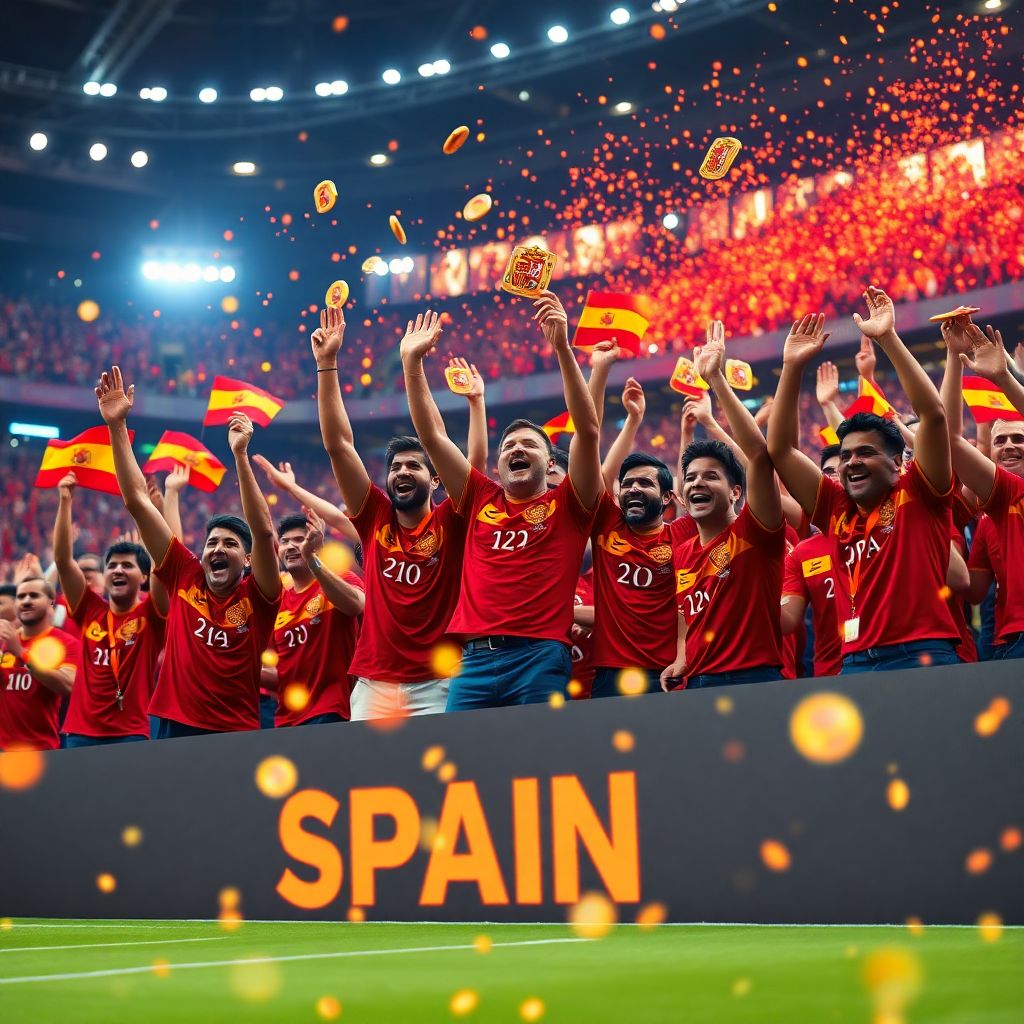
Spain has triggered the largest fan token burn of the 2026 FIFA World Cup so far, after more than 1.16 million SPAIN Fan Tokens were permanently removed from circulation following the national team’s quarter-final victory over Belgium.
Chiliz, the blockchain company behind the fan token ecosystem and the Socios platform, confirmed that Spain’s 2-1 win led to the destruction of exactly 1,161,234 SPAIN Fan Tokens under its ongoing Burn to Glory campaign. As a result, the total supply of SPAIN tokens has fallen to 27.25 million. At the time of the burn, the destroyed tokens were valued at roughly 649,050 dollars, pushing Spain to the top of the World Cup token burn rankings with close to three million SPAIN tokens eliminated overall.
Spain is now the first of Chiliz’s partnered national teams to reach the semi-finals at this World Cup. Under the rules of the Burn to Glory initiative, another win in the upcoming match against France on July 14 would trigger a further reduction in SPAIN’s circulating supply. If Spain advances again, the cumulative burn linked to the team is expected to surpass the three million token milestone, cementing its lead in the campaign.
Burn to Glory connects real-world football performance directly to on-chain token economics. For every qualifying win achieved by a participating national team, a pre-defined portion of that team’s fan tokens is permanently burned, shrinking the overall supply. The more successful the team on the pitch, the more aggressive the deflationary pressure on its associated token. Spain has become the standout beneficiary of this structure during the 2026 tournament, turning a deep run into a series of sizable supply cuts.
Belgium, despite being knocked out by Spain in the quarter-finals, still holds the second spot on the Burn to Glory leaderboard. Chiliz reported that around 870,000 BELG Fan Tokens have already been burned over the course of the World Cup. The team’s elimination did not erase its earlier contribution to the campaign’s total burn volume, illustrating how early-stage success in the competition can leave a lasting mark on token supply even after a team exits.
Argentina has also moved steadily up the rankings after defeating Switzerland to reach the final four. Across the tournament so far, approximately 160,000 ARG Fan Tokens have been destroyed. In recognition of Argentina’s progress to the semi-finals, Chiliz noted that the percentage of ARG tokens earmarked for treasury burns will rise from 5% to 7.5%. That adjustment increases the amount of ARG removed from circulation with each future burn event, adding a stronger deflationary component to the token’s design as long as the team keeps winning.
Portugal took part in the Burn to Glory campaign as well, despite exiting the tournament earlier after a Round of 16 defeat to Spain. Before its elimination, roughly 208,000 POR Fan Tokens had already been permanently burned. That figure reflects how even a shorter appearance in the competition can still lead to meaningful supply reductions when tied to early match wins.
In parallel with the burn mechanics, Chiliz has been expanding the trading environment around fan tokens as global interest in the World Cup and the associated crypto ecosystem has intensified. Crypto exchange LBank has introduced perpetual futures contracts for Argentina (ARG) and Portugal (POR) fan tokens, opening the door to leveraged trading and derivative speculation on fan sentiment and team performance. The exchange has also outlined plans to list futures for several high-profile club tokens, including those linked to Atletico Madrid, Barcelona, Juventus, Paris Saint-Germain, Manchester City, Galatasaray and Arsenal.
Beyond futures listings, Chiliz has rolled out live trader competitions timed to World Cup fixtures through its Vibe Trading and Battle Trade products. These contests allow users to trade in real time while matches are being played, blending sports viewing with active market participation. The aim is to keep engagement high not just when a goal is scored or a match is decided, but throughout the entire game window, translating on-field drama into trading volume.
Outside the World Cup, Chiliz is preparing the next phase of growth for its Socios fan engagement platform. After securing regulatory approval in the United States, the company is working toward the introduction of college sports fan tokens, targeting the 2026 college season for rollout. Bringing college teams into the tokenized fan economy could significantly broaden the user base and test whether the fan token model can extend beyond elite professional and international football into more local, grassroots and student-driven sports ecosystems.
Earlier in the World Cup, the Socios team ran a Token Hunt promotion that allowed users to collect SPAIN and BELG Fan Tokens alongside CHZ rewards. Those early engagement campaigns preceded the latest Burn to Glory milestones and helped seed token distribution ahead of key matches. By allowing users to earn tokens rather than only buy them, Chiliz reinforced the idea of participation and discovery, while still linking token value to later performance-based burns.
Taken together, these initiatives show that Chiliz is trying to build a sustained fan token economy rather than a short-lived trading frenzy tied only to match-day news. The burn events create a predictable, rule-based mechanism for reducing supply, while derivatives listings, trading products and promotional campaigns are designed to foster ongoing participation between games and beyond a single tournament cycle.
From a tokenomics perspective, Burn to Glory introduces a hybrid of gameified deflation and sports betting-style incentives. Fans who accumulate tokens for a successful team could benefit from a shrinking supply if demand holds or grows, while those backing an underperforming team may see fewer burns and a more static supply. However, the campaign also underscores the speculative nature of fan tokens: their value can be influenced simultaneously by athletic performance, broader crypto market conditions, and sentiment about the underlying club or national team.
For national associations and clubs, these mechanisms offer a new revenue and engagement channel. Token burns associated with victories can be used in marketing as a digital “trophy” of success, reinforcing the emotional connection between fans and teams. At the same time, structured burns and treasury allocations give issuers levers to adjust scarcity and potentially support long-term token health, provided they maintain transparency and predictable rules.
For fans, the model creates a layered experience: tokens double as digital collectibles, voting chips for club decisions, access keys for rewards and experiences, and speculative assets influenced by how their team performs. Spain’s run to the semi-finals and its record-breaking token burn exemplify how major tournaments can concentrate this dynamic, with each knockout win amplifying both emotional stakes and on-chain consequences.
The rapid expansion into futures markets and trader competitions also signals that fan tokens are drifting closer to the broader world of crypto finance. As more financial products emerge around these assets, the line between fandom and trading can blur. This raises questions about responsible design, user education and regulatory oversight, particularly as new regions such as the United States and new segments like college sports come online.
Nevertheless, the 2026 World Cup has become a live test case for tying digital asset mechanics directly to real-time sporting outcomes at global scale. Spain’s dominance on the Burn to Glory leaderboard, Belgium’s enduring impact despite elimination, and Argentina’s treasury burn adjustment all illustrate how teams’ journeys through a tournament can leave a permanent imprint on token supplies. As the competition moves into its decisive stages, each match is no longer just a step toward the trophy, but also a trigger point in a growing, experiment-driven tokenized sports economy.