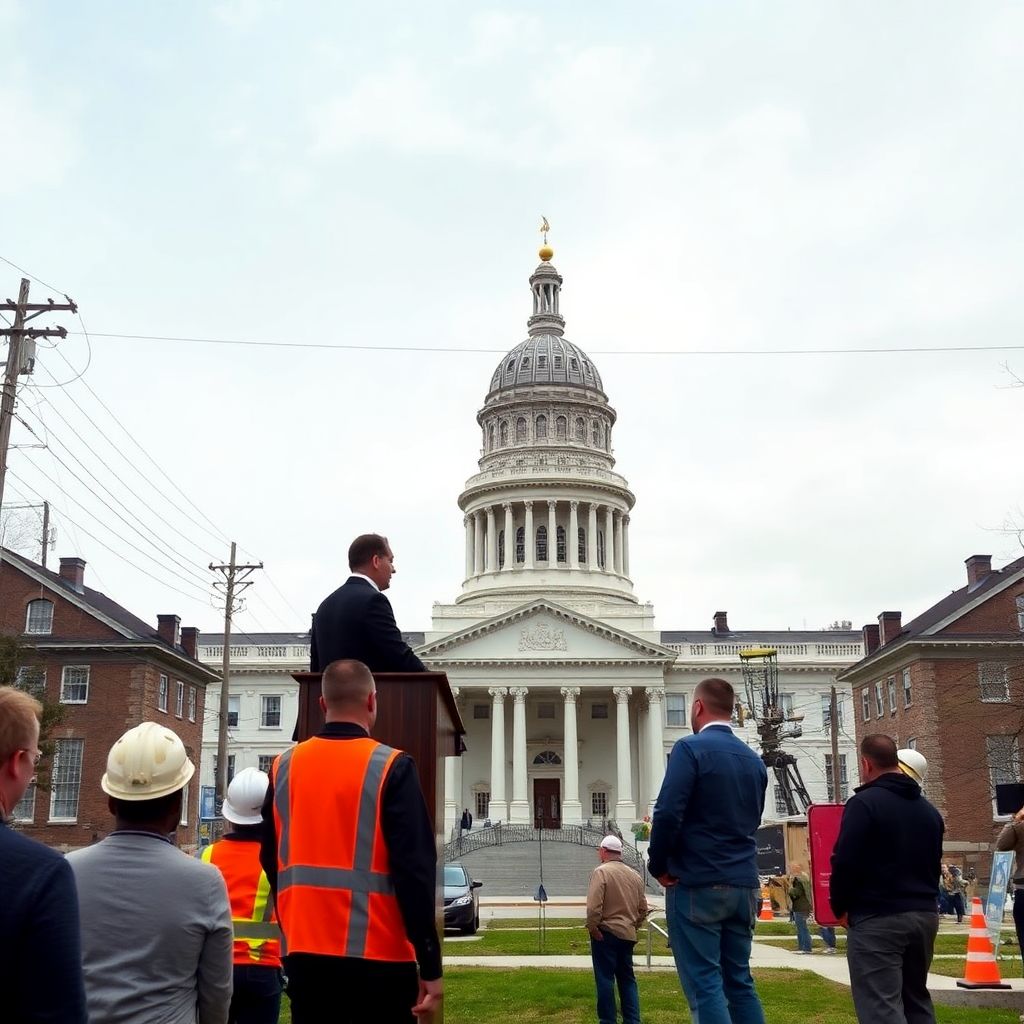
Pennsylvania tightens rules for AI data centers, linking incentives to tougher power, jobs, and community standards
Pennsylvania is rolling out one of the most demanding state-level frameworks in the US for AI data center development, making public support conditional on stricter energy, labor, and local oversight requirements.
Governor Josh Shapiro has introduced the Responsible Infrastructure Development Standards, known as the GRID Standards, to govern large data center projects that seek state-backed benefits. Under the new framework, developers cannot access key incentives unless they first earn a formal certification from the state.
According to government affairs firm Duane Morris Government Strategies, the GRID Standards set the terms for receiving accelerated permitting, sales tax advantages, and potential access to other state tax programs. The move comes as communities across Pennsylvania raise concerns about rising electricity demand, heavy water usage, and the cost of upgrading infrastructure to serve hyperscale and AI-focused facilities.
Certification as the gateway to incentives
Developers must now clear a certification process managed by two state offices before they qualify for any state-level support. Only certified data center projects will be eligible for Pennsylvania’s Permit Fast Track Program, which is designed to shorten permitting timelines. Certified projects can also obtain sales tax exemptions on computer and related equipment and may gain access to select, yet-to-be-specified tax incentives.
Crucially, certification is not a blanket approval to build or operate. Instead, it functions as a conditional status. Before a facility begins operations, the developer must submit detailed compliance reports demonstrating adherence to the GRID Standards. Once operational, the project must file annual reports confirming continued compliance and progress toward jobs, investment, and community commitments.
Duane Morris Government Strategies has described the framework as one of the most complex and detailed state-level regulatory structures for data centers to date, noting that it explicitly ties economic support to enhanced regulatory and community oversight.
State officials have also signaled that they want the legislature to move beyond executive action and formally write the GRID Standards into state law. Another goal is to ensure that Pennsylvania’s data center equipment tax exemption is no longer automatic but directly linked to GRID certification.
Developers must pay the full cost of their power
One of the most stringent elements of the GRID Standards is the requirement that data center developers shoulder the entire cost of new power generation needed for their facilities. This rule is intended to prevent shifting the financial burden of new capacity onto existing utility customers through higher rates.
Any additional power required by a certified data center must come from new or incremental generation resources, not from simply tapping existing capacity. These resources must be located within the same PJM Locational Deliverability Area (LDA) as the project, ensuring that grid reliability and regional capacity planning are handled locally rather than outsourced across distant territories.
By locking new generation to the same PJM LDA, the framework aims to limit stress on the wider grid and reduce the risk that already-strained networks support large, power-hungry AI facilities at the expense of residential or small business consumers.
Built-in expectations for future renewable energy
The standards also embed long-term energy planning into the earliest stages of data center design. Any facility larger than 100,000 square feet must be engineered to support future solar installations. That does not necessarily require immediate solar deployment on day one, but it forces developers to account for structural, electrical, and siting needs that would allow solar power to be added efficiently later.
This design requirement reflects Pennsylvania’s attempt to nudge high-energy users like AI data centers toward cleaner power sources over time, while avoiding the delays and costs associated with retrofitting buildings that were never designed to integrate renewables.
Transparency and community engagement now mandatory
The GRID framework places heavy emphasis on public transparency and local engagement. Developers must identify the ultimate end users of the data center-such as cloud, AI, or enterprise clients-rather than hiding behind shell entities or generalized descriptions of “technology tenants.”
Developers are also required to hold public meetings before finalizing major design decisions. These sessions must take place early enough in the process that community feedback can realistically shape project plans, not simply validate decisions already made.
During those meetings, developers must disclose key information, including:
– Project size and scale
– Expected water consumption
– Planned efficiency targets and performance metrics
Local governments must be consulted at the outset, before any final site or design approvals are sought. The framework aims to ensure that municipal leaders and residents are not blindsided by large projects and that local infrastructure, zoning, and land-use considerations are fully factored in.
High thresholds for investment and jobs
To qualify under the GRID Standards, data center projects must meet strict economic thresholds. Developers must commit at least 250 million dollars in capital investment. On top of that, projects must generate a minimum of 200 construction jobs during the build-out phase.
Within four years of operation, each certified facility must create at least 50 permanent positions. These jobs cannot be low-wage roles: the standards require that they pay at least 125% of Pennsylvania’s average wage, effectively pushing employers toward higher-quality, better-compensated work in operations, maintenance, and technical support.
Developers must submit detailed hiring plans that spell out how local residents can access training, apprenticeships, and construction opportunities. This is designed to ensure that data center development is tied to workforce development rather than relying primarily on out-of-state labor or transient contractors.
Separate legislative proposals target water, power, and secrecy
Beyond the GRID Standards, Pennsylvania legislators are moving their own data center bills that could reshape the sector even further.
Senator Tracy Pennycuick has introduced a proposal aimed at large facilities that would require them to secure their own power and comply with strict water consumption limits. Her bill would establish a Pennsylvania Data Center Advisory Committee to provide ongoing guidance and review of the sector.
Pennycuick’s proposal would also forbid state and local governments from entering into nondisclosure agreements with data center developers. That prohibition is meant to prevent secretive negotiations that leave communities unaware of project terms, public subsidies, or environmental impacts until it is too late to intervene.
In parallel, Senator Jarrett Coleman and Representative Jamie Walsh have put forward another bill that would repeal the existing tax exemption on data center equipment. Their proposal would allow municipalities to temporarily pause new data center applications so they can update zoning regulations and land-use rules to handle the unique challenges posed by these projects.
State officials have warned that, if left unchanged, Pennsylvania’s current equipment tax exemption could cost more than 517 million dollars per year by the 2030-31 fiscal year. They want that benefit tied explicitly to GRID certification, making generous tax breaks conditional on compliance with the new standards.
Why Pennsylvania is tightening the screws on AI data centers
The rapid expansion of AI and cloud computing has turned data centers into some of the most power-hungry and resource-intensive industrial facilities in the economy. Modern AI training clusters can consume enormous amounts of electricity and require significant cooling, often relying heavily on water.
Pennsylvania’s new standards reflect a broader unease among residents and local officials about whether the benefits of AI infrastructure-jobs, investment, technological prestige-are enough to justify the strain on power grids, water systems, and local budgets. By demanding that developers pay for their own generation, disclose water use, and invest in well-paid local jobs, the state is trying to rebalance the equation in favor of communities.
The grid-focused requirements also anticipate the possibility that AI demand will grow faster than utilities can comfortably expand capacity. Mandating new or incremental generation in the same PJM LDA is a way to avoid a scenario where existing ratepayers are subsidizing energy-intensive facilities that primarily serve global cloud and AI markets.
Implications for developers and AI companies
For developers and AI firms, Pennsylvania’s framework raises both risks and opportunities. On one hand, the cost of compliance-from funding dedicated generation to meeting wage and job targets-will likely increase upfront capital requirements. Projects structured purely around maximizing tax breaks and cheap power without local engagement may struggle to gain certification.
On the other hand, the GRID Standards create a clearer, more predictable pathway for projects that are willing to align with state priorities. Fast-track permitting, tax exemptions for equipment, and potential access to additional incentives could offset some of the higher compliance costs. For companies looking to build politically durable AI infrastructure that can withstand community pushback and regulatory scrutiny, Pennsylvania’s model may become a template.
How communities may leverage the new framework
Municipalities and county governments gain new leverage under the GRID Standards and the proposed legislation. Early consultation requirements give local officials a formal seat at the table before designs are finalized. Public meetings and disclosure rules provide residents with information they can use to advocate for stricter environmental protections, traffic mitigation, or community benefits.
If the Coleman-Walsh bill passes, temporary pauses on data center permits would offer towns breathing room to revise zoning codes-whether to steer projects to specific industrial zones, add buffer requirements, or set limits on noise and light pollution. Combined with the push to end nondisclosure agreements, local leaders would have more tools to manage growth on their own terms.
A competitive test for other states
Pennsylvania’s move also represents a competitive test within the broader US race to attract AI data center investments. Some states have taken a lighter-touch approach, offering broad tax incentives with relatively few strings attached. Pennsylvania is instead attempting a middle path: still welcoming large projects, but only under clear, enforceable conditions.
If the GRID Standards succeed-by delivering significant investment, high-quality jobs, and limited negative impact on ratepayers and the environment-other states may emulate the model or adopt similar certification-based schemes. If, however, developers choose to build in more permissive jurisdictions instead, Pennsylvania could be seen as having overplayed its hand.
The next phase: from executive framework to law
For now, the GRID Standards function as an executive policy framework, but the Shapiro administration’s push to have the legislature codify them will determine their long-term stability. Once written into law, the standards would be harder to roll back and would give developers greater certainty about the rules that will govern their projects over multi-decade lifespans.
At the same time, the outcome of the separate legislative proposals on water limits, tax exemptions, and nondisclosure agreements will shape how strict Pennsylvania ultimately becomes. Together, these initiatives signal that the state is no longer content to treat AI data centers as just another form of commercial real estate. Instead, it is defining them as critical infrastructure that must meet higher standards on energy, transparency, and community benefit.