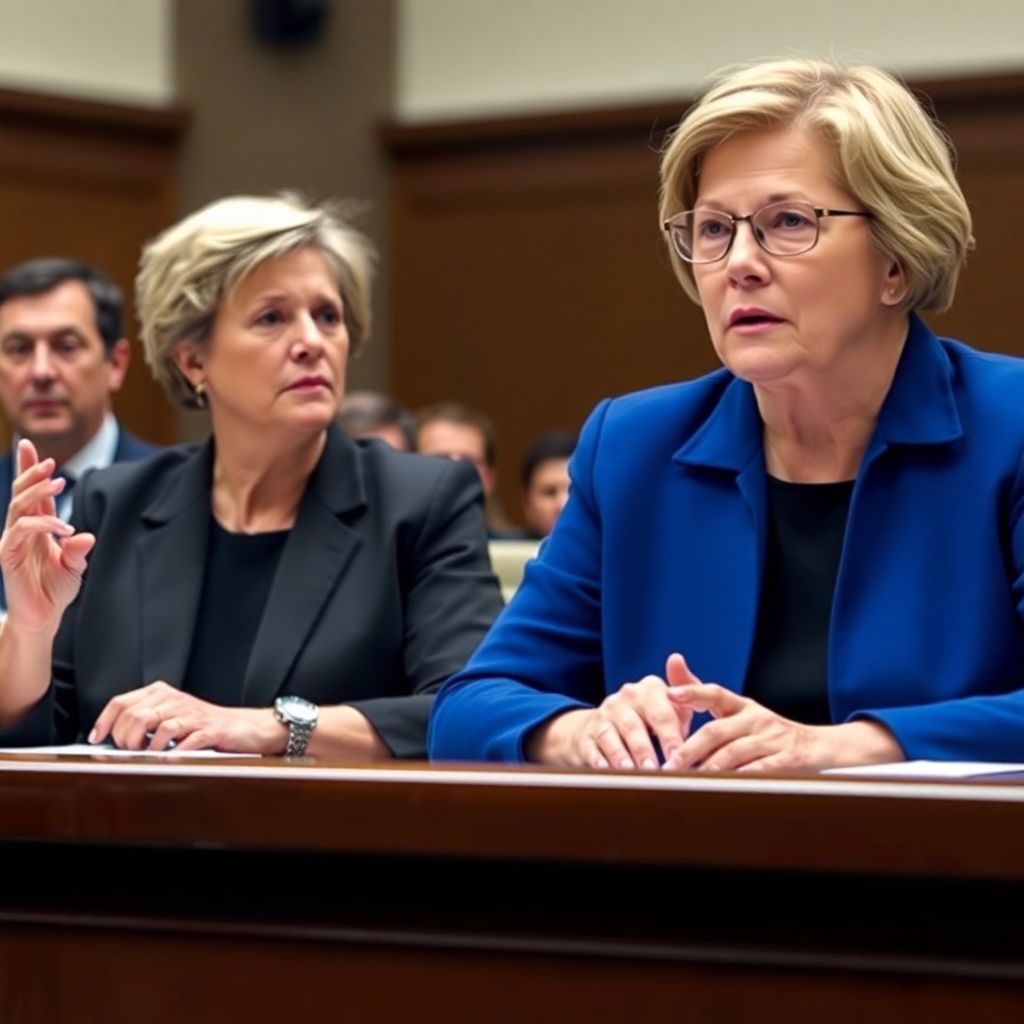
Elizabeth Warren Says Elon Musk’s X Money Could Undermine U.S. Financial Stability
Senator Elizabeth Warren is escalating her campaign against Elon Musk’s expanding financial ambitions, warning that his new payment platform, X Money, could pose a serious threat to consumers and to the broader U.S. financial system.
In a letter sent Tuesday to Musk, the Massachusetts Democrat raised alarms about the upcoming April launch of X Money, a payments and financial services arm being built into X, the social platform formerly known as Twitter. She argued that Musk’s past behavior running X suggests he cannot be trusted with a product that could one day sit at the heart of everyday financial life.
“If your track record operating X is any indication of how you’ll operate X Money,” Warren wrote, “consumers, our national security, and the stability of the financial system may be at risk.”
From Social Network to “Everything App”
Since acquiring Twitter and rebranding it as X, Musk has repeatedly described his goal of turning the platform into an “everything app” that goes far beyond social networking. As Warren noted in her letter, Musk has said he wants X to manage users’ “entire financial world.”
He has floated ambitions for X to “become the biggest financial institution in the world,” potentially rendering traditional bank accounts unnecessary. X Money, which is expected to roll out payment and wallet-like features, is widely seen as the core of that strategy.
For Warren, those aspirations are not just bold-they’re dangerous. Folding banking-like functions into a social media company led by a single, highly controversial billionaire raises, in her view, a tangle of regulatory and systemic risk issues that existing rules may not yet fully address.
Consumer Protection Gaps at the Center of Warren’s Critique
At the heart of Warren’s warning is a familiar concern: the protection of ordinary users. She argues that X Money could expose millions of people to financial loss, fraud, data misuse, and discrimination if Musk is allowed to roll it out without rigorous oversight.
Warren pointed to X’s history under Musk, including abrupt policy changes, mass layoffs affecting safety and compliance teams, and widely reported spikes in misinformation and impersonation after the platform’s verification overhaul. Those same management habits, she suggests, would be catastrophic if applied to payments and deposits rather than just tweets.
A platform that combines social identity, personal data, and financial transactions in one place, she argues, must meet a much higher bar for security, transparency, and accountability than a typical tech product. Warren questions whether X Money’s safeguards, complaint mechanisms, and dispute-resolution systems will be anywhere near as robust as those required for banks, credit unions, or regulated payment networks.
A Shadow Banking System in the Making?
Warren’s concerns go beyond individual consumers to the architecture of the financial system itself. If Musk succeeds in turning X into a dominant financial hub, the platform could begin to resemble a “shadow bank”-offering bank-like services without being fully bound by bank-like regulations.
Because Musk has openly talked about eliminating the need for traditional bank accounts, Warren fears that large volumes of payments, balances, and lending-like services could migrate into a digital ecosystem that may not be subject to the same capital, liquidity, and risk-management rules as established financial institutions.
Should a platform like X Money grow large enough, a sudden outage, cyberattack, or loss of user trust could, in theory, trigger a chain reaction-locking users out of funds and impairing the ability of households and businesses to transact. That, Warren warns, is where the “stability of the financial system” comes into play.
Weakening Federal Oversight as Fintech Grows
Warren is also sounding this alarm at a moment when parts of the federal regulatory apparatus are under sustained political and legal pressure. She has repeatedly argued that enforcement budgets have not kept pace with the rapid expansion of high-tech financial products, from crypto to app-based lending to embedded payments in social platforms.
The Senator frames X Money as arriving in a context of “weakened federal oversight,” in which agencies charged with supervising consumer finance and systemic risk are battling court challenges, constrained resources, and aggressive industry lobbying. In that environment, a fast-moving tech billionaire entering payments with a global social network attached could quickly outrun traditional regulators.
For Warren, allowing X Money to scale rapidly before regulators have fully mapped its risks and jurisdictional boundaries would be repeating the same mistakes that preceded past financial crises-only this time inside an app instead of on Wall Street.
National Security and Data Risks
Warren’s letter also ties X Money to national security, another area where she believes Musk’s stewardship has been inadequate. Financial transaction data can reveal an extraordinary amount about individuals, businesses, and even government activities: spending patterns, political donations, cross-border transfers, and more.
Concentrating that data under the control of one company-especially one that already hosts political discourse, news distribution, and sensitive communications-creates a high-value target for hackers and foreign adversaries. Any compromise of X’s systems, or any opaque data-sharing practices, could have implications well beyond consumer privacy.
Warren argues that Musk’s previous decisions on content moderation, deplatforming, and data access show a willingness to act unilaterally, sometimes impulsively, in ways that can reverberate globally. Granting him comparable discretion over payment flows and user balances, she suggests, would tie financial security to the whims of a single figure.
Can Existing Rules Really Cover an “Everything App”?
Technically, any payment platform operating in the United States must obtain licenses, comply with anti-money laundering rules, and follow a raft of state and federal regulations. X has already sought money transmitter licenses in multiple jurisdictions.
But Warren questions whether this patchwork of rules is sufficient for a platform explicitly aiming to replace bank accounts and integrate social, financial, and possibly crypto functions in one interface.
Traditional banking regulations were written for institutions that look very different from X: they don’t control global social networks, they’re subject to periodic examinations by bank supervisors, and they carry explicit obligations to manage risk, maintain capital buffers, and protect deposits up to a certain limit.
By contrast, a tech-driven wallet or super-app can scale almost overnight, crossing state and national borders digitally. Warren’s fear is that X Money could grow into a systemically important player long before regulators recognize and address its unique risk profile.
The Musk Factor: Innovation vs. Impulse
Warren’s criticism also zeroes in on Musk personally. His supporters see him as a visionary innovator, capable of transforming entrenched industries such as autos and space flight. His critics view him as erratic, combative, and prone to disregarding norms and rules he finds inconvenient.
In her letter, Warren implicitly takes the second view. By invoking Musk’s “track record operating X,” she highlights his habit of rolling out major product changes quickly, sometimes reversing them just as fast in response to backlash or operational failures.
In the world of finance, such volatility can be dangerous. A rushed update or a poorly designed feature isn’t just an annoyance; it could lock users out of accounts, misroute funds, or create exploitable security gaps. For Warren, Musk’s management style might be tolerable in a social media environment, but it becomes intolerable when real money, savings, and livelihoods are on the line.
What X Money Might Actually Offer
While full technical details remain under wraps, public statements and filings suggest X Money is likely to begin as a digital payments layer within the X app. That could mean:
– Peer-to-peer transfers between users
– Merchant payments and tipping functions
– Stored balances or wallet-like functionality
– Integration with existing bank accounts or cards, with the long-term aim of making them optional
There has also been intense speculation about how crypto might fit into X Money, given X’s large crypto-savvy user base and Musk’s long-standing interest in digital assets. Even without a native cryptocurrency product at launch, the mere possibility of mixing social feeds, retail investors, and trading-like functionality is enough to concern regulators focused on speculative bubbles and consumer harm.
Every one of these features, if mishandled, introduces layers of risk: from fraud and phishing schemes amplified by social networks, to fake accounts receiving payments, to confusion over who is responsible when transfers go wrong.
Why Warren Is Targeting Fintech Now
Warren has built a political identity around policing the intersection of finance and technology. She has criticized large banks, pressed for stronger oversight of crypto markets, and pushed for tougher rules on buy-now-pay-later, payday lending, and app-based financial products.
Her focus on X Money fits into a broader argument: that fintech should not be allowed to dress old financial risks in slick new user interfaces and escape the rules designed to keep the system safe. In her view, the lesson from past crises is clear-when finance migrates into lightly regulated corners of the economy, trouble follows.
By going after Musk and X Money early, before the product has fully launched, Warren is trying to shape the regulatory narrative proactively, rather than waiting for a high-profile failure or scandal.
What Could Happen Next
Warren’s letter ramps up pressure on both Musk and regulators. Several possible outcomes could follow:
– Regulatory scrutiny intensifies. Federal and state agencies may accelerate investigations into X’s licensing, compliance systems, and governance structures around X Money.
– New guidance for “super-apps.” Policymakers could begin crafting specific rules or clarifications for platforms that combine social media and financial services.
– Congressional hearings. Lawmakers might call Musk or regulators to testify about X Money, consumer protections, and systemic risk, especially if the platform’s rollout is rapid.
– Changes to X Money’s roadmap. Anticipating political and regulatory pushback, Musk could narrow, delay, or rebrand certain features to reduce perceived risk.
None of this guarantees that X Money will be blocked or that it will inevitably cause harm. But Warren’s intervention ensures that its launch will unfold under a brighter, more skeptical spotlight.
The Broader Question: Who Should Control the Future of Money?
Underlying this clash is a deeper question about who gets to build the infrastructure of tomorrow’s financial system. Should it be heavily regulated banks and payment networks? Tech giants with billions of users? Or some hybrid model, strictly overseen by public authorities?
Musk’s vision of X as the place where users keep, move, and manage their money challenges longstanding assumptions about how finance should be organized. Warren’s warning is a reminder that, while innovation can bring convenience and inclusion, it can also introduce new forms of concentration and new paths for contagion.
As X Money moves closer to launch, the central debate will not just be about app features or user experience, but about the balance between innovation, profit, consumer protection, and systemic stability-and about whether one company and one CEO should be allowed to sit at the crossroads of social interaction and financial power.