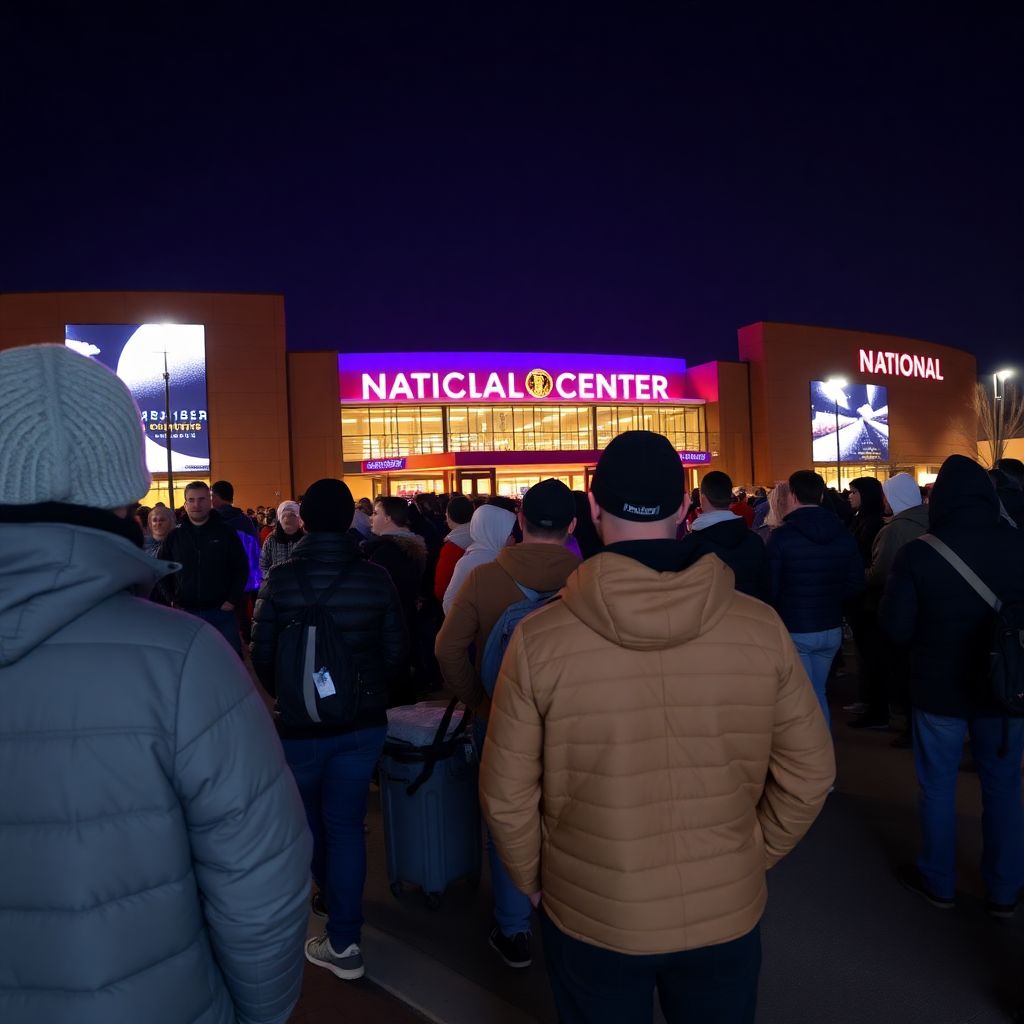
ETH Denver 2026 kicked off in Denver with a distinctly optimistic, builder-first atmosphere, even as crypto markets continue to sag and headlines emphasize a prolonged downturn.
Attendees began lining up outside the new home of the conference, the National Western Center, well before doors opened, braving the cold Colorado morning to secure early access. The shift to this larger, more versatile venue underscores how much the event has grown from its roots as a scrappy community hackathon into a full-scale ecosystem gathering-without, organizers insist, losing its original ethos.
For founder John Paller, opening day is not the start of something, but the culmination of a year-long sprint. He described the kickoff as a “crescendo,” explaining that planning for 2026 effectively began as soon as the previous ETH Denver wrapped. The result: a tightly curated lineup of builders, developers, researchers, and founders who see the event less as a party and more as an opportunity to ship, test, and collaborate.
The broader market backdrop is anything but euphoric. Crypto prices are well off previous highs, trading volumes are thinner, and external observers are once again asking whether the industry is losing steam. Yet inside the National Western Center, the tone is strikingly different. Conversations revolve around scaling solutions, zero-knowledge tooling, account abstraction, new forms of on-chain identity, and practical applications of Ethereum infrastructure-not the latest meme coin or speculative narrative.
Paller argues that this contrast is not a bug, but a feature. Historically, he said, ETH Denver has “benefited from bear markets.” In quieter times, sponsors tend to trim broader marketing experiments and concentrate their limited budgets on a small number of high-signal events where real builders gather. That dynamic, he suggested, has helped the conference maintain a strong roster of partners and speakers even as prices slide.
At the same time, Paller is realistic about the numbers. Attendance, he conceded, is tracking below the peak years of frothy bull-market enthusiasm, when lines snaked around entire blocks and the event felt close to bursting. Instead of the roughly 25,000 people ETH Denver has drawn at the height of previous cycles, organizers now expect closer to the low tens of thousands-still a large turnout, but one that feels more manageable and focused. Rather than reading this as a sign of weakness, Paller frames it as a healthy recalibration: fewer tourists, more builders.
That shift is palpable on the ground. Instead of waves of first-time, speculative visitors hoping to catch the next token launch, the crowd skews more technical and more experienced. Many participants have weathered multiple market cycles and now approach Ethereum less as a quick-profit opportunity and more as a long-term infrastructure layer to build on. Workshops are packed with developers taking notes, laptops open, rather than passersby collecting swag.
Sponsors are mirroring this more sober mood. Rather than giant, flashy booths promising overnight yields, many companies are promoting developer tooling, security audits, infrastructure services, and compliance solutions. Teams demo new SDKs, rollup frameworks, and data availability layers. The emphasis is on usability, robustness, and long-term reliability-an implicit acknowledgment that the industry’s survival depends on shipping products that work, not just tokens that moon.
The choice of the National Western Center also reflects where ETH Denver finds itself in 2026. The complex, traditionally associated with agricultural and livestock events, now plays host to a different sort of experimentation: open-source financial infrastructure, decentralized governance experiments, and new forms of digital ownership. The juxtaposition of a venue rooted in the “old economy” with a gathering focused on programmable money and Web3 applications highlights the tension-and opportunity-of this stage in crypto’s evolution.
Beyond the main talks and expo floor, the real action, as always at ETH Denver, is in the hackathons and side rooms. Teams huddle over laptops, pushing last-minute commits before project submissions. Mentors circulate to help debug contracts, refine tokenomics, and pressure-test governance designs. For many hackers, prize money is secondary to the chance to connect with potential co-founders, get feedback from seasoned engineers, or catch the eye of an early-stage investor.
The bear market is also reshaping the kinds of projects that gain attention. During boom years, the loudest pitches often revolve around yield farming, aggressive token incentives, or quick-turnaround DeFi primitives. Now, judges and mentors gravitate toward infrastructure that improves privacy, security, scalability, and user experience. Projects focused on real-world assets, on-chain credit, proof-of-reserve systems, and non-speculative gaming economies are drawing interest from both developers and investors.
A noticeable theme at this year’s event is resilience. Many attendees openly acknowledge the pain of the last cycle: liquidations, regulatory uncertainty, shattered valuations, and an exodus of opportunistic capital. Yet instead of denial, the mood is pragmatic. Builders talk about reducing dependency on mercenary liquidity, designing protocols with sustainable fee models, and preparing for stricter regulatory oversight. The bear market, in this framing, becomes less a disaster and more a forcing function that flushes out weak ideas and rewards teams with genuine conviction.
Education has become another critical pillar of ETH Denver 2026. Tracks dedicated to onboarding new developers, teaching secure smart contract patterns, and explaining the intricacies of rollups and modular architectures are full. Organizers are betting that the next wave of Ethereum adoption will depend on making advanced concepts accessible: from how to properly use multi-sig wallets and hardware security, to how to structure DAOs that can survive beyond their initial hype.
For those building products aimed at end users, the current conditions are both challenging and clarifying. Consumer-facing apps no longer enjoy the tailwind of easy speculation to attract users. Teams at ETH Denver are talking about everything from gasless transactions and seamless wallet creation to human-readable naming systems and simplified onboarding flows that hide blockchain complexity. The goal: make it possible for millions of people to use Ethereum-powered tools without even realizing they are interacting with a blockchain.
On the investment side, the slump has thinned the field but not emptied it. Venture firms and ecosystem funds are still present-just far more selective. Rather than asking how quickly a token can list on an exchange, investors at ETH Denver are pressing founders on runway, business models, defensibility, and compliance. Founders, in turn, seem more prepared to discuss sustainable paths to revenue and long-term governance, indicating that the easy-money era of “raise on a deck and a token idea” is fading.
Regulation, while not the central topic of the event, forms a constant backdrop to hallway discussions. Builders are weighing jurisdictional choices, KYC/AML requirements, securities law risk, and the implications of on-chain identity standards. Some teams are leaning into full compliance and institutional-grade structures; others are doubling down on censorship resistance and building tools that preserve user privacy in a world of increasing surveillance.
Amid all this, Paller’s core message is that ETH Denver is built for precisely this type of environment. When speculative froth recedes, he argues, the people left standing are those who genuinely care about what Ethereum can enable: open financial rails, permissionless innovation, and programmable coordination at internet scale. For them, the conference is less a festival and more an annual checkpoint-a place to measure progress, refine priorities, and set the agenda for the next 12 months of building.
If previous cycles are any indication, much of the infrastructure and many of the protocols that define the next bull market will quietly emerge from gatherings like this one, forged in the relative calm of a downturn. ETH Denver 2026, with its smaller but more focused crowd and its emphasis on shipping over speculation, is positioning itself as one of the crucibles where that next chapter is being written.