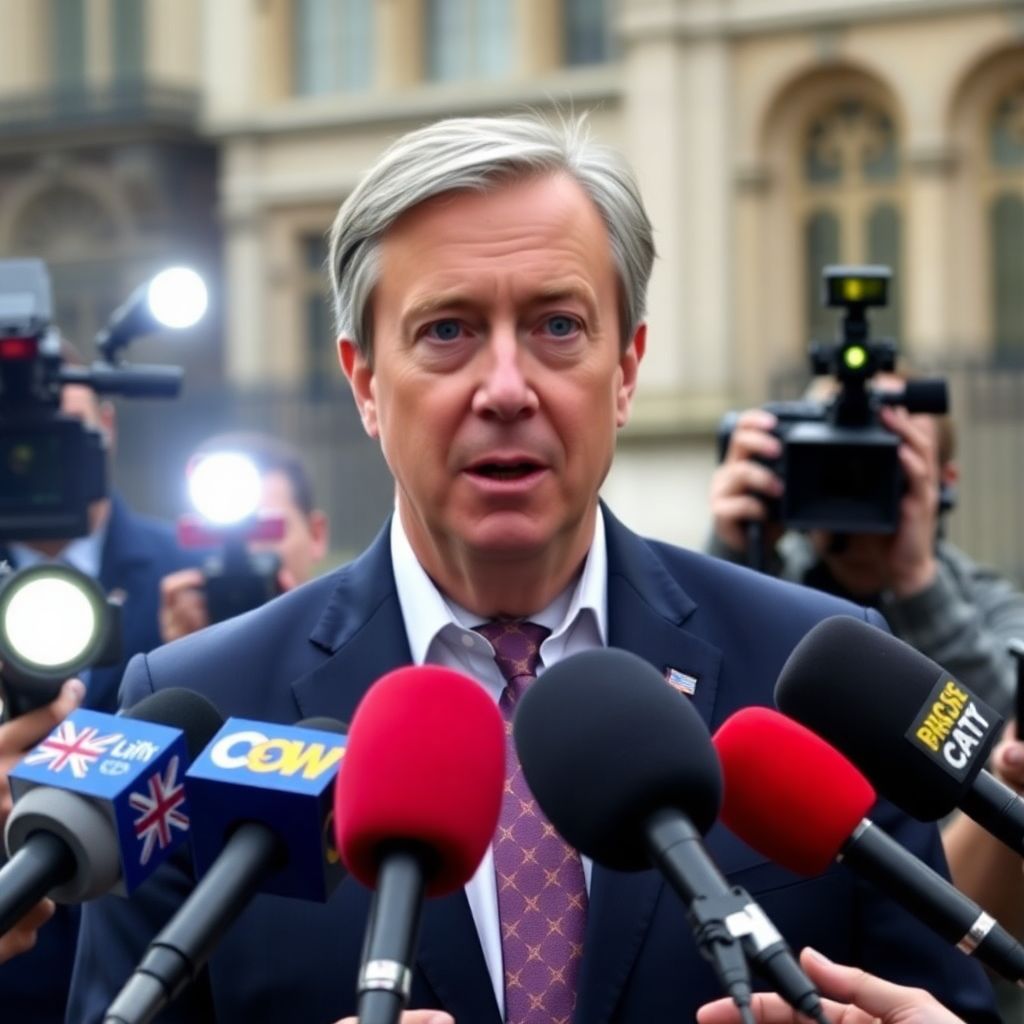
Nigel Farage has quit his seat in Parliament and will fight a by‑election, as UK authorities intensify investigations into lavish gifts he received from donors tied to the cryptocurrency industry.
The Reform UK leader confirmed during a livestream on X that he has resigned as MP for Clacton, saying the move is intended to give local voters the final say on whether he should continue to represent them while parliamentary inquiries into his finances are ongoing. Farage framed the decision as a matter of democratic accountability, arguing that constituents – not his political opponents – should be the ones to pass judgment on his conduct.
Farage stressed that he believes he has acted properly, declaring that he has “done nothing wrong” and insisting he has broken no laws and misused no public money. However, he acknowledged that the UK parliamentary standards commissioner is examining two separate issues linked to substantial gifts from two controversial figures in the crypto space: billionaire Christopher Harborne and George Cottrell, who previously served a prison sentence following a fraud conviction and has been associated with a crypto casino.
According to Farage, the funds from Harborne and Cottrell were “unconditional gifts,” not payments in exchange for political favors. He stated that a significant portion of Harborne’s money was earmarked to cover his personal security, pointing to threats and physical attacks he claims to have faced in recent years. By forcing a by‑election, he said, the people of Clacton will be able to decide whether they accept his explanation, rather than allowing the narrative to be controlled by hostile parties in Westminster.
During the broadcast, Farage accused what he called the “political establishment” of using “foul means” to try to damage him. He argued that the investigations into his financial declarations had become so politically charged that only a fresh mandate from his constituents would resolve questions about his legitimacy. The choice to resign and immediately seek re‑election, he suggested, was a way to confront the controversy head‑on rather than wait passively for the outcome of prolonged inquiries.
The storm around Farage intensified after media outlets reported that he had personally received gifts and donations worth many millions of dollars from Harborne and Cottrell. Earlier reports from May indicated that Harborne alone had provided a gift worth roughly 6.7 million dollars. Farage has described that transfer as a personal reward for his high‑profile role in campaigning for Brexit, claiming it was recognition for his efforts in the 2016 referendum that led to the UK leaving the European Union.
The precise timing of the Clacton by‑election is still unclear. Under parliamentary procedure, several formal steps must take place before the contest can be scheduled, and insiders expect the process could run for weeks or even several months. Farage captured the Clacton seat in the July 2024 general election with 46.2% of the vote, beating both Conservative and Labour challengers. His decision to vacate a relatively recently won seat underscores the political risk he is willing to take amid the growing scandal.
Long before the current inquiries, Farage had cultivated connections within the digital asset world. He has appeared as a speaker at major industry events, including the Bitcoin 2025 conference in Las Vegas, and has publicly disclosed that he is an investor in Stack, a London‑listed company focused on holding Bitcoin as a treasury asset. These links have prompted questions about whether his political positions on regulation and innovation might intersect with the financial interests of his crypto‑backing donors.
The investigations into Farage’s finances form part of a broader reassessment of how money from the crypto sector is flowing into politics. In the UK, regulators and watchdogs are increasingly concerned about the transparency of donations tied to digital assets, particularly when funds are routed through offshore entities or opaque corporate structures. Crypto‑linked wealth, often realized quickly during market booms, poses fresh challenges for existing political finance rules that were built around more traditional sources of campaign cash.
On the other side of the Atlantic, similar anxieties are emerging. In the run‑up to the November 2026 US midterm elections, scrutiny of crypto’s influence on political campaigns has intensified. A June report by a consumer advocacy organization estimated that crypto companies and key figures in the industry had collectively poured around 189 million dollars into the 2026 election cycle. Most of that money, the report suggested, has gone to candidates perceived as sympathetic to looser regulation of digital assets or more favorable tax treatment for the sector.
The convergence of big money, volatile markets, and fragmented regulation has fueled fears that digital asset fortunes could distort democratic processes. Unlike traditional donors, crypto‑rich backers can accumulate huge sums in relatively short periods, then rapidly deploy those funds to shape policy debates on everything from securities law to stablecoin oversight. This dynamic is prompting calls for stricter rules on disclosure, caps on donations, and clearer identification of the ultimate source of funds when crypto holdings are converted into political contributions.
In the United States, former President Donald Trump has become another flashpoint in this debate. His 2025 financial disclosures revealed roughly 1.4 billion dollars in income tied to crypto‑related ventures, ranging from token licensing deals to digital asset projects associated with his brand. Critics argue that such extensive involvement deepens concerns about conflicts of interest and the potential for policy to be skewed toward an industry in which powerful politicians have substantial personal stakes.
Taken together, these developments highlight a new phase in the relationship between politics and money. For decades, regulators focused on banks, corporations, unions, and wealthy individuals funding campaigns through conventional channels. The rise of crypto wealth has added an extra layer of complexity, as funds can move across borders quickly and sometimes opaquely, challenging existing transparency and anti‑money‑laundering frameworks.
In Farage’s case, the key questions now facing investigators are straightforward but difficult to answer conclusively: Were the gifts properly declared under parliamentary rules? Were they genuinely personal, or did they confer any expectation of political alignment or access? And does the sheer scale of the sums involved raise ethical concerns, even if no direct rule‑breaking is established?
Farage’s critics argue that donations of this magnitude inevitably raise doubts about independence, especially when they come from individuals with strong views on regulation and market policy. Supporters counter that wealthy backers have long rewarded politicians for ideological alignment and that the form of the wealth-crypto rather than shares, property, or cash-does not fundamentally change the nature of political patronage.
The by‑election in Clacton is likely to become a test case of how voters respond to these issues. If Farage is comfortably re‑elected, he will claim vindication and present the result as evidence that ordinary citizens are less troubled by the source of his money than the media and his opponents suggest. A narrower margin or defeat, however, would be seized upon as a sign that public patience with opaque or extravagant political funding is wearing thin.
Beyond the immediate outcome, the saga is almost certain to feed into wider discussions on reforming campaign finance rules for the digital age. Lawmakers and regulators are already examining whether existing requirements for declaring donations and benefits in kind are adequate when dealing with assets that can surge or collapse in value overnight. There is also growing debate over whether politicians should be allowed to hold significant crypto investments themselves, given the potential for policy decisions to affect the value of their portfolios in real time.
The Farage affair encapsulates many of the unsettled questions at the intersection of politics, personal wealth, and emerging technology. As the investigations proceed and the Clacton electorate prepares to vote again, the case is likely to serve as a high‑profile example of how democracies grapple with the influence of new money-and whether old rules are enough to keep it in check.