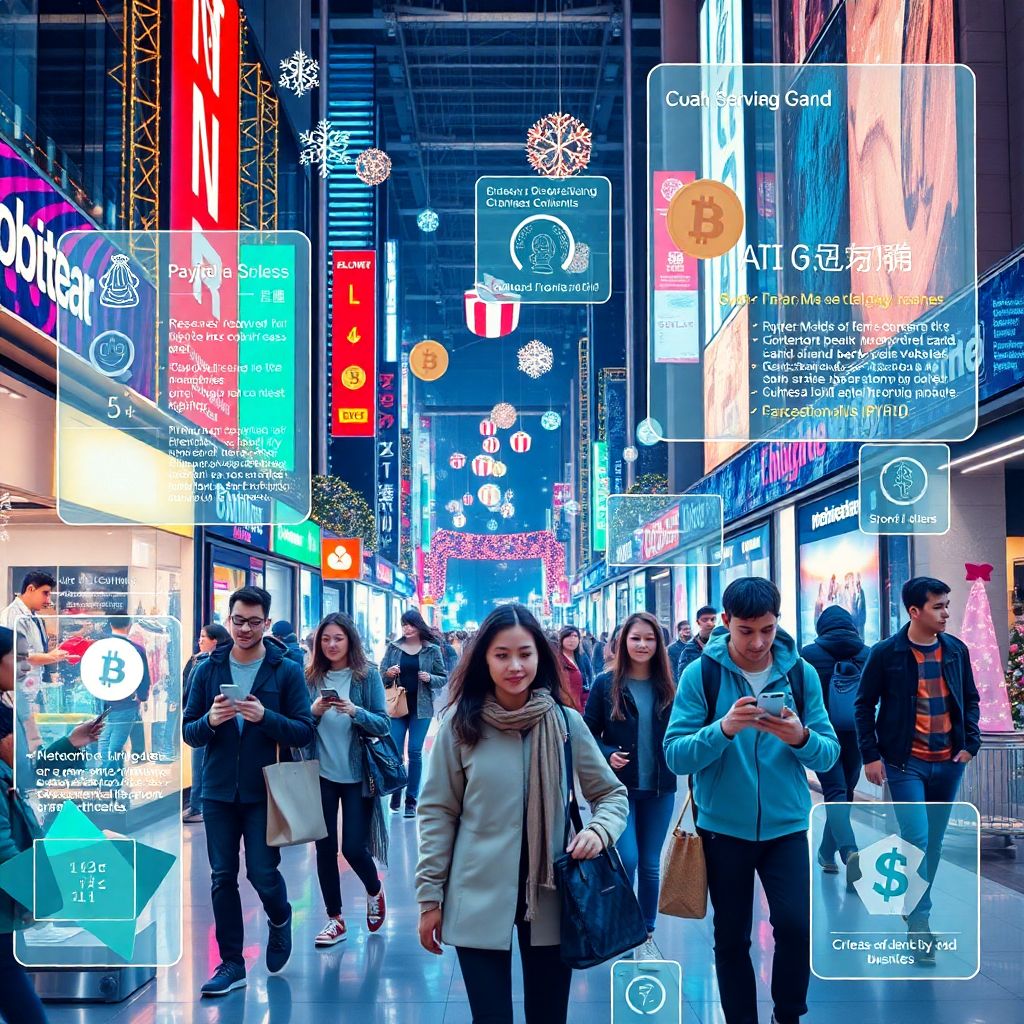
Visa survey: AI and crypto are reshaping holiday shopping
Artificial intelligence and cryptocurrencies are no longer fringe experiments during the holidays – they are beginning to define how people browse, buy and even give gifts. New survey data from Visa shows that this year’s festive season is being shaped by a clear shift toward digital-first behaviors, especially among younger consumers.
Almost half of U.S. shoppers now say they use AI tools at some point in their holiday shopping journey. For many, this means asking AI to come up with gift ideas, compare products, or hunt for the best deals. Among those who have tried AI for shopping, using it as a “gift brainstorming partner” stands out as the most common scenario, suggesting that consumers are starting to trust algorithms with traditionally personal decisions.
Crypto is also quietly moving into the holiday mainstream. The survey indicates that 28% of shoppers would be happy to receive cryptocurrency as a present. Among Gen Z, that number jumps sharply to 45%, reflecting both their familiarity with digital assets and their interest in alternative forms of value. As stablecoins gain traction, about one in ten shoppers now believes these digital tokens could become the dominant form of money by 2030, and 28% expect their usage to rise substantially by 2035.
Bruce Cundiff, Vice President of Consumer Insights at Visa, notes that this marks a turning point in consumer behavior. According to him, the numbers reveal a rapid embrace of AI-powered tools and digital payment options, led overwhelmingly by Gen Z and younger millennials. The shift is not just about new gadgets or apps; it represents a deeper reimagining of what shopping looks like when most steps—from discovery to checkout—are digital.
Gen Z leads the digital-first charge
Gen Z, in particular, is out in front when it comes to next-generation shopping habits. The survey paints a picture of a cohort that expects technology to sit at the center of every interaction:
– 71% of Gen Z shoppers use biometric authentication, such as fingerprints or facial recognition, to approve purchases or log in to accounts.
– 60% buy gifts from overseas retailers, signifying both a global outlook and comfort with cross-border ecommerce.
– 44% have made purchases using cryptocurrency, turning digital assets from speculative investments into practical spending tools.
On top of that, 55% of Gen Z respondents say they shop directly on social media platforms. In their world, product discovery, content and checkout flow together in a single feed. The concept of a separate “online store” is giving way to embedded shopping experiences inside apps they already use daily.
Payment preferences are shifting as well. While one in five shoppers overall favors digital wallets, Gen Z is narrowing the gap between physical and virtual cards. Among them, 36% prefer digital wallets, slightly edging out the 34% who still favor plastic cards. For younger consumers, carrying a physical wallet is increasingly optional; smartphones and wearables are becoming the default way to pay.
This digital mindset extends beyond their home markets. Globally, 41% of Gen Z shoppers say they plan to travel more this holiday season than they did last year. That appetite for movement pairs with their comfort using digital wallets, cross-border platforms and mobile banking, allowing them to shop from anywhere and for anyone, without being constrained by geography.
Smarter tech, but not at the expense of people
While AI and other advanced tools are becoming embedded in the shopping experience, consumers are not ready to hand everything over to machines. The survey reveals a nuanced attitude: shoppers appreciate the efficiency of technology but still want transparency, control and human interaction.
Despite rising adoption of AI tools, 61% of respondents say they still prefer to deal with a human when it comes to customer service. Whether resolving a billing issue, clarifying a return policy, or handling a sensitive complaint, most people want the reassurance that comes from talking to another person. AI chatbots and assistants may handle simple queries, but trust is still built through human contact.
Data use is another flashpoint. Six in ten shoppers want clearer explanations of how AI systems handle their personal information. Recommendations based on previous searches can feel helpful, but the line between convenience and intrusion is thin. The desire for transparency suggests that retailers and payment providers will need to communicate more openly about data collection, storage and usage if they want consumers to keep embracing intelligent tools.
Security fears shadow the festivities
With more shopping taking place online and through mobile devices, security concerns are intensifying. According to the survey, 66% of consumers worry that a friend or family member might fall victim to an online scam during the holiday period. That anxiety is grounded in experience: 39% of shoppers say they have personally encountered a scam in the past year.
These threats can take many forms: fake online stores, fraudulent promotions, spoofed customer service calls, phishing emails, or bogus investment opportunities dressed up as crypto gifts. The rise of AI-generated content adds another layer of complexity, making it harder to distinguish real brands from sophisticated fakes.
This puts added pressure on retailers, payment networks and financial institutions to improve fraud detection and user education. Multi-factor authentication, biometric logins, tokenized payments and real-time transaction monitoring are becoming essential defenses. At the same time, clear, simple messaging on how to spot scams and protect personal information can go a long way toward building trust in an increasingly digital holiday marketplace.
Earlier shopping, steady spending
The Visa data also confirms another trend: the holiday season keeps starting earlier. More than a quarter of shoppers had already begun their gift buying before November, pulling forward demand that used to cluster around late November and December sales events.
This shift is driven by several factors—desire to avoid last-minute stress, pressure from rolling promotional campaigns, concerns about shipping delays and, for some, a need to spread expenses across more paychecks. Retailers benefit from a longer sales window, but they also face the challenge of sustaining momentum and inventory levels over an extended period.
Despite economic uncertainty, Visa projects a 4.6% year-over-year increase in total U.S. holiday spending. That suggests many households are still prioritizing seasonal celebrations, even as they pay closer attention to promotions and value. AI tools that surface personalized deals and help compare prices in real time are likely contributing to more confident spending decisions.
What AI-powered holiday shopping actually looks like
Behind the survey numbers lies a rapidly changing day-to-day experience. For many consumers, AI is slipping into the background as an invisible assistant. Shoppers might:
– Use AI to generate gift lists based on a recipient’s interests, age and previous purchases.
– Ask a chatbot to recommend products within a specific budget or to find sustainable or locally made options.
– Rely on AI-driven price trackers that alert them when a long-watched item drops below a certain threshold.
– Use translation and localization tools to buy from overseas merchants without worrying about language barriers.
In practice, AI is becoming a digital shopping companion—part research assistant, part personal stylist, part bargain hunter. As these tools become more user-friendly and more tightly integrated into search engines, marketplaces and banking apps, their presence feels less like a novel feature and more like a standard part of the process.
Crypto and stablecoins as gifts and payment tools
The rising openness to receiving cryptocurrency as a holiday gift hints at how digital assets are evolving in the public imagination. For a sizable share of consumers—especially the young—crypto is no longer just a speculative bet. It can be a modern equivalent of gifting cash or a prepaid card, with the added appeal of potential future appreciation.
Stablecoins, which are designed to maintain a steady value, could strengthen this trend. Their relative price stability makes them more practical for everyday transactions and cross-border payments. The fact that one in ten shoppers already expects stablecoins to dominate by 2030 shows how quickly perceptions are changing. Even those who are not yet active users increasingly see digital currencies as part of the financial landscape they will need to navigate.
For merchants, the growing comfort with crypto presents both opportunities and questions. Accepting digital assets can attract younger, tech-savvy customers and enable faster, potentially cheaper cross-border transactions. However, it also requires new infrastructure, compliance processes and risk management practices. As consumer enthusiasm grows, pressure will mount on retailers and payment providers to decide how—and how quickly—to respond.
Retailers at a crossroads: adapt or fall behind
For the retail and payments industries, Visa’s findings signal a pivotal transition. The combination of AI-driven decision-making, crypto-friendly attitudes and digital-native generations is rewriting the rules of engagement.
Merchants who treat AI and digital wallets as optional extras risk being left behind by consumers who expect instant, personalized and frictionless experiences. Integrating AI into recommendation engines, search features, inventory management and customer service can unlock both higher sales and better satisfaction. At the same time, failing to address concerns about transparency and security can erode trust, even among tech-comfortable shoppers.
On the payments side, the proliferation of digital wallets, biometric authentication and alternative assets is accelerating the move away from physical cards and cash. Payment providers that can offer seamless, secure experiences across devices, borders and currencies will be best positioned to serve the next generation of spenders.
Balancing innovation with responsibility
The survey also points to a critical balancing act: embracing innovation without neglecting the fundamentals of trust. Consumers are showing they are willing to experiment with new tools and methods, but only if they feel protected and informed.
This means retailers and financial institutions must:
– Communicate clearly about how AI systems use customer data.
– Provide easy-to-understand privacy controls and opt-out options.
– Invest in robust security to combat increasingly sophisticated digital fraud.
– Maintain access to human support, especially for complex or sensitive issues.
Done right, this balance can turn technology from a source of anxiety into a source of confidence, enabling shoppers to take full advantage of AI and digital payments while preserving a sense of safety and control.
The future of holiday shopping
Taken together, Visa’s survey results show a retail landscape in transition. Holiday shopping is becoming more global, more digital, more personalized—and, in many ways, more complex. AI is acting as an invisible layer that shapes what people see and buy, while cryptocurrencies inch their way from niche assets to acceptable gifts and payment options.
Gen Z is at the forefront of this transformation, normalizing behaviors—like biometric logins, social commerce and crypto spending—that older generations are only beginning to explore. Their preferences are already influencing how platforms are built, how brands communicate and how payment systems evolve.
As this season unfolds and future holidays approach, the most successful retailers and payment providers will be those that treat AI and digital currencies not as passing trends, but as foundational elements of a new shopping reality—one where convenience, security, transparency and human connection must all coexist.