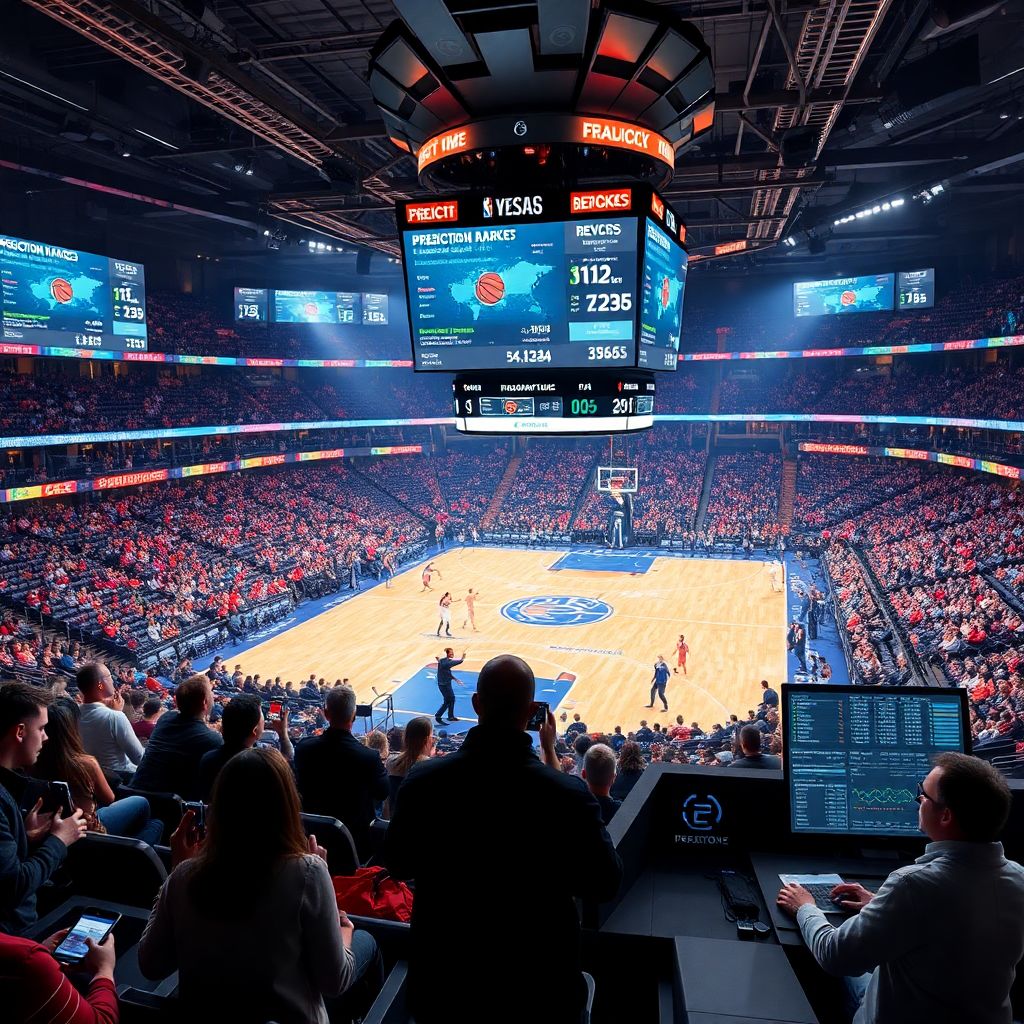
Prediction markets, once the domain of political forecasting, are now making their way into professional sports—and according to NBA veteran Tristan Thompson, this shift is just the beginning of a broader transformation in how fans experience games. These markets, which allow users to bet on the likelihood of future events, are poised to become a regular feature in the world of athletics, offering real-time insight into fan sentiment and game momentum.
Thompson, speaking in a recent interview, noted that just as television networks started blending social media commentary into live broadcasts—letting audiences interact with familiar faces like Shaquille O’Neal and Charles Barkley—prediction markets are the next step in creating a more dynamic and interactive viewing experience. He envisions a future where live games are accompanied not just by scores and stats, but also by fluctuating odds and forecasts that shift with every play on the field or court.
He points to the rapid growth of platforms like Polymarket, which are already partnering with major sports organizations. Just this week, the Ultimate Fighting Championship (UFC) announced a multi-year deal with Polymarket’s parent company, integrating a “fan prediction scoreboard” into its broadcasts. This new feature displays live forecasts and global fan sentiment, allowing viewers to see how opinions evolve in real time as fights unfold.
Sports, unlike politics, are characterized by rapid developments—sometimes occurring in mere seconds. Thompson referenced the fastest knockout in UFC history, which happened just five seconds after the opening bell, to illustrate how prediction markets must adapt to extremely short time frames. As such, these platforms must be agile, capable of updating odds and predictions moment by moment.
The rise of prediction markets also coincides with the explosion of legal sports betting in the United States. According to the American Gaming Association, Americans wagered $99 billion through commercial sportsbooks in the first eight months of the year—a 12% increase from the previous year. At the same time, traditional sports broadcasts are increasingly filled with betting odds and analytics, making prediction markets a natural extension of the viewing experience.
However, the legal status of these platforms is still under scrutiny. Courts are beginning to examine whether prediction markets fall under existing gambling laws, which vary widely from state to state. While some legal hurdles remain, Thompson argues that these markets differ from conventional gambling in that they reward knowledge, intuition, and engagement rather than just chance.
He believes that prediction markets could not only boost fan engagement but also increase viewership. Because users can exit their wagers before outcomes are determined, they have a reason to stay glued to the screen, analyzing every twist and turn. “It’s hard to understand the flow of a game by just looking at the scoreboard,” Thompson explained. “Prediction markets give you another layer of context.”
Thompson is also putting his money where his mouth is. He’s supporting a new platform called Basketball.fun, where fans can speculate on NBA players’ performances in a way that merges elements of fantasy sports and trading card games. This experimental approach draws inspiration from Football.fun, a similar platform that launched earlier this year, offering fans a new way to engage with their favorite athletes.
The National Hockey League (NHL) recently became the first major sports league to formalize a multi-year partnership with prediction market platforms, working with both Polymarket and its primary competitor Kalshi. Meanwhile, retail investing app Robinhood has begun offering access to sports-related prediction markets, signaling that mainstream financial platforms are also catching on to the trend.
DraftKings, known for its dominance in the fantasy sports arena, further validated the momentum behind prediction markets by acquiring Railbird, a company that specializes in the space. While DraftKings has indicated its focus will be broader—spanning finance, culture, and entertainment—the acquisition underscores the growing appetite for interactive and data-driven entertainment experiences.
As the line between sports, technology, and finance continues to blur, prediction markets are emerging as a new frontier for fan engagement. These platforms allow users to become participants rather than passive observers, interpreting live trends and making informed predictions in real time.
Beyond just entertainment, prediction markets may influence how games are analyzed and discussed. Coaches, commentators, and analysts could use crowd sentiment data to better understand public expectations, while fans may feel more immersed in the outcomes of each play.
There’s also potential for these markets to become educational tools. By tracking and analyzing prediction data, users could learn more about probability, decision-making, and the nuances of gameplay. As a result, sports fandom could evolve from emotional allegiance to a more analytical and interactive experience.
Moreover, as Web3 technologies continue to evolve, prediction markets could integrate blockchain-based systems for enhanced transparency and security. This would allow users to verify odds, betting volumes, and outcomes without relying on centralized authorities, further democratizing access to this new form of engagement.
With major players like Thompson advocating for them, and leagues like the NHL and UFC already onboard, prediction markets may soon become as ubiquitous as box scores and highlight reels. Whether you’re a casual fan or a data-driven strategist, the way you watch your favorite sport may never be the same again.