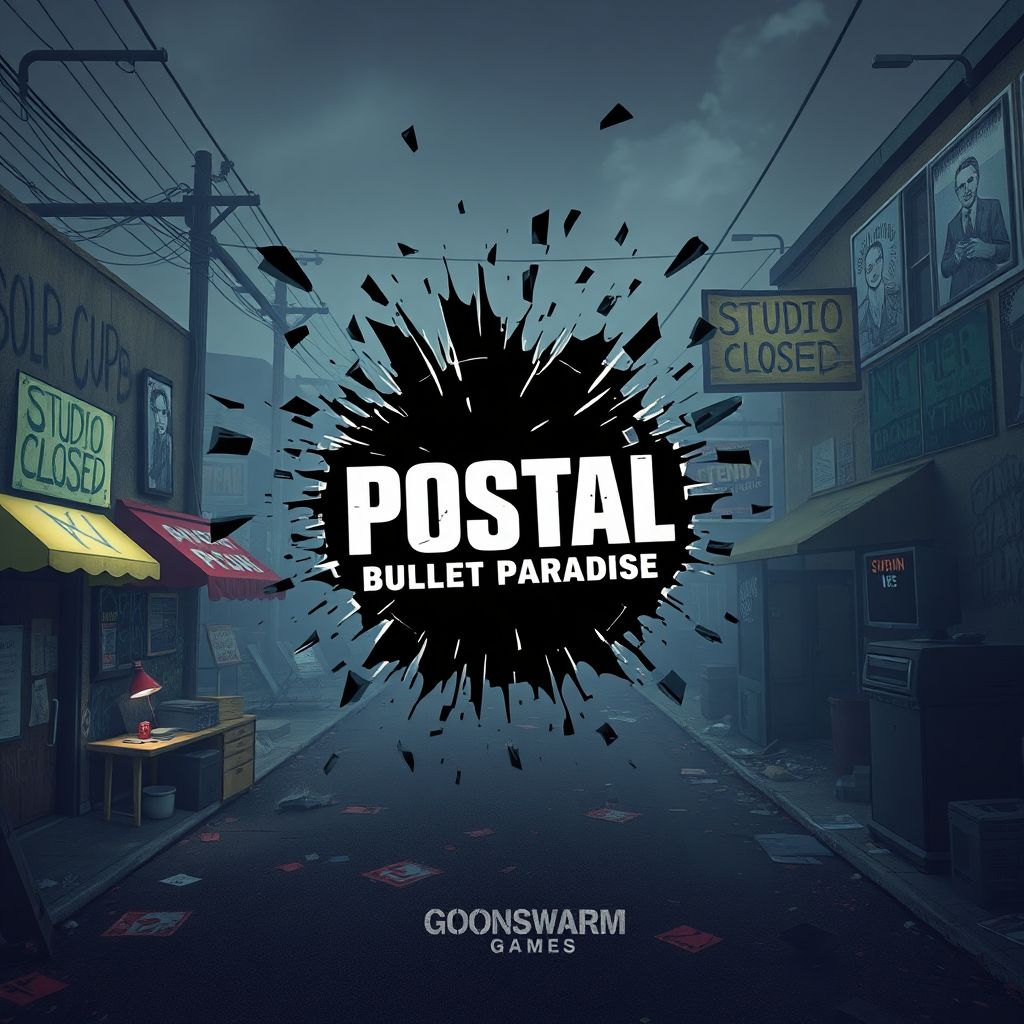
New ‘Postal’ Spin-Off Axed Just a Day After Reveal Amid Generative AI Backlash
Running With Scissors, the studio behind the infamous Postal franchise, abruptly pulled the plug on a newly announced game just 24 hours after showing it to the world. The cancellation followed a wave of criticism from players who claimed that the reveal trailer relied on generative AI artwork and assets.
The project, titled Postal: Bullet Paradise, was pitched as a fast-paced, first-person shooter spin-off developed not in-house, but by an external studio, Goonswarm Games. Within a day of its announcement, however, the game was dead—and so, it appears, is the studio that was building it. Goonswarm Games announced it was shutting down in the fallout from the controversy.
From Reveal to Cancellation in 24 Hours
Postal: Bullet Paradise was meant to take the franchise’s notorious dark humor and over-the-top violence into a more frenetic, arcade-inspired direction. Early footage suggested a chaotic, bullet-hell-style shooter set in the recognizable, crude, and satirical world that Postal is known for.
But almost immediately after the reveal trailer went live, viewers began scrutinizing its visuals. Fans pointed out what they believed were telltale signs of AI-generated art: awkward anatomy, strange visual artifacts, inconsistent details, and backgrounds that looked more like machine-made collages than hand-crafted game art. Accusations quickly spread that the trailer featured generative AI assets.
What made the situation particularly explosive was the timing. Just days earlier, Running With Scissors had taken a public stance against the use of generative AI in creative work, criticizing its growing presence in the games industry. The apparent discrepancy between that position and the alleged use of AI assets in a Postal spinoff trailer created a perception of hypocrisy that fueled the backlash.
Breakdown of Trust With the Developer
In response, Running With Scissors announced that it was ending its partnership with Goonswarm Games and canceling Postal: Bullet Paradise altogether. The publisher said that the core reason for the decision was a breakdown in trust with the external development team.
According to the studio, the controversy around the trailer raised serious concerns about how the project was being handled and whether their previously stated principles around generative AI were being honored. Rather than attempt to salvage or quietly rework the game, the publisher opted for the most drastic measure: shutting the project down and starting over with other plans.
Running With Scissors emphasized that it wanted to remain transparent with its audience and that it would rather cancel a project than push forward with something that conflicted with its stated values. The company added that it still has multiple other titles and updates in development, suggesting that the franchise itself is far from finished—even if this particular spin-off will never see release.
A Studio Shuts Its Doors
On the other side of the fallout, Goonswarm Games is effectively no more. The external developer, which had been building Postal: Bullet Paradise for Running With Scissors, is reportedly shutting down following the cancellation.
While small, externally contracted studios live and die on a handful of deals, losing a project attached to an established name like Postal can be devastating. For Goonswarm, this cancellation did not simply mean one less game in its portfolio—it appears to have been the final blow for the company itself.
The situation raises uncomfortable questions about risk, accountability, and due diligence when publishers outsource work to smaller teams. It also underlines how fragile young or small studios can be in a market where a single failed partnership can end an entire business.
Generative AI and the Gaming Industry’s Identity Crisis
The Postal: Bullet Paradise debacle is part of a much larger conversation happening across the entertainment and tech sectors. Generative AI tools are now capable of producing concept art, character designs, environments, and even animations at a fraction of the time and cost of traditional human labor.
For publishers and cash-strapped studios, that can look like an irresistible shortcut. But for players and artists, it raises concerns about:
– Authenticity – Whether the visuals truly reflect a creator’s vision or are generic outputs of a large model.
– Labor and ethics – Whether AI tools are undermining the livelihood of human artists and designers.
– Training data – Whether AI systems have been trained on copyrighted or unconsented artwork.
– Creative integrity – Whether studios are being transparent about what is hand-made and what is machine-generated.
In this case, the controversy wasn’t just that AI may have been used, but that it might have been used by or for a publisher that publicly condemned such practices days earlier. That sense of contradiction amplified player frustration and turned what could have been a minor scandal into a full-blown reputational crisis.
Why Fans Reacted So Strongly
The extreme speed of the backlash—and subsequent cancellation—underscores how sensitive the gaming audience has become to AI use in creative production. Several factors likely contributed to the intensity of the reaction:
1. Long-standing loyalty to the franchise
Postal, despite (or because of) its controversy, has a devoted fanbase that feels a strong sense of ownership over what the series “should” be. Many players expect the franchise’s trademark irreverence, but also hand-crafted, deliberately crude art rather than slick, machine-generated visuals.
2. Growing skepticism toward corporate decisions
Gamers have seen an increasing number of cost-cutting measures in the industry, from layoffs to monetization changes to asset reuse. Suspicions that generative AI is being used purely to save money at the expense of human artists feed into a broader narrative of mistrust.
3. Recent, vocal anti-AI stance from the publisher
When a studio publicly criticizes generative AI and then appears to benefit from it anyway, players often view that as a betrayal, not just a business decision. The perceived gap between words and actions was a major accelerant in this case.
4. Visual evidence that is easy to share and dissect
Trailers and screenshots can be scrutinized frame by frame. When possible AI artifacts are spotted, they can be quickly magnified, shared, and analyzed across social spaces, turning a few suspicions into a widespread consensus.
The Risk of Outsourcing in the AI Era
The collapse of Postal: Bullet Paradise also highlights the specific risks that come with outsourcing parts of development—especially when it comes to art and marketing materials. A publisher may have clear internal policies about generative AI, but enforcing those policies across independent vendors is more difficult.
Key challenges include:
– Lack of direct oversight – Publishers may not see every stage of art production or asset sourcing.
– Different standards and pressures – Small teams might quietly rely on AI tools to meet aggressive deadlines or budgets.
– Reputational asymmetry – If something goes wrong, it is the larger, public-facing brand that takes the hit, not the lesser-known contractor.
In the wake of situations like this, publishers may start demanding far more detailed audits, contract clauses, or technical checks to verify that third-party studios are not sneaking AI-generated assets into projects without disclosure.
What This Means for Future Postal Games
Running With Scissors has made it clear that the end of Postal: Bullet Paradise is not the end of the franchise. The studio says it has multiple projects still in the pipeline, including both updates to existing titles and entirely new entries.
One likely outcome is that the company will double down on:
– Hand-crafted art and design, emphasizing their human creators.
– Clear communication about production methods, including whether any AI tools are used and where.
– Closer control over external collaborations, or potentially more development brought back in-house, where policies can be tightly enforced.
The controversy could also influence the visual direction of future Postal titles. Expect more emphasis on distinctive, deliberately stylized art that is easily distinguishable from the often-generic look associated with many AI outputs.
Lessons for Other Studios
For the broader industry, the rapid death of Postal: Bullet Paradise is a warning shot. Studios watching from the sidelines can draw several practical lessons:
– Be consistent with public statements
If a company takes a hard stance on AI—or any ethical issue—it must ensure every partner and project aligns with that stance. Inconsistency erodes brand trust faster than silence.
– Disclose tools and methods proactively
In an era of heightened skepticism, being upfront about which tools are used—AI or otherwise—can prevent suspicion from metastasizing into a full-blown backlash.
– Invest in recognizable identity
The more distinctive and human a game’s artistic voice feels, the less likely fans are to accept obviously synthetic or mismatched elements.
– Understand that “optics” now matter as much as reality
Even if AI use is limited or technically allowed, optics can still damage a brand if players feel misled or sidelined in the creative process. Decisions about technology are no longer purely internal; they are part of a studio’s public identity.
The Tension Between Innovation and Integrity
None of this means generative AI is destined to be permanently rejected in gaming. Some developers are experimenting with these tools as ways to explore quick concepts, iterate early designs, or assist small teams without replacing human artists. Others are exploring hybrid pipelines where AI is used only for rough drafts that are then heavily overpainted or redesigned by people.
The key issue, as exposed by the Postal: Bullet Paradise incident, is one of trust and transparency. Players may be more open to limited, clearly communicated uses of AI than to vague, undisclosed reliance on machine-generated assets—especially in franchises they have supported for years.
A Cautionary Tale for an Industry in Flux
Postal: Bullet Paradise’s near-instant rise and fall encapsulates the tension at the heart of modern game development: studios are under immense pressure to produce more content, more quickly, on tighter budgets—while audiences demand authenticity, ethical practices, and consistency between what studios say and what they do.
Running With Scissors chose to sacrifice a newly announced project rather than fight its own fanbase over an issue it had so recently taken a public stance on. In doing so, it sent a clear message to players and partners alike: in the current climate, perceived misuse of generative AI can be enough to end a game before it ever truly begins.
For developers, publishers, and artists, this episode will likely be remembered less as an odd misstep in the Postal franchise and more as a defining early example of how powerful—and unforgiving—the conversation around AI in creative work has become.