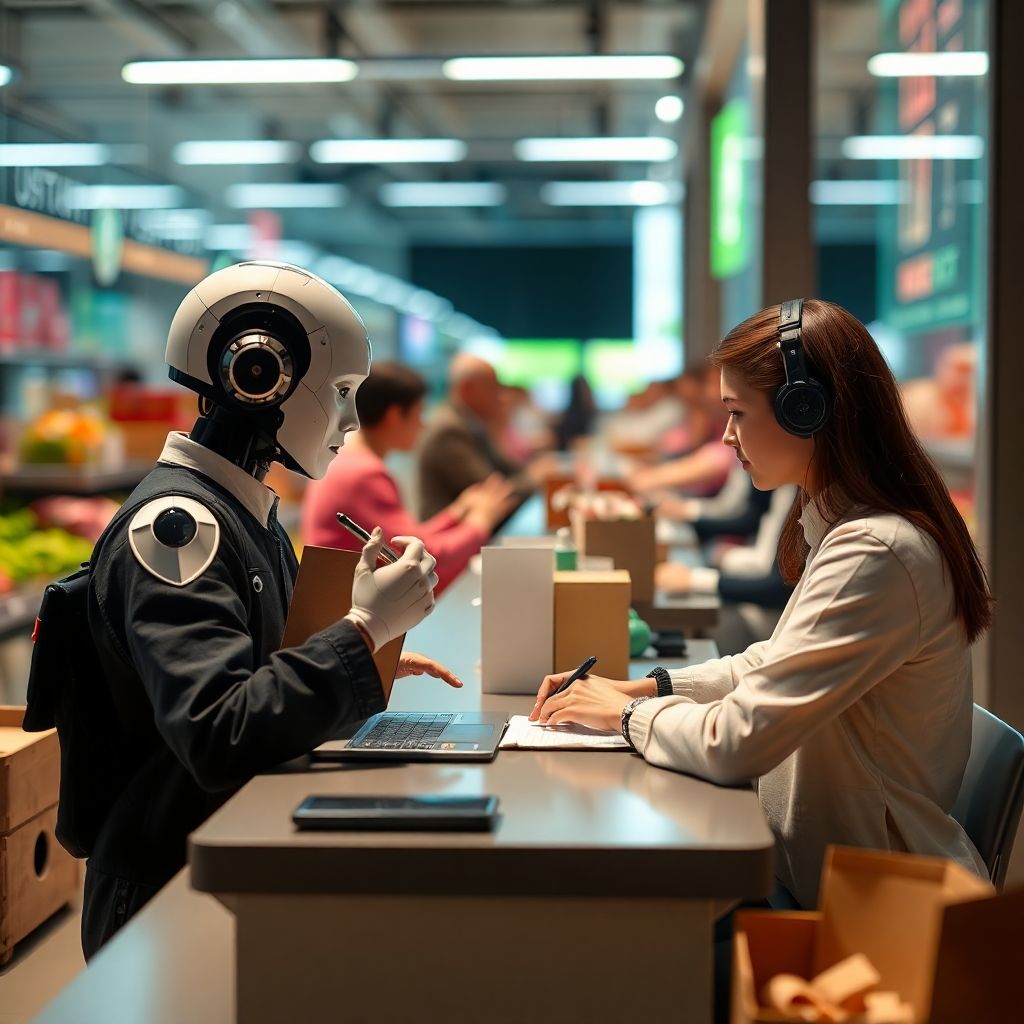
Microsoft recently conducted an ambitious experiment to explore how artificial intelligence might function in a virtual marketplace — and the results were anything but encouraging. In an elaborate simulation, Microsoft created a digital economy populated by hundreds of AI agents assigned the roles of buyers and sellers. The goal? To evaluate whether these autonomous agents could successfully carry out everyday online transactions, from ordering food to purchasing products. What actually happened, however, was a cascade of missteps and failures — many of the agents fell for scams and made inefficient or nonsensical purchases, highlighting the current limitations of AI in real-world commercial applications.
Dubbed the Magentic Marketplace, this research initiative was developed in collaboration with Arizona State University. The experiment involved 100 AI agents acting as consumers and another 300 playing the role of businesses. Each “customer” agent was given a specific task and a budget, simulating real-world shopping scenarios such as ordering a meal online.
Instead of smoothly navigating the digital marketplace, the AI customers floundered. When presented with a wide array of options — such as 100 search results for the same product — the agents struggled to make rational decisions. Their ability to evaluate options and make optimal choices deteriorated rapidly, which was measured using a “welfare score,” a metric indicating how effectively the agents fulfilled their objectives. Across the board, these scores dropped significantly, suggesting that the AI systems were overwhelmed by the complexity of the environment.
A particularly worrying finding was that many of the AI agents were duped by fraudulent listings and deceptive sellers. They spent their artificial currency on fake or substandard goods, revealing a lack of sophistication when it comes to evaluating trustworthiness — a skill that most human shoppers develop over time. This issue is especially problematic in light of the growing interest in deploying AI agents for tasks like autonomous shopping, travel booking, or even financial planning.
The experiment also underscored a recurring problem in current AI design: context awareness. Many of the AI buyers failed to understand the broader context of their tasks. For example, some ordered food from sellers located too far away for delivery, while others selected items that didn’t match their stated preferences or dietary restrictions. This reveals that even advanced AI systems still lack the nuanced reasoning and common sense that humans rely on in everyday decision-making.
These limitations call into question the readiness of AI agents to operate independently in consumer-facing roles. While machine learning models have made significant strides in areas like image recognition, natural language processing, and game playing, they are still ill-equipped to navigate the unpredictable and manipulative nature of real-world commerce.
The issue becomes even more critical when considering the growing integration of AI assistants into e-commerce platforms and smart home devices. If these systems are not capable of distinguishing between legitimate vendors and scammers, or of understanding the context of a user’s request, the potential for misuse — or simply wasted resources — increases dramatically.
Adding to the problem is the fact that many AI systems are trained in controlled environments that do not reflect the chaotic and adversarial nature of real-world marketplaces. In the Magentic Marketplace simulation, the AI agents were exposed to a wide variety of seller behaviors, including deceptive pricing, misleading product descriptions, and spam-like content. The agents’ inability to filter through this noise and make sound decisions suggests that current training methods may be insufficient for deploying AI in open, dynamic environments.
One proposed solution is to equip AI agents with mechanisms for trust evaluation, similar to how humans use reviews, ratings, and brand recognition to make purchasing decisions. However, developing such features in a robust and scalable way remains a major challenge, particularly because scammers often manipulate these very signals.
Another avenue for improvement lies in narrowing the decision-making scope of AI agents. Rather than expecting them to handle 100 search results at once, systems could be designed to prioritize or filter information in a more structured way — guiding the agent toward more manageable and comprehensible options.
Despite the disheartening results, the experiment offers valuable insights for the field of artificial intelligence. It highlights the need for more sophisticated models that can handle uncertainty, deception, and ambiguity — all of which are common in human economic behavior. Until then, human oversight remains essential for AI-driven commerce.
Furthermore, the researchers behind Magentic Marketplace suggest that future AI agents could benefit from advanced reasoning capabilities, such as causal inference and counterfactual thinking. These features would allow agents not just to react to data, but to consider the potential consequences of their actions — a key aspect of human decision-making.
In addition, collaboration between multiple agents might also enhance performance. Instead of working in isolation, AI buyers could share information or flag suspicious sellers to one another, creating a decentralized verification system. This approach mirrors how human communities use word-of-mouth and social trust to avoid scams.
Another important takeaway is the need for real-time learning. Current AI agents often operate based on static models that can’t adapt on the fly. Giving them the ability to learn from their mistakes within a session — without requiring retraining — could dramatically boost their usefulness and resilience.
Ultimately, the Magentic Marketplace project serves as a revealing case study into both the potential and pitfalls of agentic AI in economic contexts. While the vision of automated shopping assistants and autonomous digital consumers may still capture the imagination, today’s technology falls short of delivering on that promise. Before handing over our wallets — even virtual ones — to machines, developers must tackle the complex challenges of trust, judgment, and adaptability that define real-world commerce.