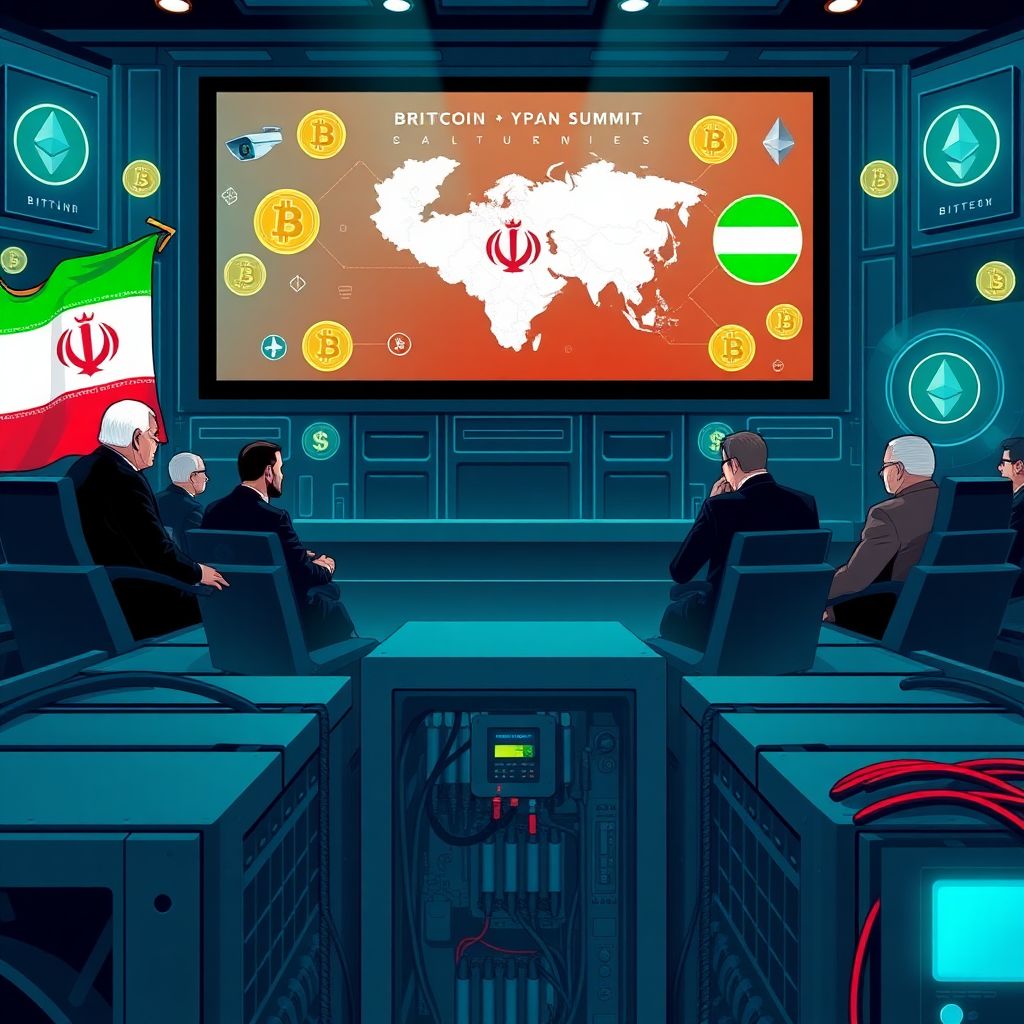
Iran intensifies its efforts to integrate cryptocurrency into its international trade strategy, aiming to bypass the renewed global sanctions that have further isolated its economy. This strategic pivot was underscored during the deBlock Summit — Iran’s first state-sponsored international blockchain conference — where top officials described digital currency as essential for national survival amid deepening economic isolation.
The conference marked a significant policy shift, with Iranian leaders openly advocating for crypto as a tool to break free from the constraints imposed by U.S. and U.N. sanctions. Mohammad Bagher Ghalibaf, Speaker of Iran’s Parliament, emphasized the transformative potential of digital currencies in enabling cross-border transactions with like-minded nations. “For countries seeking independence from Western-dominated financial structures, digital currencies represent a necessary evolution,” he declared at the summit.
Ghalibaf further committed to expanding cooperation between government institutions, research centers, and technology firms to develop blockchain infrastructure domestically. He also highlighted Iran’s intent to attract foreign investment into its growing digital finance ecosystem, despite the geopolitical risks involved.
The urgency behind Iran’s crypto push follows the activation of the “snapback mechanism” by France, the UK, and Germany in August 2025. This legal maneuver effectively reinstated the full scope of international sanctions on Iran, intensifying Tehran’s search for alternative payment systems.
Crypto as a Sanctions Bypass
Iran’s exclusion from the SWIFT banking network has severely hindered its ability to engage in global trade. In response, crypto assets are being positioned as a parallel financial system that could circumvent these limitations. Advocates within the country argue that digital currencies are not only a lifeline but a strategic asset in maintaining access to international markets.
Ehsan Mehdizadeh, CEO of Wallex Iran — the country’s largest crypto exchange — criticized the government’s current regulatory stance as underdeveloped and opaque. “In an environment where sanctions are suffocating traditional financial channels, Iran cannot afford to misunderstand or delay the adoption of blockchain technology,” Mehdizadeh warned.
Despite mining operations being authorized, the broader crypto market remains tightly regulated under the control of Iran’s Central Bank. The institution has placed strict limitations on converting the Iranian Rial into cryptocurrencies through domestic platforms, effectively bottlenecking local adoption.
Energy Debate and Infrastructure Challenges
A contentious issue in Iran’s crypto expansion is the energy consumption of mining operations. Shamseddin Hosseini, chairman of Parliament’s Economic Committee, raised concerns over subsidized electricity rates used by miners. He questioned whether this energy-intensive industry should benefit from the same low-cost electricity as residential consumers, especially given the strain on Iran’s aging energy infrastructure.
Nonetheless, Iran’s vast energy reserves — particularly natural gas — give it a competitive edge in crypto mining, which has already attracted interest from international players. The government sees this as a potential revenue stream and a method of accumulating decentralized assets that are harder to seize or freeze.
BRICS Collaboration and Global Ramifications
Iran’s crypto ambitions are also tied to broader geopolitical realignments. As a recent member of BRICS, Tehran is exploring closer coordination with countries like Russia, China, and Brazil to develop a shared digital payment system. The idea is to reduce dependence on the US dollar and promote financial sovereignty among emerging economies.
However, not all BRICS members are on board. India, for example, has publicly distanced itself from the idea of abandoning the dollar-centric system. In August 2025, the Indian Ministry of Foreign Affairs stated that replacing the dollar is “not part of India’s financial agenda,” signaling internal divisions within the bloc.
Moreover, former U.S. President Donald Trump has threatened to impose heavy tariffs on BRICS nations that pursue alternative currency systems. Such warnings reflect Washington’s concern over the erosion of dollar dominance and the potential rise of a multipolar financial order.
Security and Regulatory Risks
Iran’s crypto journey has not been without setbacks. A major breach at Nobitex, one of the country’s leading exchanges, earlier this year revealed significant vulnerabilities in the nation’s digital asset infrastructure. The incident sparked a broader crackdown and intensified calls for comprehensive regulatory reform.
In addition, reports have emerged of Israel seizing over 180 crypto wallets allegedly linked to Iranian actors, fueling further debate on the traceability and security of digital assets. These developments underscore the dual-edged nature of blockchain technology — offering both financial freedom and new vectors for state surveillance and international enforcement.
Iran’s Regulatory Dilemma
One of the key challenges Iran faces is the lack of a coherent and transparent regulatory framework. While the government actively promotes blockchain innovation for strategic purposes, it has yet to provide the legal clarity necessary for widespread industry growth. Entrepreneurs and investors remain wary of abrupt policy shifts and enforcement actions.
To move forward, Iranian policymakers must strike a balance between enabling innovation and ensuring compliance with domestic and international standards. This includes developing clear guidelines for crypto exchanges, custody services, and cross-border transactions, as well as establishing consumer protection mechanisms.
The Road Ahead
Iran’s embrace of cryptocurrency is driven more by necessity than ideology. As traditional financial pathways continue to close, Tehran views digital assets as a pragmatic solution to maintain its economic lifelines. However, without significant regulatory reforms and international cooperation, the country risks falling into a grey zone — technologically ambitious but institutionally unprepared.
In the coming months, much will depend on how Iran navigates its internal regulatory overhaul, builds technological capacity, and forges alliances with countries open to alternative financial systems. If successful, it could emerge as a pioneer among sanction-hit nations leveraging crypto to reclaim economic autonomy.
Yet the stakes remain high. Missteps could invite further isolation, capital flight, or even internal dissent among a population already burdened by inflation and limited access to global markets. Iran’s crypto gamble is not just about financial innovation — it’s a high-stakes maneuver on the front lines of geopolitical finance.