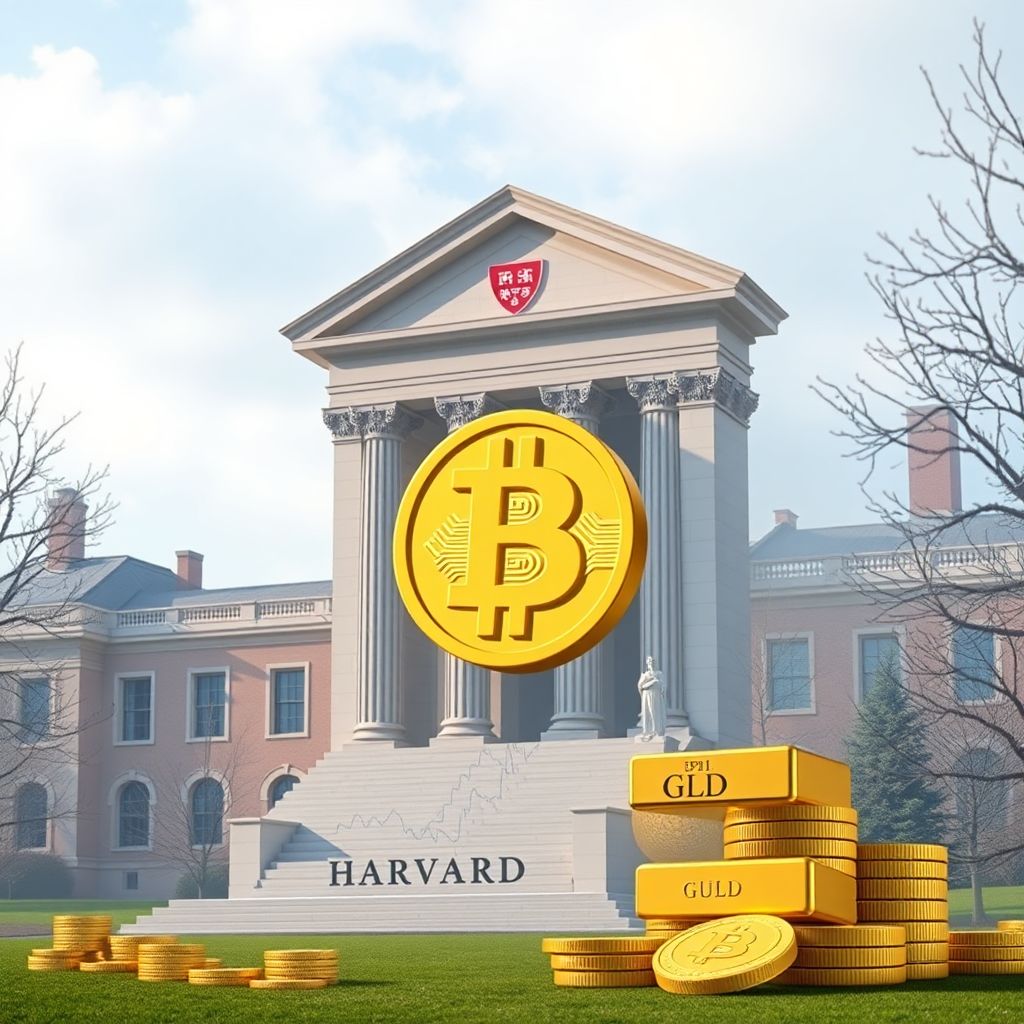
Harvard’s investment portfolio experienced a significant shift in the third quarter of 2025, as the university dramatically increased its exposure to Bitcoin through BlackRock’s spot Bitcoin ETF, iShares Bitcoin Trust (IBIT). According to the latest 13F regulatory filing, Harvard now holds 6,813,612 shares of IBIT, representing a valuation of approximately $443 million as of September 30. This marks a 257% increase compared to the 1,906,000 shares worth $117 million reported at the end of the previous quarter.
This move not only underscores Harvard’s growing confidence in digital assets but also positions IBIT as the largest single investment holding in its disclosed portfolio. While this investment comprises less than 1% of the university’s total $57 billion endowment, it is nonetheless substantial enough to place Harvard as the 16th-largest holder of IBIT shares globally.
The significant allocation toward Bitcoin via an ETF reflects a broader trend of institutional adoption, where major endowments and financial entities are increasingly treating Bitcoin as a legitimate and strategic reserve asset. Harvard’s diversified investment approach also included an increased stake in the SPDR Gold Trust (GLD), where its holdings rose to 661,391 shares, valued at around $235 million.
Eric Balchunas, a senior ETF analyst at Bloomberg, emphasized the rarity of such a prominent institution entering the ETF space with this level of commitment. He noted that getting elite endowments like Harvard or Yale to invest in ETFs is exceptionally difficult, highlighting the move as a strong endorsement of both the ETF vehicle and Bitcoin itself.
Despite Harvard’s bullish stance, the wider market for U.S.-based Bitcoin ETFs has recently faced a downturn. Over the past week, these funds saw a net outflow of $1.1 billion, with BlackRock’s IBIT recording $463.1 million in outflows on a single day—November 14. This marked the third consecutive day of net withdrawals for the ETF. Still, IBIT remains the world’s largest spot Bitcoin ETF, boasting net assets of nearly $75 billion.
The timing of Harvard’s increased allocation to IBIT is noteworthy, especially as Bitcoin’s price has experienced fluctuations and broader market skepticism has grown. Institutional sentiment, however, appears to diverge from short-term market movements, indicating a long-term value investment strategy rather than speculative trading behavior.
Moreover, Harvard’s move could encourage other academic endowments and conservative financial entities to reevaluate their positions on digital assets. As one of the most respected institutions globally, Harvard’s endorsement may serve as a catalyst for broader institutional participation in the crypto market.
The strategic inclusion of both Bitcoin and gold in the university’s portfolio suggests a hedging approach against macroeconomic uncertainties. With inflationary pressures and global financial volatility on the rise, these non-correlated assets provide diversification that traditional equities may not offer.
In addition, Harvard’s decision to substantially increase its IBIT holdings suggests growing trust in the regulatory and custodial framework surrounding spot Bitcoin ETFs. Unlike futures-based ETFs, which often face issues of price tracking and rollover costs, spot ETFs offer direct exposure to Bitcoin, making them a more appealing vehicle for long-term investors.
Another possible driver behind the increased investment is the recent improvement in Bitcoin ETF infrastructure, including enhanced transparency, improved liquidity, and reduced management fees. These developments make such instruments more attractive, especially for institutional players seeking compliant entry points into the digital asset space.
It’s also worth noting that this strategic positioning comes at a time when Bitcoin is increasingly being viewed as a digital alternative to gold. Both assets share characteristics such as scarcity, portability, and resistance to inflation, which likely explains Harvard’s parallel allocation in GLD and IBIT.
Furthermore, the university’s activity aligns with a broader narrative of de-dollarization and diversification of sovereign and institutional reserves. As central banks and institutional investors look beyond fiat currencies, Bitcoin continues to gain traction as a viable alternative store of value on a global scale.
Harvard’s bold move could also influence U.S. policymakers and regulators, potentially accelerating the acceptance of digital assets within traditional financial frameworks. As more legacy institutions embrace this asset class, the pressure to develop robust regulatory standards and clearer tax guidelines will likely increase.
In conclusion, Harvard’s substantial investment in BlackRock’s IBIT not only signals confidence in Bitcoin’s long-term potential but also reflects a broader shift in institutional asset allocation strategies. While short-term volatility persists in the crypto markets, the involvement of heavyweight players like Harvard could reshape the narrative around Bitcoin, transforming it from a speculative asset to a mainstream financial instrument.