Google Under Fire Over Hidden Gmail Switch Letting Gemini Read User Inboxes
A little-known toggle inside Gmail has ignited a wave of anger after users discovered it quietly allowed Google’s Gemini AI to scan their emails and calendar events by default.
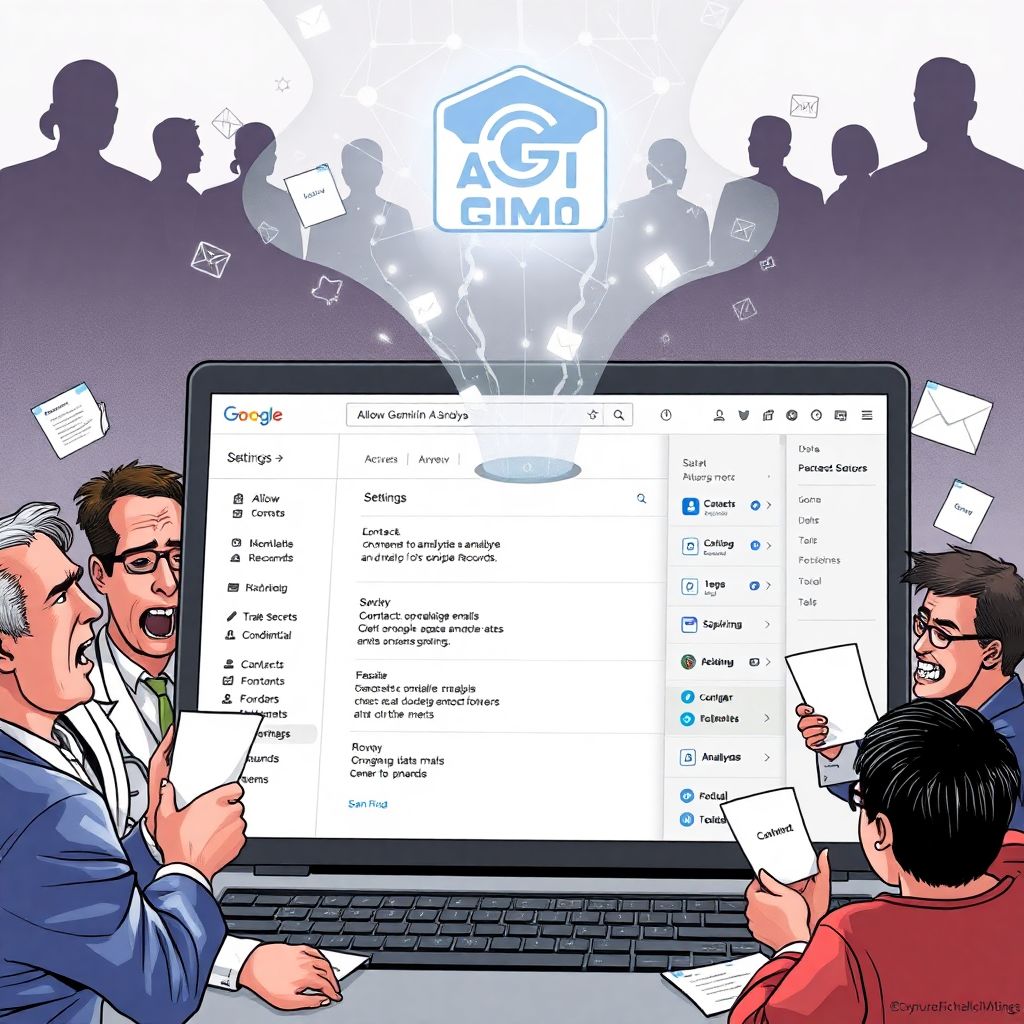
Screenshots circulating online showed a setting that, when enabled, gave Gemini permission to analyze private messages and attachments, as well as scheduling data, in order to “enhance” AI features. The controversy erupted not just because the option existed, but because many people said they had never knowingly turned it on—and had never been clearly told that their inboxes could be used in this way.
As users dug through their Gmail settings, many reported finding the AI-related option already active. That raised immediate questions: When was this enabled? Was it switched on automatically? How much historical email and calendar data had already been processed by Gemini? Those doubts quickly snowballed into broader concerns about consent, transparency, and control over personal data.
The backlash grew sharper as people complained that Google had failed to provide any obvious, front‑and‑center notification about the change. Instead of a prominent pop‑up or a clear opt‑in flow, the control appeared to be buried deep in settings, where only determined users were likely to notice it. For critics, this felt less like a new feature and more like a quiet expansion of data collection under the cover of “helpful AI.”
Many users said they had never agreed to anything resembling using their private correspondence as fuel for AI. They were surprised to learn that their email content, attachments, and calendar entries could be analyzed to power Gemini’s capabilities unless they found and disabled the option themselves. The default‑on approach struck privacy advocates as particularly problematic, especially in a service as sensitive and central to people’s lives as Gmail.
Privacy‑minded professionals reacted with special alarm. Lawyers, doctors, journalists, founders, and engineers often handle highly confidential material in their inboxes—contracts, medical records, trade secrets, or unreleased product plans. The idea that an AI system might comb through that data, even under promises of anonymization or strict access controls, was enough to trigger immediate distrust and, in some cases, reconsideration of using Gmail for sensitive work at all.
The incident also renewed long‑standing fears about how large tech companies roll out AI features. For years, major platforms have used “dark pattern” design tactics—interfaces that steer people toward choices that benefit the company more than the user. In this case, critics argued that hiding the Gemini permission behind layers of menus and turning it on by default looked less like user empowerment and more like an attempt to maximize training data with minimal friction.
From a legal and regulatory perspective, the controversy lands at a precarious time. Governments around the world are tightening rules around data privacy and AI, from stricter consent requirements to clearer explanations of how automated systems use personal information. A feature that seems to bypass explicit, informed opt‑in—particularly in an email service used by billions—risks drawing unwanted scrutiny from regulators already skeptical of Big Tech’s data practices.
There is also the question of user expectations. For many people, Gmail feels like a digital vault, a long‑term archive of personal and professional history. Old conversations with family, receipts from major purchases, financial statements, legal negotiations, and sensitive attachments all live there. Even if Google insists that its AI systems treat this information securely, the perception that “AI is reading my mail” is enough to erode trust, especially when users discover it only after the fact.
The uproar highlights a fundamental tension in the AI era: the trade‑off between smarter tools and privacy. Systems like Gemini become more capable as they ingest more real‑world data, particularly from services where people already spend much of their time. Email and calendars are rich sources of context—tasks, relationships, schedules, preferences. But that same richness makes them among the most sensitive data streams a company can access. When companies design defaults that favor data capture over clear consent, they risk crossing a line that many users are unwilling to tolerate.
Some defenders of the feature argue that AI‑driven analysis can genuinely improve productivity—suggesting replies, surfacing relevant messages, drafting responses, summarizing long threads, and automatically extracting events or reminders. From this perspective, enabling Gemini to learn from inbox and calendar usage is a natural extension of existing “smart” features. However, critics counter that even beneficial tools must be introduced with rigorous transparency and a genuine, obvious choice, especially when they touch private communications.
There are also practical security implications. If an AI model has access to entire inboxes and calendars, the potential impact of a breach, abuse of internal access, or misconfiguration increases. Even if the model technically stores only derived representations of the data, and not raw messages, many users are uncomfortable with any process that copies, parses, or retains patterns from deeply personal content. For organizations subject to strict compliance regimes, this kind of hidden AI processing can create headaches around audits and regulatory obligations.
The incident serves as a cautionary example for how not to roll out AI integrations in core communication tools. To rebuild trust, companies implementing similar features need to consider several principles:
1. True opt‑in, not opt‑out
Access to private communications for AI should start off disabled, with a clear, unambiguous prompt explaining what will happen if it’s turned on, what data is used, and for which explicit purposes.
2. Prominent, plain‑language disclosure
Technical jargon and vague phrases like “improving services” or “enhancing your experience” are no longer acceptable. Users need direct explanations: “If you turn this on, the system will analyze your emails and attachments to do X, Y, and Z.”
3. Granular controls
Rather than a single all‑or‑nothing toggle, people should be able to decide whether AI can read new emails only, exclude specific labels or folders, ignore certain accounts, or avoid workspaces governed by stricter confidentiality.
4. Visible, easy‑to‑reach settings
Burying critical privacy options several layers deep undermines the idea of informed consent. Controls related to AI and data access should be top‑level and easy to find, not hidden where only experts will look.
5. Clear separation between product features and model training
Users should know whether their data is merely being processed to deliver features in real time or whether it is also fed back into long‑term model training that benefits a wider user base. These are not the same thing, and they should not be collapsed into a single checkbox.
For users concerned about whether their data may have been swept up into Gemini’s processing, a pragmatic response is to immediately review Gmail and Google account settings. Turning off any AI‑related switches, limiting data sharing, and regularly auditing connected services and permissions can reduce exposure. For highly sensitive work, some may choose to keep a strict separation—using one account for everyday communication and another, more locked‑down environment for confidential material.
On a broader level, the backlash underscores how quickly public sentiment can shift when people feel blindsided. AI‑powered assistants, search tools, and productivity features hold real promise, but they depend on trust. Once users suspect that a company is quietly expanding what it does with their data, even sophisticated, well‑engineered products can become reputational liabilities.
The Gmail‑Gemini controversy is likely to become a reference point in future debates about AI, privacy, and consent. It illustrates that the technical ability to analyze data at scale is no longer the limiting factor; the real constraint is whether users are willing to grant that access under terms they consider fair. If large providers want to keep pushing AI deeper into everyday tools, they will have to put respect for user autonomy at the center of their design choices—not hidden away in a toggle most people never knew existed.