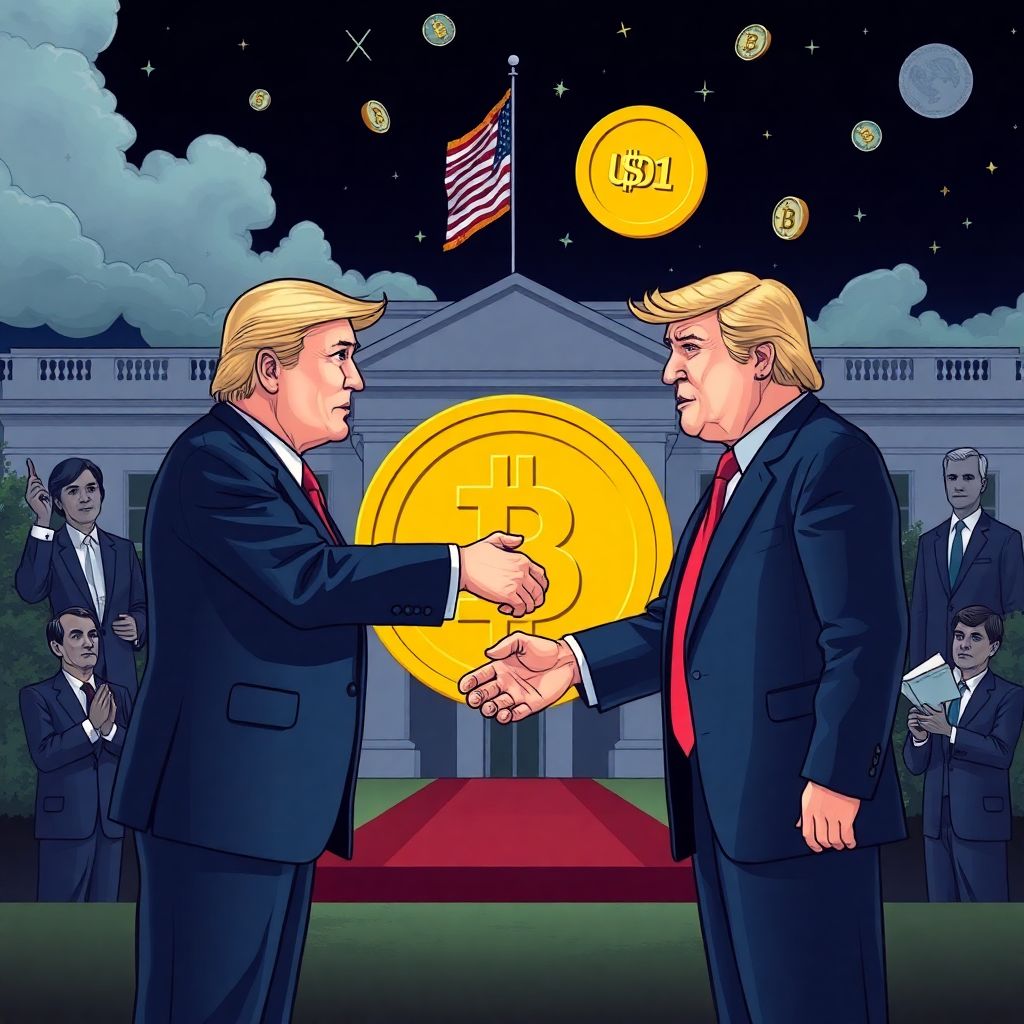
Title: Did CZ Buy a Trump Pardon? Binance and Legal Team Firmly Deny
In late October, former U.S. President Donald Trump issued a presidential pardon to Changpeng “CZ” Zhao, the founder and former CEO of Binance, reigniting controversy and speculation about the intersection of politics, business, and cryptocurrency. The clemency granted to Zhao—who had previously pled guilty to regulatory breaches—sparked immediate reactions from lawmakers, regulatory bodies, and crypto industry observers. Central to the debate is the question: Was the pardon influenced by business ties or financial incentives?
At the core of the allegations lies a potential connection between Binance and World Liberty Financial, a crypto venture with reported links to the Trump family. According to various media outlets, Binance engineers allegedly supported the technical development of a stablecoin project launched by World Liberty Financial, known as USD1. Further reports suggest that around $2 billion in investments were committed to the initiative, with portions of the funding managed using the USD1 stablecoin.
Despite the mounting speculation, Zhao’s legal team has categorically denied any improper conduct. During an interview on the Pomp Podcast, Zhao’s attorney Teresa Goody Guillén dismissed claims that the pardon was part of a “pay-to-play” arrangement. She labeled the accusations as baseless and described the narrative as “a pile-up of falsehoods.” Guillén emphasized that neither she nor her client had seen any evidence that the pardon was exchanged for money, crypto, or business favors.
Guillén also refuted portrayals of World Liberty Financial as a direct extension of the Trump family’s interests. According to her, the company operates independently and should not be reduced to a political vehicle. She underscored that Binance’s role in the USD1 project has been overstated in the media: while Binance employees may have contributed technical expertise, the decision to fund the project at scale came from a separate group of investors, not Binance itself.
Binance, for its part, has issued statements distancing itself from the financial commitments associated with USD1. The company maintains that it had no involvement in negotiating Zhao’s pardon and played no role in any potential arrangements involving political favors. Company representatives have repeatedly emphasized the independence of the investor group that backed the stablecoin rollout.
Nonetheless, skepticism persists. Several members of Congress have called for formal investigations into whether undue influence or quid pro quo arrangements played a role in the pardon. They cite the sheer scale of the alleged $2 billion investment and reported meetings between Trump aides and crypto industry figures as justification for subpoenas and public hearings. Critics argue that transparency is essential, especially when executive clemency intersects with billion-dollar business ventures.
Opponents of the pardon highlight Zhao’s prior conviction, which stemmed from Binance’s failure to adequately prevent the platform’s use for illicit transactions. Though the charges did not allege fraud, they raised concerns about regulatory compliance and corporate accountability. Zhao served four months in federal custody before receiving the pardon in October, a timeline that some say deserves closer scrutiny amid the recent revelations.
Supporters of Zhao and the pardon, however, argue that the legal case against him was limited in scope and lacked allegations of direct criminal intent. They view the pardon as a move to restore a prominent entrepreneur’s ability to contribute to the global blockchain ecosystem, not as a political favor.
Beyond the immediate controversy, the CZ pardon highlights broader questions about the growing entanglement between cryptocurrency and politics. As digital assets gain mainstream acceptance and wield increasing financial clout, their influence in political and regulatory circles is becoming more pronounced. This intersection raises concerns about transparency, accountability, and the potential for conflicts of interest.
The USD1 stablecoin project itself is also drawing fresh attention. Market analysts have noted that the token’s association with high-profile political figures and major investors could impact its adoption and regulatory oversight. If proven to be part of a wider influence operation, the stablecoin could become a focal point for future investigations into financial conduct and political ethics.
Additionally, legal experts warn that this case may set a precedent for how presidential pardons are interpreted in the context of financial relationships. Historically, pardons have been controversial, but introducing crypto and high-stakes investments into the mix adds a new layer of complexity. Some argue that new legislation may be needed to ensure that clemency powers are not leveraged for personal or political gain.
In the court of public opinion, the debate remains unresolved. While legal denials have been firm, the perception of impropriety continues to circulate. For Zhao, Binance, and the broader crypto industry, this controversy is a stark reminder that regulatory scrutiny is intensifying—and that transparency will be key to earning public trust.
As investigations potentially unfold, the case may also influence how crypto firms approach political engagement in the future. The line between lobbying, partnerships, and undue influence remains thin, and companies may need to adopt stricter internal governance to avoid similar controversies.
Ultimately, whether or not any wrongdoing occurred, the situation underscores a pivotal moment in the maturation of the cryptocurrency industry. As digital assets become a fixture in global finance, the importance of ethical conduct, legal compliance, and public accountability grows ever more critical.