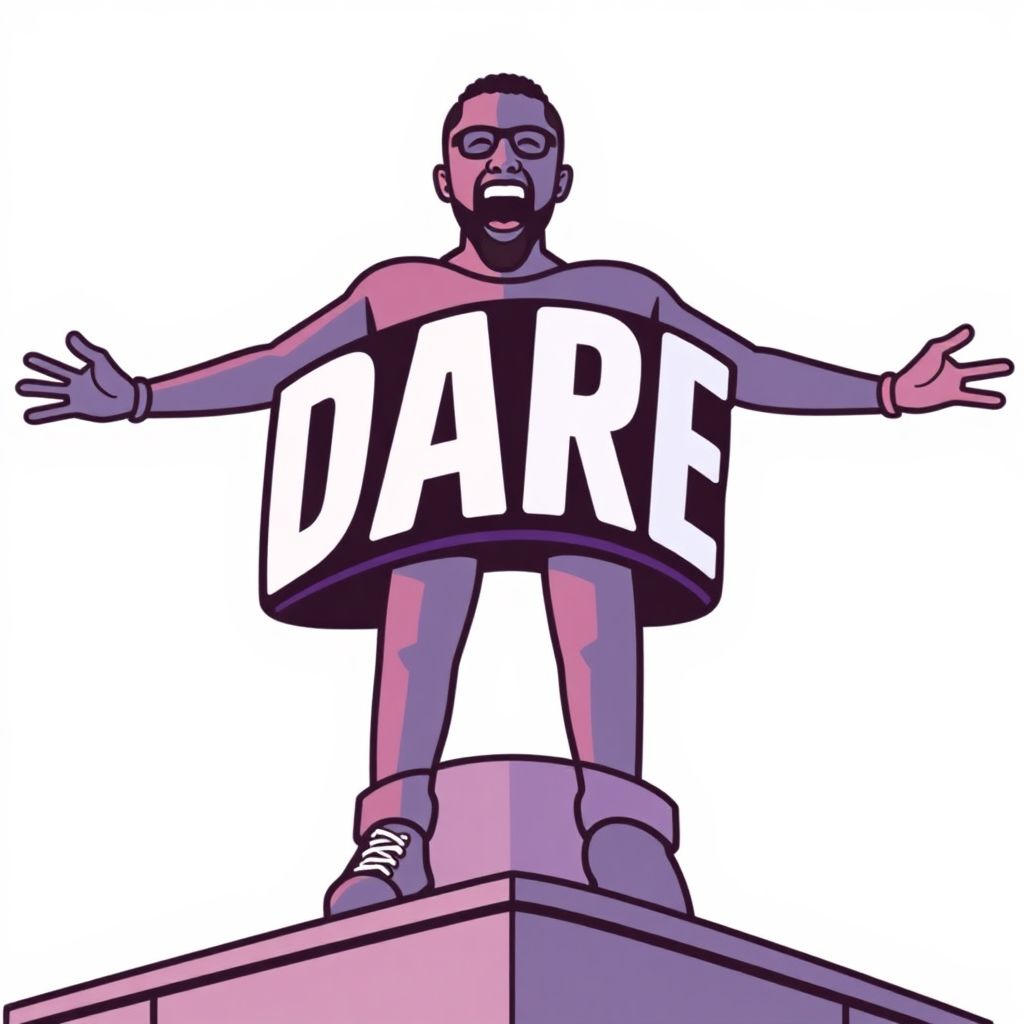
“Dare Market” — a new and wildly unconventional platform built on the Solana blockchain — is shaking up the world of digital entertainment by offering crypto rewards for completing outrageous, humorous, and often bizarre public stunts. Dubbed “the most unhinged platform on the internet,” the project has already secured $2 million in pre-seed funding, with backing from notable names including NBA player Tristan Thompson, crypto personality Ansem, and betting heavyweight Super Group.
At its core, Dare Market empowers users to either issue or complete challenges — or “dares” — in exchange for cryptocurrency, creating an economy centered around viral content and audience engagement. The platform is designed to appeal to a generation that craves both notoriety and monetary reward, merging entertainment with blockchain-based incentives.
There are two main mechanisms for how dares work on the platform. First, any user can publicly post a dare with a specific crypto bounty attached. Other users then attempt to complete the challenge and upload proof — typically via social media. The original poster reviews submissions and selects a winner to receive the bounty. The second method, called “Fund-My-Dare,” allows users to propose a stunt they’re willing to perform once enough funds are raised. If at least 69% of the contributors confirm that the challenge was completed, the pledged funds — in USDC or SOL — are released to the performer.
Founder and CEO Isla Rose Perfito describes the platform as “the internet on steroids,” emphasizing its dual appeal of fame and financial reward. According to Perfito, Dare Market isn’t just a playground for thrill-seeking creators — it also serves as a real-time lab for brands to engage with audiences through participatory content. Challenges can be tailored to individuals, such as targeting high-profile streamers, or structured to split rewards among multiple participants.
Despite the chaotic potential, Perfito insists that the platform is committed to safety and ethical content. All dares are first screened through automated moderation systems and then reviewed by human moderators. Any stunt that promotes self-harm, drug use, or could endanger individuals is strictly prohibited. This approach aims to distance Dare Market from previous internet phenomena — such as Pump.fun’s reckless stunt culture — and fictional depictions like the dystopian dares portrayed in “Black Mirror” or the 2016 film “Nerve.”
Currently, Dare Market has launched with a curated selection of sponsored dares. One example features WTF Leagues, a brand encouraging participants to shout “What the fuck?” in public for crypto rewards. Another campaign, external to Dare Market but reflecting the same cultural trend, saw the POIDH (short for “pics or it didn’t happen”) initiative offering a $28,000 meme coin prize for breaking the Guinness World Record for most skateboard kickflips in a minute — a challenge successfully completed by Dave Bachinsky.
The platform also supports a growing roster of content creators. One notable figure, Penofein, has gained traction by staging humorous public skits, prank phone calls, and office invasions — all within the bounds of lighthearted comedy. These creators embody the spirit Dare Market hopes to cultivate: viral entertainment that engages, without crossing ethical or legal lines.
Perfito draws an interesting comparison between Dare Market and traditional prediction markets like Polymarket or Kalshi. While those platforms reward users for accurately predicting future events — essentially trading on truth — Dare Market pays users for creating impactful moments of fiction or performance. “It’s like the reverse of truth in ‘truth or dare,’” Perfito noted, highlighting how attention is now one of the internet’s most valuable commodities.
This attention-driven model is particularly attractive to brands seeking authentic engagement and virality. As digital advertising becomes more saturated, unconventional campaigns that directly involve users in the brand narrative offer a compelling alternative. Dare Market’s structure allows companies to sponsor dares tied to their identity, turning audiences into both performers and promoters.
Looking ahead, Dare Market is positioned to become a central player in the evolving creator economy powered by Web3 technologies. The integration of smart contracts ensures transparency in reward distribution, while the use of decentralized finance tools allows for seamless micro-transactions between users. Furthermore, the platform’s moderation policies and curated onboarding process aim to create a sustainable space where creativity thrives without descending into chaos.
As Web3 continues to redefine how creators monetize their work, platforms like Dare Market exemplify a shift away from traditional sponsorships and ad revenue toward community-funded, performance-based models. The viral potential of such platforms also makes them fertile ground for internet culture, memes, and even grassroots social commentary.
Moreover, Dare Market introduces a new form of social gamification. Unlike typical social media platforms where content is posted passively, Dare Market requires action, validation, and follow-through. This not only increases engagement but also builds a more participatory digital ecosystem.
For users, the appeal lies in the opportunity to turn boldness and creativity into tangible financial gain. For brands, it offers a cutting-edge way to engage with a younger, internet-savvy audience that values authenticity and interactivity. And for the broader Web3 ecosystem, Dare Market illustrates how blockchain can fuel entirely new forms of entertainment and community dynamics.
In the coming months, the success of Dare Market will likely depend on its ability to scale safely, maintain ethical oversight, and continuously attract both creators and funders. If it succeeds, it may well redefine how we perceive social media, performance, and digital value exchange in the age of decentralized internet culture.