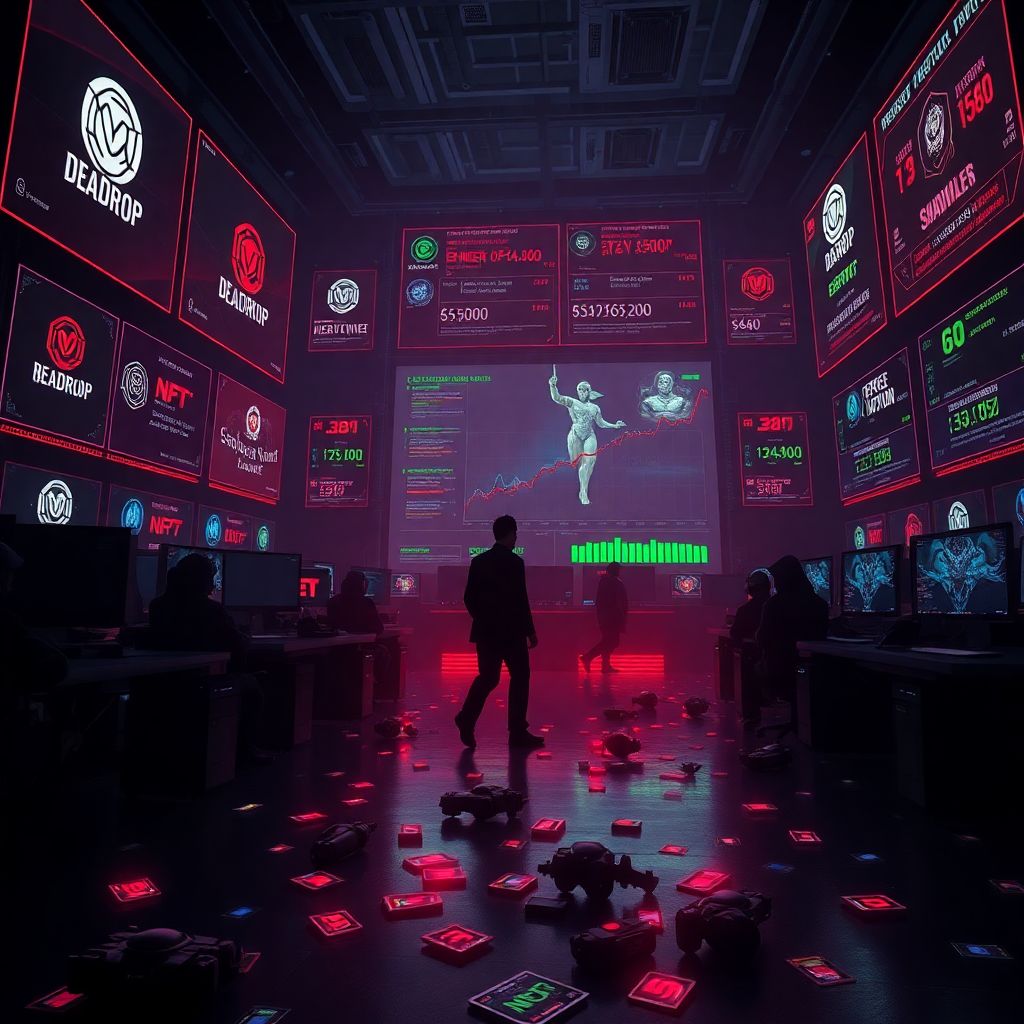
Crypto Game Crashouts: The Biggest Shutdowns in 2025
For years, blockchain gaming was pitched as the future of interactive entertainment: true digital ownership, open trading of in‑game items, and the possibility of earning money by playing. Yet 2025 has turned into a brutal reality check. A wave of high‑profile crypto games has been wound down, sold off, or quietly abandoned, exposing just how difficult it is to maintain a sustainable game and token economy at the same time.
Below is a look at the most notable crypto game shutdowns of 2025, why they collapsed, and what lessons they leave for developers, investors, and players.
—
Why So Many Crypto Games Failed in 2025
The basic promise of crypto gaming sounded powerful on paper:
– Players truly own their assets as NFTs or tokens
– Those assets can be traded freely, even outside the game
– Early players could, in theory, profit if the game succeeds
In practice, though, many teams discovered that:
1. Building a good game is extremely hard even without tokenomics.
2. Maintaining a functioning economy is even harder, especially when speculation overwhelms gameplay.
3. Funding windows closed fast as venture capital cooled on “play‑to‑earn” and regulators scrutinized tokens that looked like unregistered securities.
A number of projects launched with flashy trailers, expensive NFT mints, and ambitious roadmaps—but never reached a truly fun, stable product. Others did release playable builds, but could not retain users once token prices dropped and yields dried up.
The result: a cascade of closures, restructurings, and “hibernations” in 2025.
—
Deadrop: Big Hype, Bigger Pressure
Deadrop arrived with a massive spotlight thanks to its association with a major streamer‑turned‑developer and its promise of a “vertical extraction shooter” built on blockchain rails. NFT “Founders Passes” sold out early, generating a vocal community expecting rapid progress and long‑term support.
Yet as traditional shooter players compared Deadrop to polished free‑to‑play hits, the project faced a brutal comparison. The team struggled to simultaneously:
– Iterate on core gameplay
– Build a robust on‑chain item system
– Deliver new content at the pace live‑service players demand
By mid‑2025, development costs and shrinking enthusiasm converged. Public updates slowed, playtests thinned out, and eventually the studio confirmed that active development would be halted. The on‑chain items remain in wallets, but with no ongoing game, they function more as historical collectibles than usable gear.
—
Ember Sword: Ambitious MMORPG Meets Economic Reality
Ember Sword aimed to be a browser‑friendly MMORPG with land ownership, player‑driven economies, and cosmetic NFTs. It was one of the more “gamer‑first” projects, promising a fun experience without forcing players into crypto if they didn’t care about it.
Despite this thoughtful approach, several factors worked against Ember Sword:
– Building an MMO is vastly more expensive and time‑consuming than most early projections
– The crypto slowdown reduced access to fresh capital
– The land and cosmetic markets cooled as fewer speculators were willing to hold illiquid assets
In 2025, the team announced that large‑scale development would cease. Servers and tools were kept online for a transition period, but the grand vision of a living, expanding MMORPG economy quietly gave way to a controlled sunset.
—
Nyan Heroes: From Play‑to‑Earn Darling to Shutdown
Nyan Heroes, a hero shooter with feline‑themed mechs, once symbolized the optimism of “play‑to‑earn 2.0.” The studio pitched more sustainable tokenomics and a focus on skill‑based gameplay instead of mindless grinding.
However, the game still depended heavily on token expectations. Once the broader crypto market entered another choppy, risk‑off phase, Nyan Heroes faced:
– Declining NFT and token volumes
– Mounting development and marketing costs
– Difficulty competing with non‑crypto shooters offering slicker gameplay and massive marketing budgets
In 2025, the project was formally wound down. The shutdown underscored that simply rebranding play‑to‑earn as “play‑and‑earn” is not enough; without a compelling game that stands on its own, token‑driven economies are fragile.
—
Realms of Alurya and Symbiogenesis: Narrative Worlds That Never Fully Landed
Realms of Alurya tried to blend collectible NFTs with a lore‑rich fantasy world, offering story arcs and community‑driven world‑building. Symbiogenesis, pitched as an experimental narrative experience with on‑chain elements, similarly focused on story, scarcity, and decision‑making.
Both projects highlight a key challenge of 2025:
– Story alone isn’t enough to maintain long‑term engagement
– NFT‑gated lore and limited interaction loops struggle to retain players over months and years
As user counts flattened and secondary markets thinned out, development shifted from grand expansions to maintenance mode. Eventually, both projects announced they would stop major feature updates. Servers may remain accessible for a time, but new content has effectively stopped, freezing these universes in place.
—
The Mystery Society and Raini: The Lords of Light – Card Games Under Stress
Trading card games seemed like a natural fit for blockchain: unique cards, provable scarcity, and active secondary markets. The Mystery Society and Raini: The Lords of Light attempted to ride this wave by combining deck‑building with NFT collections.
Yet in 2025, many card‑based crypto games ran into the same problem:
– As token and NFT prices dropped, many players who came for speculation left
– Without a robust competitive scene, purely gameplay‑driven users were not enough to sustain revenue
– Balancing a live card game while preserving NFT value proved incredibly complex
Both titles scaled back operations and then halted further development. Servers either went offline or into semi‑archival modes, highlighting that the “NFT TCG” model needs more than scarcity to survive.
—
The Walking Dead: Empires – Big IP, Limited Lifespan
On paper, a blockchain game leveraging a famous zombie franchise sounded like a sure‑fire magnet for attention. The Walking Dead: Empires set out to combine survival gameplay with on‑chain land and items in an apocalyptic MMO‑style setting.
But licensed IP comes with its own challenges:
– Fees and approval pipelines increase costs and slow decision‑making
– Expectations from fans of the original franchise are extremely high
– If player metrics and in‑game revenue don’t justify the expense, partners can quickly pull the plug
By 2025, facing lukewarm user engagement and a soft secondary market for its NFTs, the project’s backers chose not to extend its runway. The game’s closure shows that even recognizable brands cannot guarantee success in the crypto gaming space.
—
MetalCore, Blast Royale, Mojo Melee, and OpenSeason: Mid‑Core Experiments That Ran Out of Road
A cluster of “mid‑core” PvP and strategy titles—MetalCore, Blast Royale, Mojo Melee, and OpenSeason—spent the past few years testing ways to blend free‑to‑play gameplay with on‑chain assets. Each tried different tactics:
– MetalCore leaned into large‑scale mech warfare with tokenized assets
– Blast Royale proposed fast, bite‑sized battle royale matches with NFT loadouts
– Mojo Melee combined auto‑battler mechanics with collectible characters
– OpenSeason targeted more casual competitive play with interoperable assets
Individually, some of these games had dedicated player pockets. Collectively, though, they faced systemic headwinds: user acquisition costs in gaming skyrocketed; regulatory scrutiny made token launches riskier; and crypto‑native players were no longer willing to pour capital into unproven economies.
By 2025, most of these projects either paused operations, shifted away from blockchain entirely, or shut down after failing to achieve the scale needed to justify ongoing live‑ops.
—
Tokyo Beast, Pirate Nation, and Ragnarok: Monster World – The Themed Worlds That Couldn’t Scale
Theme and aesthetics are critical in gaming, and projects like Tokyo Beast, Pirate Nation, and Ragnarok: Monster World tried to differentiate themselves with strong identities: futuristic urban monsters, swashbuckling pirates, and creature‑collecting fantasy worlds.
Their downfall reveals a recurring pattern:
– Eye‑catching art and a strong initial mint can generate buzz, but
– Long‑term survival depends on deep progression systems, regular content updates, and stable economies
As token rewards decreased and NFT trading fell, many of these games saw daily active users plummet. Some attempted to pivot to more traditional free‑to‑play monetization, but the original economic promises made to early NFT buyers limited their flexibility.
When revenues could no longer support active development teams, shutdowns and slow fades became inevitable.
—
Moonfrost, Dragginz, Age of Dino, and Jungle: Casual and Social Experiments
Not every 2025 casualty was a hardcore combat game. Moonfrost, Dragginz, Age of Dino, and Jungle leaned more into casual, social, or creature‑collecting experiences with on‑chain assets.
Their goals included:
– Appealing to mobile and casual audiences
– Making blockchain optional but beneficial
– Building cozy or social worlds where players might organically trade items
But casual players often care even less about wallet setup and token speculation than core PC or console gamers. Without simple onboarding and clear value beyond speculation, the friction was too high. Many players treated these projects as mobile games with extra complexity—and simply moved on to easier alternatives.
By 2025, ongoing updates slowed or stopped altogether. Some studios signaled intentions to “relaunch” without blockchain, while others simply sunset servers and support.
—
Captain Tsubasa Rivals: Niche Sports Fandom Meets Token Fatigue
Captain Tsubasa Rivals attempted to combine a beloved sports manga IP with crypto mechanics, aiming to capture both football fans and collectors. It offered character NFTs, PvP matches, and token rewards.
Yet by the time it gained traction, market conditions had changed dramatically:
– Sports‑themed NFTs no longer commanded the premiums they once did
– Competing football games without crypto friction were far more polished and accessible
– Regulatory questions around token rewards made some regions difficult to serve
With limited growth prospects and rising operational costs, the project joined 2025’s growing list of closures. The case illustrates how even well‑known franchises can struggle to overcome the perception that “crypto” equals complexity and risk.
—
What About Games That Survived?
Not every blockchain game collapsed in 2025. Some titles, such as Off the Grid from Gunzilla Games, managed to reach broader gaming audiences first and kept their blockchain components relatively subtle. In those cases:
– The core game is front and center
– On‑chain items are an enhancement, not the main selling point
– Players don’t need to become token speculators to enjoy the experience
This contrast is critical. The projects that shut down often led with tokenomics and NFT sales, then tried to build a game around them. Survivors tended to invert that order, focusing on a polished gameplay loop and using blockchain as infrastructure rather than the product itself.
—
Key Lessons from the 2025 Crypto Game Shutdown Wave
The failures of 2025 aren’t just a list of casualties; they’re a playbook of what not to do:
1. Token‑first design is fragile
If the primary value proposition is “earn money while playing,” interest collapses when token prices fall.
2. Overpromising and under‑delivering is fatal
Years of trailers, mints, and roadmaps without a fun, stable release erode trust with both players and investors.
3. Economies must be sustainable without constant new buyers
Many games relied on fresh NFT buyers to support existing holders, a structure that breaks once user growth slows.
4. Regulation matters
As authorities take a harder look at game tokens, teams have to navigate legal questions that traditional game developers don’t face.
5. Live‑ops are expensive
Running seasonal content, events, and esports while also maintaining a blockchain stack is costly. Without a strong revenue foundation, the math doesn’t work.
—
What This Means for Future Crypto Games
The 2025 crashouts do not necessarily spell the end of blockchain in gaming, but they sharply narrow the path forward. Future projects that want to avoid the same fate will likely need to:
– Launch fun, complete games first, then gradually add on‑chain features
– Treat NFTs and tokens as optional tools, not mandatory gates
– Design economies that stand even if token speculation disappears
– Focus on simple onboarding where players don’t need to understand wallets or gas fees to start playing
– Communicate realistic timelines and avoid funding the entire studio off one hyped NFT sale
Players, for their part, are becoming more discerning. Many now ask whether a game offers real entertainment value apart from any potential financial upside. The days when a whitepaper and a flashy trailer could carry a project for years are clearly over.
—
Conclusion: A Brutal, Necessary Reset
2025 will be remembered as the year the crypto gaming sector faced its toughest reckoning. From high‑profile titles like Deadrop and Nyan Heroes to niche experiments like The Mystery Society or Jungle, dozens of projects discovered that building a lasting game is far more challenging than minting NFTs.
Behind every shutdown are developers who spent years chasing a vision, players who invested time and money, and investors who bet on a new paradigm. For the industry, this painful correction may ultimately be healthy. It clears out unsustainable models and makes room for teams who see blockchain not as a shortcut to riches, but as one more tool in the long, difficult craft of making great games.
The next generation of crypto games—if it emerges—will almost certainly look different: less speculative, more subtle in its use of blockchain, and far more focused on delivering the one thing many 2025 crashouts never fully achieved: a game people want to keep playing, even when there is nothing left to earn.