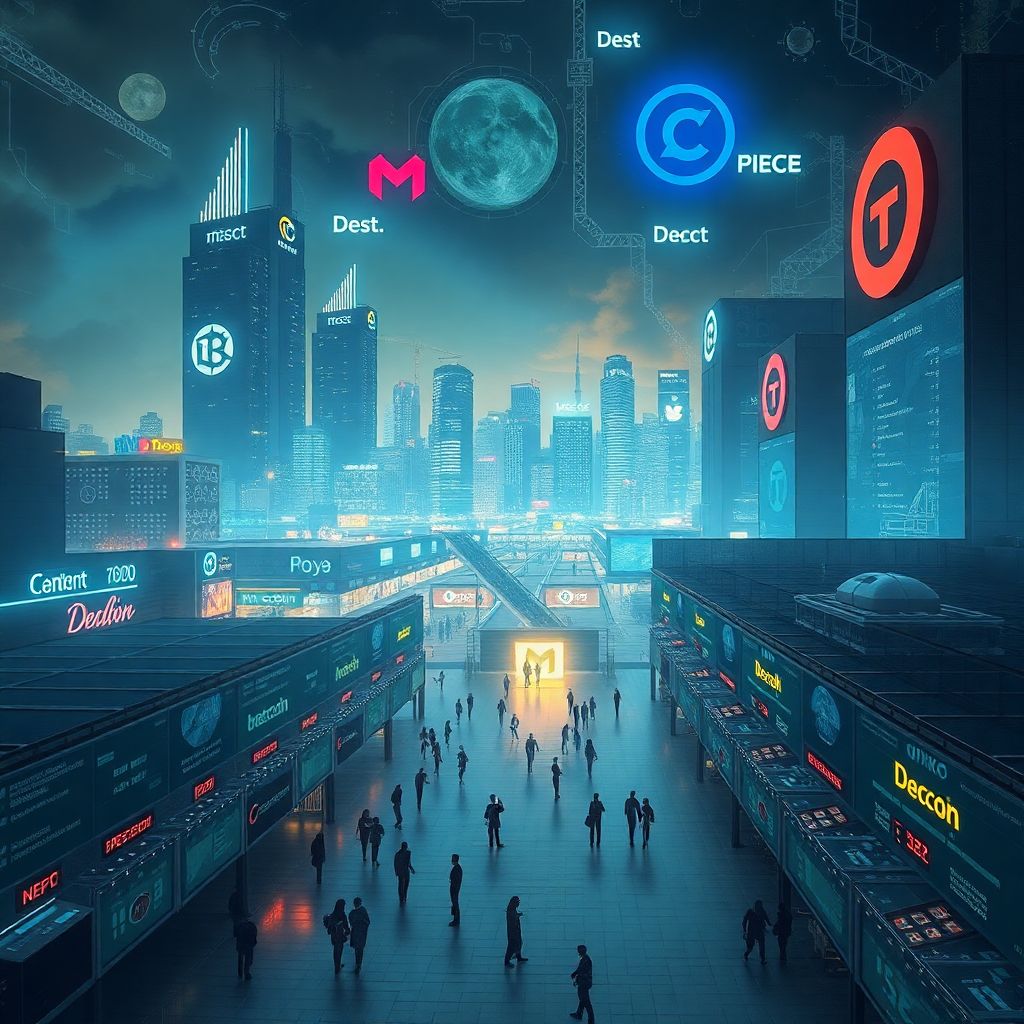
Centralized Tech Is Suffocating the Internet’s Potential
While the internet still presents itself as an endless landscape of content—endless scrolls of videos, articles, and images—the reality is far more restricted. The vast majority of the internet, estimated to be over 90%, resides in the Deep Web, remaining unindexed and inaccessible to the average user. What we interact with daily is a curated, narrowed slice controlled by a handful of powerful entities.
In the early days, the internet was a decentralized frontier promising open access to information and diverse voices. Over time, that promise has eroded. Much like the consolidation that gripped traditional media—where six corporations control the lion’s share of the U.S. media landscape—the web has followed a similar trajectory. Tech giants now dictate what content is seen, prioritized, and monetized, effectively turning the open web into a gated community.
This shift is not just about access. It’s about control. Modern digital devices—from smartphones to smart TVs—act as both consumption tools and surveillance mechanisms. Equipped with microphones, cameras, and sensors, they record our habits, preferences, and even our physical environments with remarkable precision. These data trails fuel algorithmic engines designed not to inform or empower, but to manipulate, often pushing users toward impulsive consumption.
A major driver of this trend is the relentless pursuit of shareholder value. With AI technologies now at the forefront, the internet’s direction is increasingly determined by machines optimized to maximize engagement and ad revenue, not human connection or informational value. The result? A digital ecosystem filled with low-effort, high-volume content aimed at keeping users scrolling, not thinking.
This algorithmic bias has created an environment where only commercially viable or broadly appealing narratives rise to the top. Unique voices, independent creators, and critical thinkers are frequently buried beneath mounds of sponsored content and SEO-optimized fluff. The internet is no longer a marketplace of ideas—but a shopping mall where every aisle leads to a checkout page.
AI-generated content is accelerating this decline. What began as a tool to assist creators has turned into a flood of synthetic material, often indistinguishable from human work. According to cybersecurity data, bots accounted for nearly half of all web traffic by 2023. In 2025, a study of nearly a million new web pages revealed that over 74% were created by AI. If current trends continue, synthetic content could dominate up to 90% of the web by 2026.
This shift represents more than just a technological evolution—it’s a cultural and cognitive crisis. As the line between authentic and artificial continues to blur, our ability to distinguish truth from fabrication is weakening. The internet, which once promised transparency and democratized access to knowledge, is becoming a hall of mirrors.
There’s a growing fear that we’re on the brink of what some call the “dead internet”—a concept where most online activity is generated by bots, not people. In such a scenario, meaningful human expression becomes marginalized, drowned in a sea of algorithmically generated noise. The web, once hailed as the most powerful tool for mass communication since the printing press, risks becoming a wasteland of recycled, purposeless content.
But this outcome is not inevitable. A conscious shift toward human-centric content can still reverse this trajectory. Supporting creators who prioritize substance over virality, and who strive for accuracy and empathy rather than outrage and clickbait, can breathe life back into the digital commons. Platforms that reward authentic interaction, thoughtful discourse, and genuine creativity can foster a renewed sense of community and trust.
Decentralization offers one potential escape route. By dispersing control away from a few dominant players, decentralized technologies can empower users to own their data, curate their experience, and support the creators and ideas they value. Blockchain-based platforms, peer-to-peer networks, and open-source tools can help reestablish the internet as a space driven by people, not profit.
Yet decentralization alone isn’t a silver bullet. It must be accompanied by a cultural shift—a renewed commitment to media literacy, ethical tech development, and digital sustainability. Users must be educated not just in how to navigate the web, but in how to question it, challenge it, and build better alternatives.
There is also an urgent need for regulatory frameworks that protect users from exploitative data practices and enforce transparency in algorithmic decision-making. Governments and institutions must step in to ensure that the digital public square remains accessible, equitable, and free from monopolistic control.
Furthermore, platforms must reevaluate their metrics of success. Engagement should not be defined solely by time spent or clicks earned, but by the quality of interactions and the value delivered to users. Moving away from dopamine-driven design toward more intentional, mindful user experiences can help rebuild digital spaces that nurture, rather than exploit, human attention.
Collaborative efforts between technologists, policymakers, educators, and users are essential. Community-driven moderation, ethical AI development, and support for open standards can form the backbone of a more resilient internet ecosystem.
Ultimately, the internet’s future depends on the choices we make today. Will we continue down a path of centralized control, algorithmic manipulation, and synthetic saturation? Or will we reclaim the web as a space for authentic human connection, creativity, and collective growth?
The internet should not become a digital junkyard of monetized distraction. It can still be a place of discovery, learning, and empowerment—if we choose to fight for it.