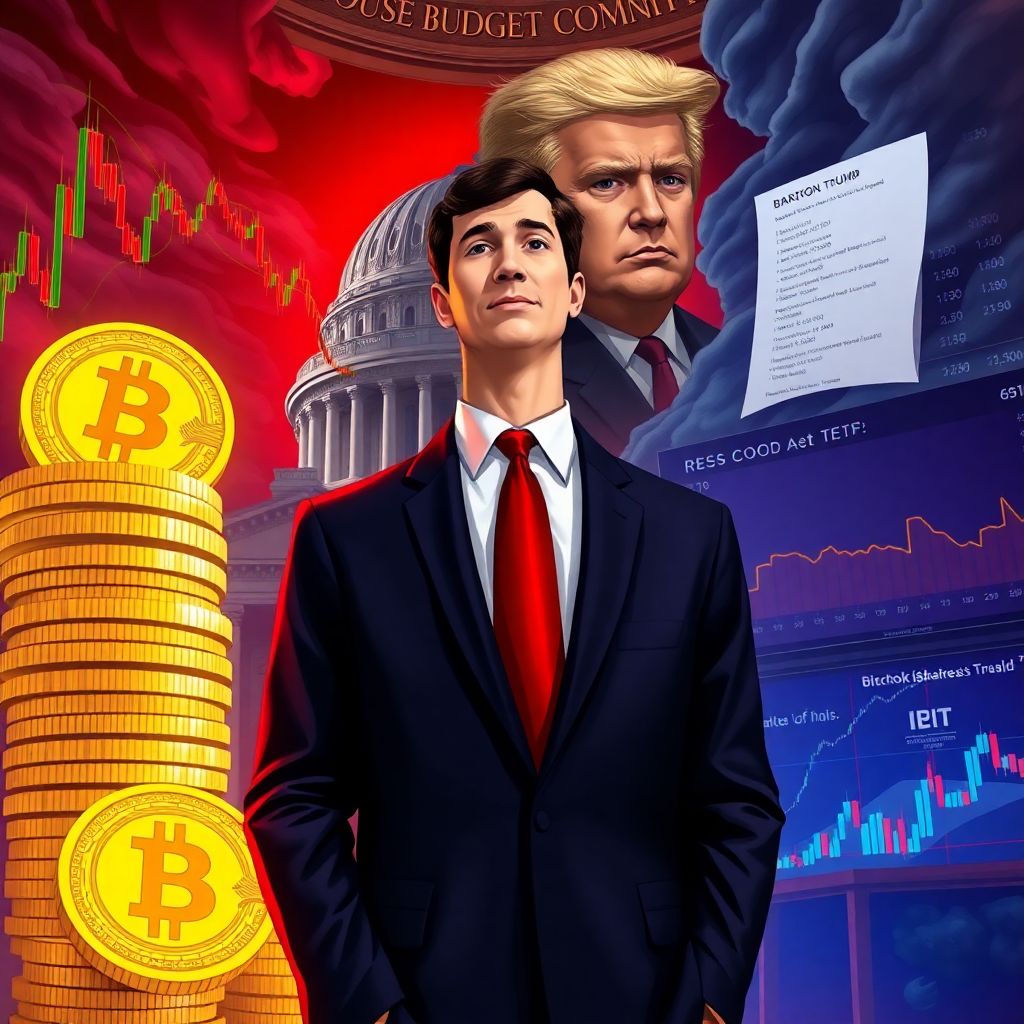
Trump-aligned Congressman Brandon Gill has quietly expanded his already hefty exposure to Bitcoin, disclosing another six-figure investment in the leading cryptocurrency along with fresh purchases of a Bitcoin exchange-traded fund.
According to his most recent financial transaction report filed with the clerk of the U.S. House of Representatives on November 18, the Texas Republican reported adding up to $300,000 in combined Bitcoin and Bitcoin ETF holdings in late October. The disclosures, which list investments in value ranges rather than exact figures, show that Gill bought somewhere between $100,000 and $250,000 in Bitcoin on October 20. Nine days later, on October 29, he reported acquiring between $15,001 and $50,000 worth of shares in BlackRock’s iShares Bitcoin Trust ETF (ticker: IBIT).
These latest moves reinforce Gill’s position as one of the most active crypto investors in Congress. Over the course of this year, he has accumulated as much as $2.6 million in Bitcoin alone, based on the upper limits reported in his periodic transaction statements. The filings also indicate significant exposure to the largest U.S.-listed Bitcoin exchange-traded product, underscoring a dual strategy of holding both spot Bitcoin and regulated financial instruments linked to it.
Gill, a freshman lawmaker and former investment banker, serves on the House Budget Committee, positioning him at the center of debates over federal spending, fiscal policy, and increasingly, digital assets. His financial disclosures put him in a relatively rare category among lawmakers: a sitting member of Congress with multimillion-dollar exposure to a highly volatile, politically charged asset class. His close alignment with former President Donald Trump—who has recently spoken favorably about Bitcoin and other digital assets—adds an additional political dimension to his investment activity.
Under House ethics rules, members of Congress must report most stock, bond, and certain other financial trades within 45 days, usually in value bands such as $15,001–$50,000, $50,001–$100,000, or $100,001–$250,000. Gill’s report follows that pattern, making it impossible to determine the exact number of Bitcoins or ETF shares he purchased, but the ranges alone reveal that he is deploying substantial capital into the sector. The cumulative total of up to $2.6 million in Bitcoin this year places him among the largest known individual BTC holders in the federal legislature.
The choice to combine direct Bitcoin ownership with an ETF is significant. Holding Bitcoin directly typically means dealing with wallets, private keys, and the security challenges that come with self-custody or third-party custodians. By adding BlackRock’s iShares Bitcoin Trust, Gill is also gaining exposure through a more traditional investment wrapper that trades on conventional securities markets, can be held in brokerage accounts, and is more familiar to institutional investors. This diversified approach may suggest that Gill sees value in both the censorship-resistant, bearer-asset nature of Bitcoin itself and the liquidity and regulatory clarity associated with exchange-traded funds.
Gill’s activity comes at a moment when cryptocurrency policy is increasingly becoming a partisan and electoral issue. Republican lawmakers have generally been more vocal in criticizing what they describe as regulatory overreach toward digital assets, while many Democrats have pressed for tighter oversight, citing consumer protection and financial stability concerns. As a vocal Trump ally, Gill’s sizable Bitcoin bet is likely to be viewed by supporters as a sign of confidence in the long-term role of digital assets and by critics as a potential conflict of interest in upcoming policy debates.
The fact that Gill sits on the House Budget Committee adds another layer of scrutiny. The committee’s remit includes federal spending priorities and oversight over the broader economic framework in which crypto regulation is being shaped. While there is no rule prohibiting members from investing in digital assets, large personal positions can raise questions about impartiality, especially if legislation or regulatory pressure directly affects the value of those holdings.
At the same time, Gill’s investments also reflect a broader trend: an increasing number of U.S. politicians are either investing in or openly discussing Bitcoin as a strategic asset. For some, it represents a hedge against inflation and fiscal mismanagement. For others, it is tied to a vision of American innovation, financial sovereignty, and competition with adversarial countries that are exploring alternatives to the U.S. dollar. Gill’s professional background in investment banking likely informs his view of Bitcoin not merely as a speculative play, but as a macro asset with global implications.
The scale of his purchases suggests he is operating with a long-term horizon rather than simply trading short-term volatility. Bitcoin has gone through multiple boom-and-bust cycles, and while past performance is no guarantee of future results, the willingness to allocate up to millions of dollars signals a conviction that digital scarcity and growing institutional adoption could continue to drive demand. The addition of a BlackRock-managed ETF also points to an awareness of how mainstream financial products can amplify access and legitimacy for Bitcoin among more conservative investors.
Gill’s disclosures also highlight how the rules governing congressional investments were not designed with volatile, 24/7, globally traded digital assets in mind. The reporting system captures ranges, not real-time valuations, and offers only a snapshot of a lawmaker’s crypto exposure at specific moments. Given the rapid price swings typical of Bitcoin, the nominal range of $100,000–$250,000 at the time of purchase could translate into a materially different figure weeks or months later, complicating any effort to assess ongoing financial incentives.
Ethics advocates have long argued for stricter rules on lawmakers trading individual assets, including bans or blind trusts, to prevent potential conflicts of interest. The emergence of crypto as a meaningful share of some members’ portfolios may intensify that debate. On one hand, personal investment can give legislators first-hand experience with technologies they are regulating. On the other, there is a risk that policy decisions could be influenced—consciously or not—by the financial stakes they hold.
For the crypto industry, high-profile political figures holding Bitcoin can be a double-edged sword. It can help normalize the asset, signaling to skeptical voters that digital currencies are no longer just fringe experiments. But it can also politicize Bitcoin, tying its public image to specific parties, candidates, or ideological camps. Gill’s alignment with Trump and his pro-Bitcoin posture risk reinforcing perceptions that the asset is becoming a red-versus-blue issue rather than a neutral technology.
Looking ahead, Gill’s financial choices make it likely that he will remain an outspoken participant in legislative battles over digital-asset policy. Key issues on the horizon include the regulatory status of stablecoins, the division of authority between securities and commodities regulators, taxation of crypto transactions, and rules governing digital-asset custodians and exchanges. With up to $2.6 million in Bitcoin holdings on the line, his voice in those debates will carry both political weight and personal financial consequences.
For voters and observers, the disclosure underscores how digital assets are no longer a niche topic. They have become part of the financial lives of ordinary investors, institutional players, and now, prominent elected officials. Whether Bitcoin continues to rise in value or undergoes another severe downturn, Gill’s filings will remain a closely watched barometer of how deeply cryptocurrency has penetrated the political class—and how that, in turn, might shape the rules under which the entire market operates.