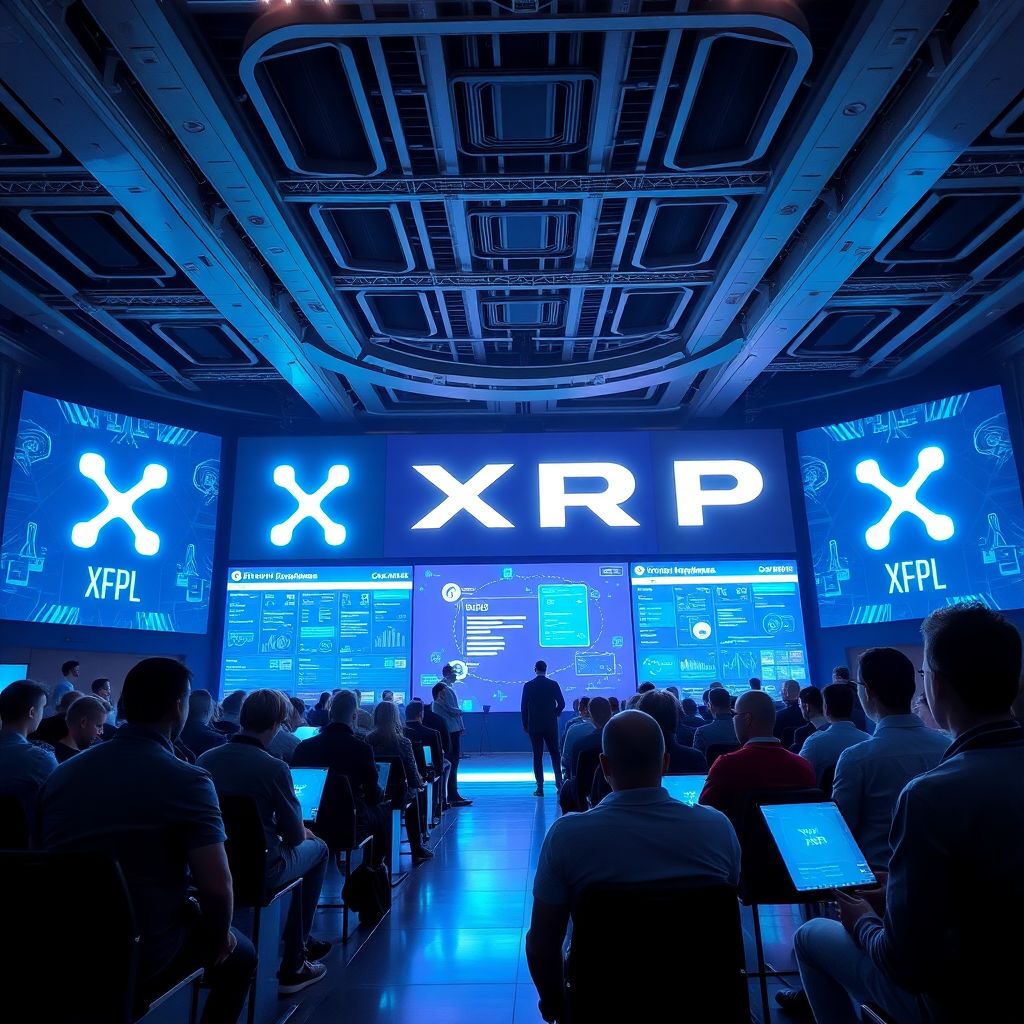
XRP community gears up for pivotal week with Paris showcase and major XRPL security audit
The coming days are shaping up to be a milestone moment for the XRP ecosystem, as community leaders, developers, and security researchers converge around two key events: a high‑profile XRP community gathering during Paris Blockchain Week and a large‑scale audit contest focused on upcoming XRP Ledger (XRPL) upgrades.
Together, these initiatives underline how the ecosystem is evolving on two fronts at once: public visibility in one of Europe’s most important crypto hubs and a renewed push for rigorous, incentive‑driven security testing of new protocol features.
Paris Blockchain Week puts XRP ecosystem in the spotlight
The centerpiece of the week for many community members will be the XRP community night scheduled for April 15, running from 7 p.m. to 10 p.m. at Solum in Paris. Timed to coincide with Paris Blockchain Week, the event is designed as a focal point for users, builders, and partners who have helped shape the XRPL over the past years.
Paris Blockchain Week has grown into one of Europe’s flagship digital asset conferences, drawing an international mix of founders, Web3 startups, institutional players, and regulators. Within that broader context, the XRP gathering serves as a dedicated space for those specifically building on or following the XRP Ledger to meet face‑to‑face, exchange ideas, and discuss the next phase of development.
Previous editions of XRP community night have attracted a diverse range of participants, from early‑stage XRPL project teams and infrastructure providers to payment companies and individual token holders. Organizers expect this year’s turnout to be particularly strong among European developers and power users who see Paris as a natural convening point for the region.
European XRP community seen as a key regional hub
Well‑known XRP Ledger validator Vet highlighted the upcoming week as especially significant for the European contingent of the community. Commenting on the event, Vet emphasized that Paris has consistently hosted a strong XRPL presence, describing Europe as one of the leading regional hubs for layer‑1 activity tied to XRP.
Vet also pointed to the role of XRPL Commons and other Europe‑based initiatives in turning the region into an important experimentation ground for new use cases. This context has sharpened attention on the Paris gathering, as many expect discussions to touch not only on current projects but also on how Europe’s regulatory and business environment can support future XRPL growth.
For developers and entrepreneurs, this combination of community energy and regulatory clarity is increasingly important. With more Web3 projects seeking compliant frameworks and institutional relationships, hubs like Paris offer a bridge between grassroots builders and traditional finance, a dynamic that could prove crucial for XRP‑related payment and tokenization solutions.
XRPL hackathon period intersects with security contest
Running in parallel with the Paris event is a major technical initiative: a feature‑unlock audit contest for the XRP Ledger, organized in collaboration between security platform Sherlock and Ripple. The contest begins on April 13 and runs through April 27, 2026, creating a two‑week window during which independent researchers and developers are incentivized to probe new XRPL functionalities.
Positioned within a broader XRPL hackathon period, the contest is expected to draw a mix of smart contract auditors, blockchain security experts, and protocol engineers who specialize in identifying edge‑case vulnerabilities and design weaknesses. For many builders attending Paris Blockchain Week, the timing reinforces the message that innovation on XRPL is being accompanied by a methodical emphasis on robustness and safety.
Focus areas: core features on the XRPL roadmap
Sherlock outlined a clear set of features that will be under review during the contest. These include:
– Batch Transactions – tooling that allows multiple actions to be grouped into a single operation, potentially improving efficiency and lowering costs for high‑volume users.
– Permission Delegation – mechanisms that let accounts delegate specific rights or actions to others, opening the door to more flexible custody, automation, and access‑control patterns.
– MPT DEX – an evolution of decentralized exchange capabilities linked to the XRPL’s native order‑book style trading, with a focus on scalability and advanced matching logic.
– Confidential Transfers for MPT – privacy‑enhancing techniques intended to obscure certain transactional details while preserving verifiability and compliance features.
– Sponsored Fees – a model that lets third parties cover transaction fees on behalf of end users, which can make onboarding smoother and enable new business models.
– Reserves – updates to how reserve requirements and related parameters are handled on ledger, which can influence account creation, spam prevention, and overall network health.
Taken together, these upgrades touch nearly every major dimension of ledger activity: execution of transactions, control over account permissions, trading environments, privacy, user experience, and the economic safeguards that protect the protocol from abuse. That breadth is one of the reasons the security contest has drawn attention from across the wider crypto security community.
A significant prize pool underscores the stakes
The audit program is backed by a prize pool of 550,000 dollars, a figure that signals both the importance of the features under review and the growing role of competitive audit formats in blockchain security. Such prize structures are designed to reward not just cosmetic feedback, but the discovery of severe vulnerabilities, logical flaws, and design risks that could have real‑world consequences if left unaddressed.
By tying meaningful compensation to tangible findings, the contest aims to attract top‑tier talent who might otherwise focus on more established bug bounty programs or protocol audits. In practice, this creates a temporary “pressure test” environment where upcoming XRPL features are scrutinized from multiple angles before they are widely deployed.
Ripple’s broader pivot to proactive, AI‑driven security
The contest does not exist in isolation. It follows Ripple’s recent shift toward a more proactive security posture for the XRP Ledger. The company has emphasized that it is increasingly integrating AI‑assisted tools and automated analysis into its security workflows, with the goal of spotting anomalies and design issues earlier in the development process.
This move reflects a broader trend across the industry: as protocols become more complex and handle greater value, traditional manual reviews are being augmented with machine‑driven pattern detection, fuzzing, and behavioral analysis. For XRPL, combining internal AI‑supported safeguards with an open, competitive audit format marks a layered security strategy designed to anticipate, rather than merely react to, emerging threats.
The two‑week Sherlock contest is a practical extension of that philosophy. It invites outside experts to validate, challenge, and stress‑test new XRPL components under real‑world conditions, ideally catching issues before they can manifest in production environments or impact users.
Why this week matters for XRPL’s evolution
For the XRP community, the overlap of Paris Blockchain Week and the XRPL audit contest sends a clear signal: the ledger is moving into a phase where narrative and technology must advance side by side. On one hand, events like the Paris gathering help shape public perception, strengthen partnerships, and give a platform to projects building on XRPL. On the other, deep security work and rigorous audits ensure that the underlying infrastructure can safely support those ambitions.
This dual focus is especially important as the XRPL roadmap touches on sensitive areas like confidential transfers, delegated permissions, and more flexible fee models. Such features can unlock powerful new use cases in payments, DeFi, and tokenization, but they also introduce attack surfaces that must be thoroughly understood.
Community members who follow XRP price action and policy developments, such as the CLARITY Act, are increasingly aware that technical resilience, regulatory clarity, and ecosystem visibility all influence long‑term adoption. A well‑secured ledger with credible use cases stands a much better chance of weathering market cycles than one that moves fast but neglects operational risks.
Potential implications for developers and businesses
For developers building products on XRPL, the audit contest and the roadmap features it covers offer concrete signals about where the ecosystem is headed. Batch transactions and sponsored fees, for example, can make high‑throughput or consumer‑facing applications more viable, as they reduce friction for end users and allow teams to abstract away some of the complexity of on‑chain interactions.
Permission delegation can be particularly relevant for institutional users, custodians, or enterprise deployments that require granular control over who can do what with specific accounts. Combined with improvements to the decentralized exchange layer and privacy‑preserving transfers, these tools could help position XRPL as a more versatile platform for both retail and institutional flows.
Businesses attending Paris Blockchain Week will likely watch these developments closely, especially those interested in payments, tokenized assets, and compliance‑friendly DeFi. A ledger that marries performance with robust access controls and optional privacy features can fit into a wide range of regulatory contexts, which is increasingly important as jurisdictions refine digital asset rules.
Community expectations and the road ahead
Beyond the technical specifics, the upcoming week is also a test of how the XRP community organizes itself around key milestones. A strong turnout at the Paris event, active participation in the audit contest, and substantive discussion of the new features can all serve as indicators of the ecosystem’s health and cohesion.
If the contest uncovers critical issues that are then quickly patched, it will reinforce confidence in the XRPL’s capacity to evolve safely. If it validates the robustness of the planned upgrades, builders and institutional partners may feel more comfortable committing to XRPL‑based roadmaps that depend on those features.
In either scenario, the process itself-transparent review, public engagement, and clear communication of results-will be just as important as the specific technical findings.
A defining moment for visibility and security
Taken together, the Paris community gathering and the XRPL audit initiative mark a defining moment for the XRP ecosystem. They reflect a maturing network that is not only seeking greater recognition on the global stage, but also investing heavily in the behind‑the‑scenes engineering and security work that long‑term success requires.
As the week unfolds, attention will remain on how effectively the community can translate this momentum into concrete outcomes: deeper collaboration among European builders, clearer roadmaps for new features, and a stronger, more thoroughly tested XRP Ledger ready to support the next wave of applications and market activity.