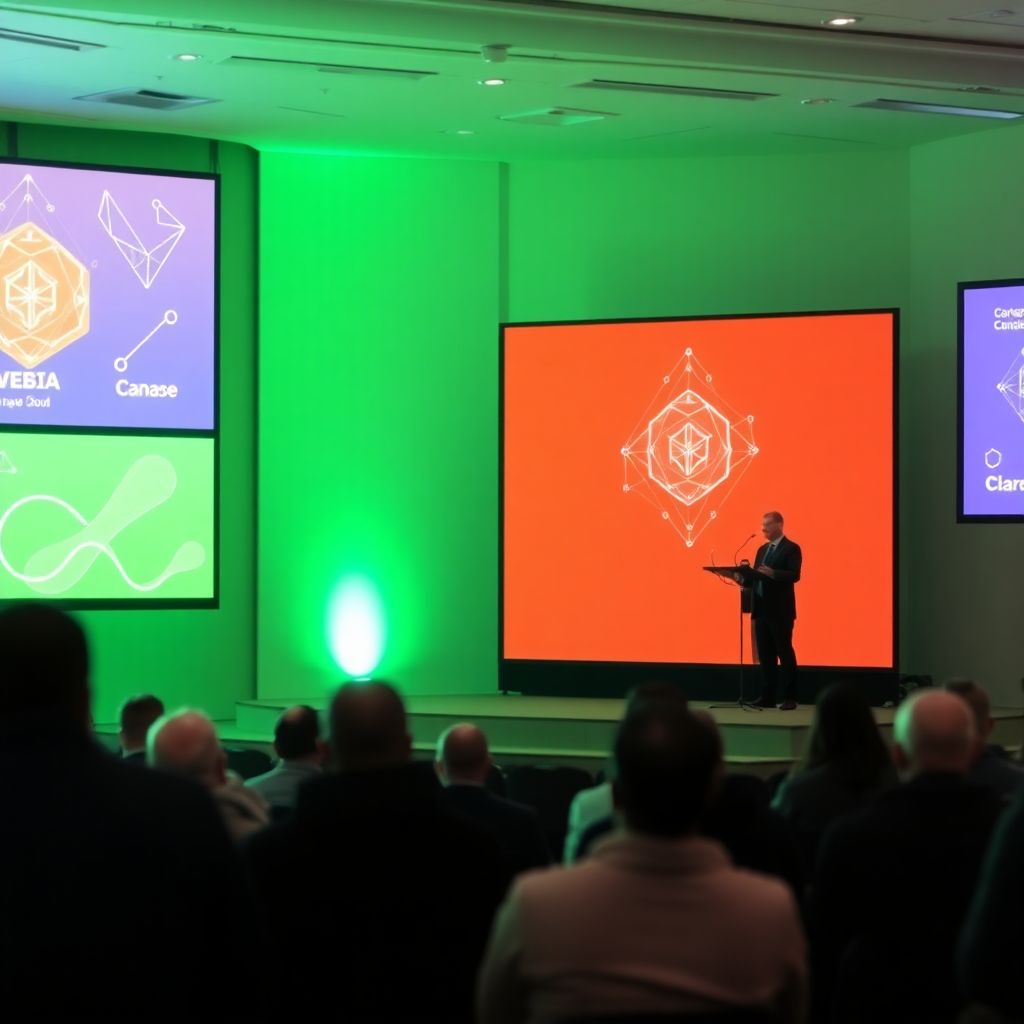
The Blockchain Division has officially wrapped up 2025 with the landmark event “Crypto Yolka,” introducing an unprecedented community-driven investment fund focused on the convergence of Web3 and artificial intelligence. Held on December 19 in Nizhny Novgorod, this strategic gathering marked the final phase of a year-long initiative aimed at creating a sustainable tech ecosystem in the region. More than a celebratory year-end meetup, “Crypto Yolka” served as the culmination of a meticulously planned series of four major events, each contributing to the foundation of a long-term regional innovation hub.
This fourth and final installment followed three key events: Startup Pitch Day, the flagship web3ai.co Forum, and the Case Study Meetup. Together, they formed a blueprint for ecosystem development, with “Crypto Yolka” serving as the capstone. At the center of this closing event was the announcement of a unique investment fund, crafted to back early-stage projects operating at the intersection of Web3 and AI technologies. What sets this fund apart is its commitment to decentralization: funding decisions will be made collectively by community members through a transparent voting mechanism.
The Blockchain Division emphasized that this approach redefines how strategic funding is allocated, turning passive attendees into proactive stakeholders. “We’re building something fundamentally new here,” said a spokesperson from the organizing team. “By merging the decentralized ethos of Web3 with the transformative capabilities of AI, and then putting the power directly into the hands of the builders, we’re creating an entirely different innovation pipeline. Every event we hosted this year was a step in that direction.”
Unlike traditional tech conferences, “Crypto Yolka” was designed with a focus on quality over quantity. Capped at just 100 participants, the event prioritized depth of interaction, giving attendees the rare opportunity to engage in serious deal-making, forge key partnerships, and discuss long-term strategies. The curated format enabled direct dialogue between founders, developers, and investors, fostering a collaborative environment rather than a competitive one.
The choice of Nizhny Novgorod as the geographic focal point of this initiative is no accident. Strategically located between Moscow and Kazan, the city benefits from robust transport infrastructure and a growing reputation as a rising tech hub. With plans underway to launch new, cutting-edge technology campuses, the region is well-positioned to attract both domestic and international talent.
By establishing Nizhny Novgorod as a regional center for blockchain and AI activity, the Blockchain Division and its partners aim to decentralize innovation away from traditional urban strongholds. Their strategy hinges on creating a self-sustaining community that can identify, incubate, and accelerate breakthrough technologies while remaining grounded in local talent and resources.
Looking ahead, the first disbursement of investment capital from the newly formed community fund is scheduled for 2026. The projects set to receive funding will be determined through the collective vote of registered community members. This model not only ensures alignment with community priorities but also reinforces the core principles of transparency, accountability, and shared ownership.
The fund will target startups that demonstrate tangible synergies between Web3 infrastructure—such as decentralized identity, smart contracts, and tokenization—and AI capabilities, including machine learning, data analysis, and generative models. The goal is to support pioneering solutions in fields like decentralized finance (DeFi), data marketplaces, autonomous agents, and ethical AI governance.
In addition to funding, selected projects will receive access to a regional support network, including mentorship from experienced entrepreneurs, technical advisory from Web3 and AI professionals, and potential pilot opportunities within the local ecosystem. This multi-pronged approach is designed to increase the long-term viability and scalability of early-stage ventures.
Plans are also underway to integrate educational initiatives into the ecosystem. These include workshops, developer bootcamps, and research grants aimed at students and young professionals. The objective is to cultivate a new generation of innovators who are fluent in both blockchain and AI technologies and who can contribute meaningfully to the growth of the ecosystem.
Another key feature of the fund is its governance framework. Voting rights will be distributed among verified community residents, ensuring that strategic decisions reflect the collective wisdom of active contributors rather than external investors. This model of participatory governance is expected to serve as a proof-of-concept for future decentralized funding mechanisms.
The success of “Crypto Yolka” also signals a broader shift in how regional tech ecosystems are formed. Rather than relying on top-down institutional support, the Blockchain Division is demonstrating the power of bottom-up, community-led innovation. In doing so, they are setting a precedent for other regions aiming to build their own tech sovereignty.
By the end of the event, several MoUs (Memorandums of Understanding) had been signed between participating startups and potential partners, signaling that the initiative is already yielding tangible results. Attendees left with not only new connections but also a shared sense of purpose and direction heading into 2026.
With strong momentum and a clear roadmap in place, the Blockchain Division’s “Crypto Yolka” has done more than close out the year—it has officially opened a new chapter for Web3 and AI innovation in the region. The community fund is now set to become a central mechanism for turning promising ideas into impactful, real-world solutions.
As the regional ecosystem continues to evolve, stakeholders across the tech spectrum are watching closely. The intersection of decentralized systems and artificial intelligence represents one of the most dynamic frontiers in the digital economy, and Nizhny Novgorod may soon become a key node in that global network.