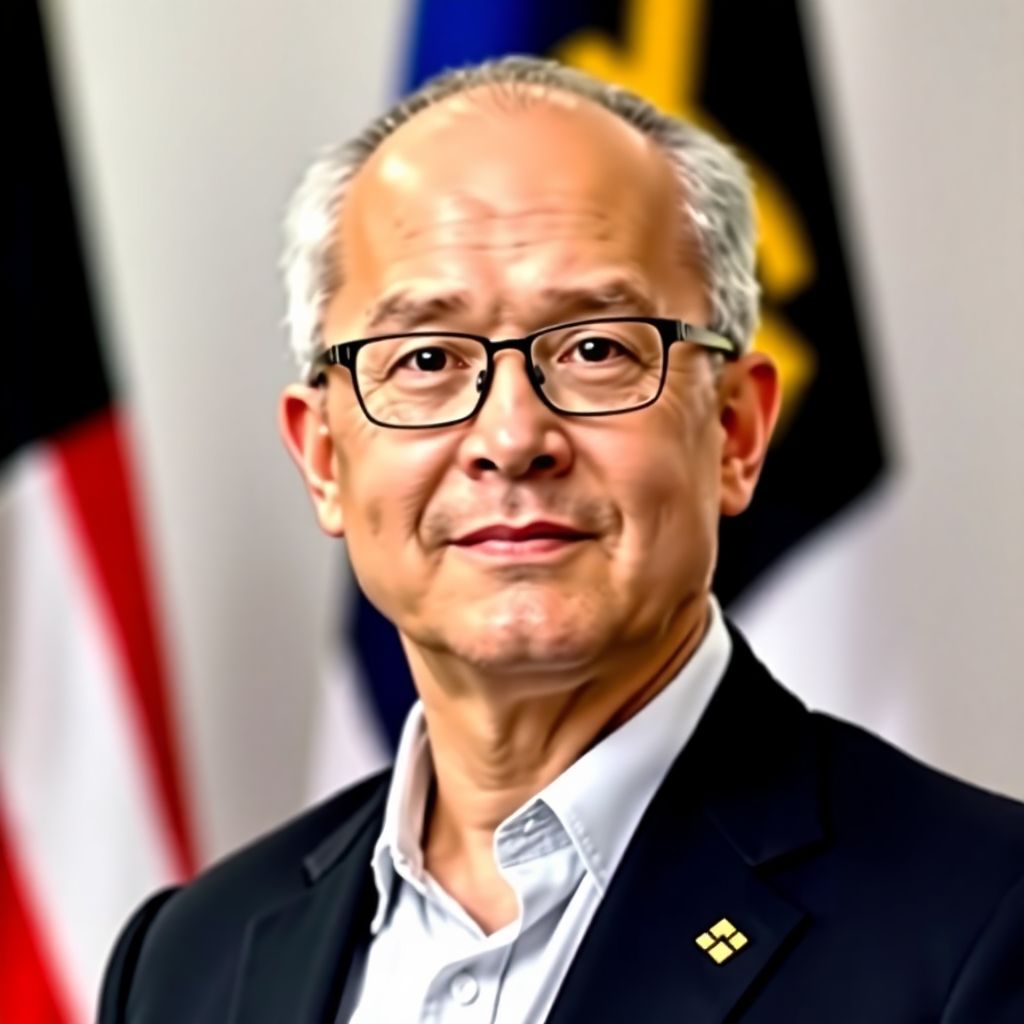
Trump Reportedly Mulls Presidential Pardon for Binance Founder Changpeng Zhao
Former U.S. President Donald Trump is allegedly exploring the possibility of granting a presidential pardon to Changpeng Zhao—better known as CZ—the co-founder and ex-CEO of Binance, one of the world’s largest cryptocurrency exchanges. This contemplation comes at a pivotal time for the crypto sector, which is experiencing heightened volatility amid broader geopolitical and economic tensions.
According to insider sources cited by Fox Business reporter Charles Gasparino, early discussions have emerged within Trump’s inner circle regarding a possible clemency for CZ. The motivation behind this consideration reportedly stems from a belief among some of Trump’s advisers that the legal actions taken against Zhao may have been excessively harsh and that the case may lack substantial evidentiary weight.
In 2023, Zhao and Binance came under intense legal scrutiny by U.S. authorities. The Department of Justice accused the exchange of failing to uphold the Bank Secrecy Act, particularly in relation to anti–money laundering (AML) compliance. Prosecutors alleged that Binance facilitated the movement of illicit funds, some of which were traced to criminal organizations and sanctioned states, including North Korea’s Lazarus Group.
Zhao, a Chinese-born Canadian entrepreneur, admitted guilt to a single charge of failing to maintain an effective AML program. His admission formed part of a broader plea deal, which saw Binance agreeing to pay $4.3 billion in penalties—ranking among the largest corporate fines in U.S. history. As a consequence, CZ resigned from his role as CEO in late 2023 and was sentenced to four months in federal prison in April 2024.
While Zhao no longer holds an executive position at Binance, he retains a significant ownership stake in the company. A presidential pardon would not only expunge his criminal conviction but could also open the door for his return to a more active role in the crypto space. However, due to Binance’s settlement with the DOJ, the company remains under the supervision of an independent compliance monitor for several years—making Zhao’s immediate reintegration into leadership unlikely even in the event of a pardon.
The timing of this potential political maneuver intersects with several key developments. Trump has recently amplified his protectionist rhetoric, proposing a sweeping 100% tariff on all Chinese imports. This announcement followed China’s declaration of broad export restrictions set to take effect in November 2025. These economic tensions have sent shockwaves through financial markets, with the cryptocurrency sector particularly hard-hit. The overall crypto market capitalization has dropped by 9.63%, now hovering around $3.72 trillion, while Bitcoin alone has seen a 7.81% dip, trading near $111,900.
Despite these challenges, the possibility of a presidential pardon for CZ could signal a broader shift in the U.S. political approach to digital assets. Trump’s stance on crypto has evolved over time. While initially skeptical, he has increasingly acknowledged its role in modern finance—especially as the technology gains traction among younger voters and institutional investors.
A pardon for Zhao could also serve to bolster Trump’s appeal among libertarian-leaning voters and crypto enthusiasts. It might be interpreted as a symbolic rebuke of what some perceive as regulatory overreach and selective enforcement in the digital asset space. However, critics argue that such a move may set a dangerous precedent, potentially undermining attempts to improve transparency and compliance within the crypto industry.
It’s important to note that presidential pardons are typically granted after a rigorous review by the Department of Justice’s Office of the Pardon Attorney. While Trump has been known to bypass traditional procedures in the past, especially during his first term, any clemency for Zhao would likely face both political and legal resistance. Moreover, with Trump not currently in office, any such pardon would not be applicable unless he wins a future election and returns to the White House.
Even if Zhao were pardoned in the future, questions would remain about the long-term impact on Binance’s reputation and regulatory standing. The exchange has already made efforts to improve compliance and governance, appointing new leadership and enhancing internal controls. Still, the shadow of past controversies continues to loom large.
For Zhao himself, a pardon could represent redemption and a chance to re-enter the public sphere with a clean slate. However, it would not erase the broader challenges facing Binance and the crypto industry. Heightened scrutiny from financial watchdogs around the globe and increasing calls for regulatory clarity mean that the path forward remains complex.
Beyond the legal and political dimensions, the story also highlights the growing intersection between digital finance and global policymaking. As cryptocurrencies become more integrated into mainstream economies, the actions of influential figures—whether business leaders like CZ or political heavyweights like Trump—continue to have far-reaching implications.
In the coming months, the crypto community will be closely watching for more concrete signs about whether Trump will move forward with the pardon if re-elected. Until then, Zhao’s fate—and his potential return to a leading role in the crypto world—remains uncertain.
Meanwhile, Binance continues to operate under a new governance structure, signaling its commitment to reform. Whether a potential return of CZ would reinforce or undermine those efforts is a question that regulators, investors, and the crypto community at large will need to grapple with.
As the 2024 U.S. presidential race heats up, the role of cryptocurrency in national policy is likely to gain even more prominence. Trump’s rumored consideration of a pardon for CZ may just be the beginning of a broader political engagement with the future of digital assets.