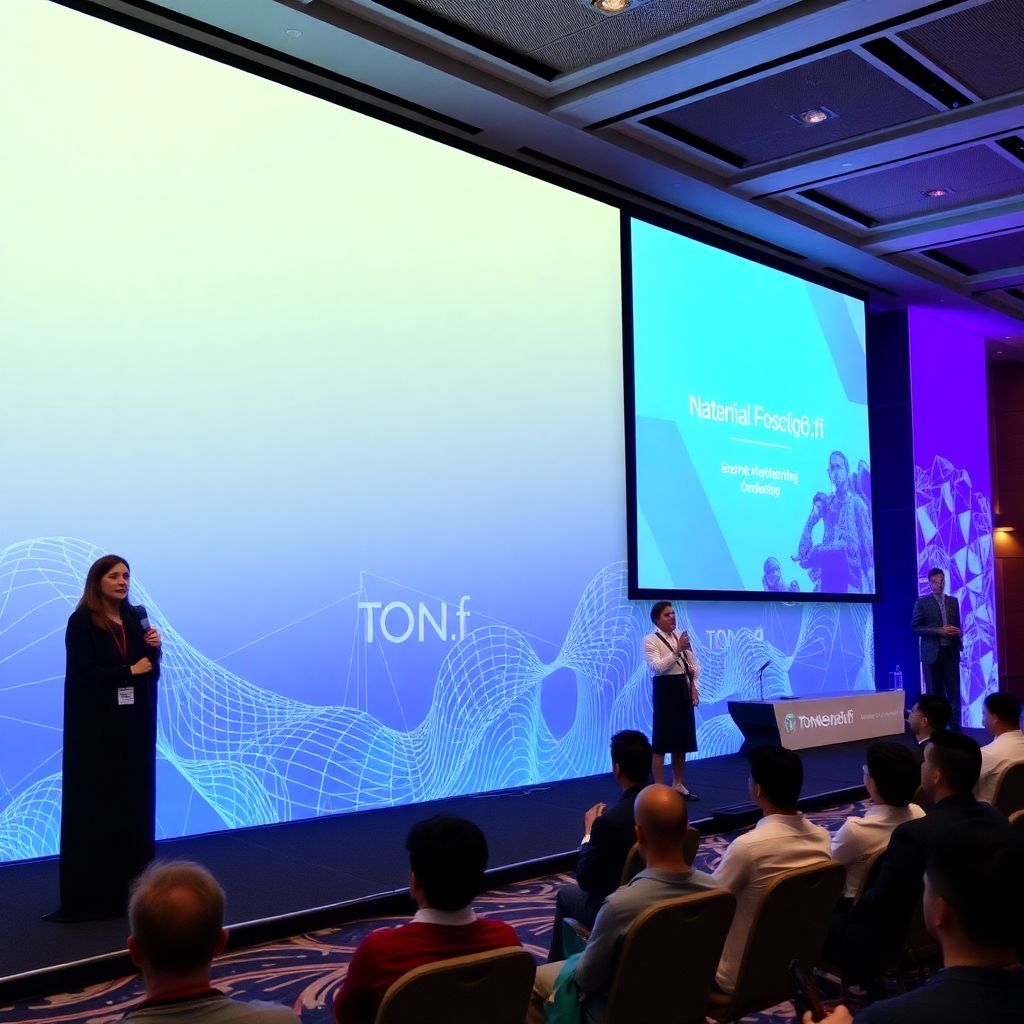
STON.fi at TOKEN2049: Andrey Fedorov Unpacks the Future of TON and Scalable Web3 Infrastructure
At the TOKEN2049 conference held in Singapore, Andrey Fedorov, Chief Marketing and Business Development Officer at STON.fi, offered a detailed perspective on how the TON blockchain is evolving — and how STON.fi is playing a central role in driving that transformation. Through innovations like seamless token swaps, cross-platform liquidity aggregation, and the development of the Omniston protocol, STON.fi is addressing some of the most critical scalability and usability challenges currently facing the TON ecosystem.
Fedorov emphasized that while infrastructure often operates behind the scenes, its absence becomes painfully obvious during real usage. “People don’t usually think about infrastructure until something goes wrong — when swaps lag, prices are off, or a transaction fails,” he explained. According to him, STON.fi’s mission is to ensure those issues never reach the user. “The best infrastructure is invisible — it just works.”
A key use case Fedorov highlighted is the growing number of Telegram-based mini-apps and games, which often reward users with tokens. However, once users receive these tokens, they’re left wondering what to do next. Without accessible tools for trading, staking, or farming, much of that user enthusiasm fizzles out. STON.fi bridges this gap by offering intuitive and efficient financial infrastructure, turning passive token holders into active participants in the TON ecosystem.
One cornerstone of STON.fi’s architecture is Omniston — a liquidity aggregation protocol designed to deliver optimal trade execution without requiring users to understand the complexities of decentralized exchanges (DEXs). “With Omniston, users don’t have to compare pools or hunt for the best rates — it all happens automatically,” Fedorov noted. This means faster onboarding for new users and a more streamlined experience for everyone involved.
TON’s leap from potential to performance came during high-traffic events like large-scale airdrops, which stress-tested the network. Transaction volumes surged overnight, exposing weak links in the infrastructure. Fedorov described how STON.fi responded to that pressure by pausing swaps, implementing distributed routing mechanisms, simplifying transactions, and introducing automatic transaction deadlines to prevent overload. “What seemed like chaos at first became the proving ground for a far more resilient system,” he said.
Today, developers building on TON using STON.fi’s SDK can count on infrastructure that has already weathered extreme spikes in demand. This reliability creates confidence not just among developers, but also among end-users, who can trade and interact with blockchain applications without disruptions — even during peak network activity.
Fedorov also highlighted three major assets that position TON for long-term success. First, its integration with Telegram provides instant access to a massive user base — potentially over a billion people. “That’s a game-changer in terms of distribution. You’re not asking users to find you; you’re already where they are,” he said.
Second, TON’s architecture — particularly its sharding mechanism — is designed to handle scale efficiently. However, sharding also presents technical challenges, especially when coordinating activity across different shards during periods of high demand. STON.fi has tackled this by building distributed routers that ensure swap reliability regardless of the shard configuration.
Third, Fedorov applauded the collaborative nature of the TON ecosystem. “Projects on TON don’t grow in silos. We’re always thinking about how one solution can enhance another,” he said. This emphasis on partnership and synergy is what drives sustainable network expansion.
For developers, the value proposition of Omniston is especially compelling. Before its launch, integrating swaps into an application meant connecting individually to multiple DEXs — an inefficient and error-prone process. Now, a single integration with Omniston opens up access to all available liquidity on TON, drastically reducing development time and complexity. “It lets developers focus on what really matters — building great features — rather than getting bogged down in backend mechanics,” Fedorov explained. This ease of use has already led to more than 40 projects integrating Omniston into their platforms.
Beyond the technical innovations, STON.fi is also contributing to the broader financialization of the TON ecosystem. With plans to expand support for yield farming, staking, and cross-chain interoperability, the platform aims to offer a comprehensive DeFi experience. These enhancements are critical for attracting both retail and institutional users, who increasingly demand more than just basic token swaps.
Security is another crucial pillar. As STON.fi scales, it’s investing heavily in smart contract audits and real-time monitoring tools to ensure user funds are protected. Given the high-profile hacks in the DeFi space over the past few years, this focus on safety is not optional — it’s essential for long-term credibility.
Education and accessibility also remain core priorities. STON.fi is rolling out user-friendly documentation, API tools, and developer grants to lower the entry barrier for new builders. The goal is to foster a vibrant, diverse ecosystem where innovation can flourish on top of robust infrastructure.
Looking ahead, STON.fi is exploring integration with other blockchains and layer-2 networks, enabling seamless asset movement across ecosystems. This cross-chain functionality is vital for unlocking liquidity and expanding the reach of TON-based applications beyond Telegram’s walls.
In summary, STON.fi is doing more than just enabling token swaps — it’s laying down the foundation for a scalable, user-friendly, and secure Web3 infrastructure on TON. By solving real problems for developers and end-users alike, and by building tools like Omniston that abstract away complexity, STON.fi is positioning itself as a cornerstone of TON’s next evolutionary phase.
As the blockchain space continues to mature, platforms like STON.fi that prioritize user experience, performance under stress, and ecosystem collaboration will be the ones that define the next generation of decentralized applications. And with TON’s unique positioning via Telegram, the opportunity to bring Web3 to the mainstream has never been more tangible.