Solana price trapped in a crucial band: Is a drop below $50 next for SOL?
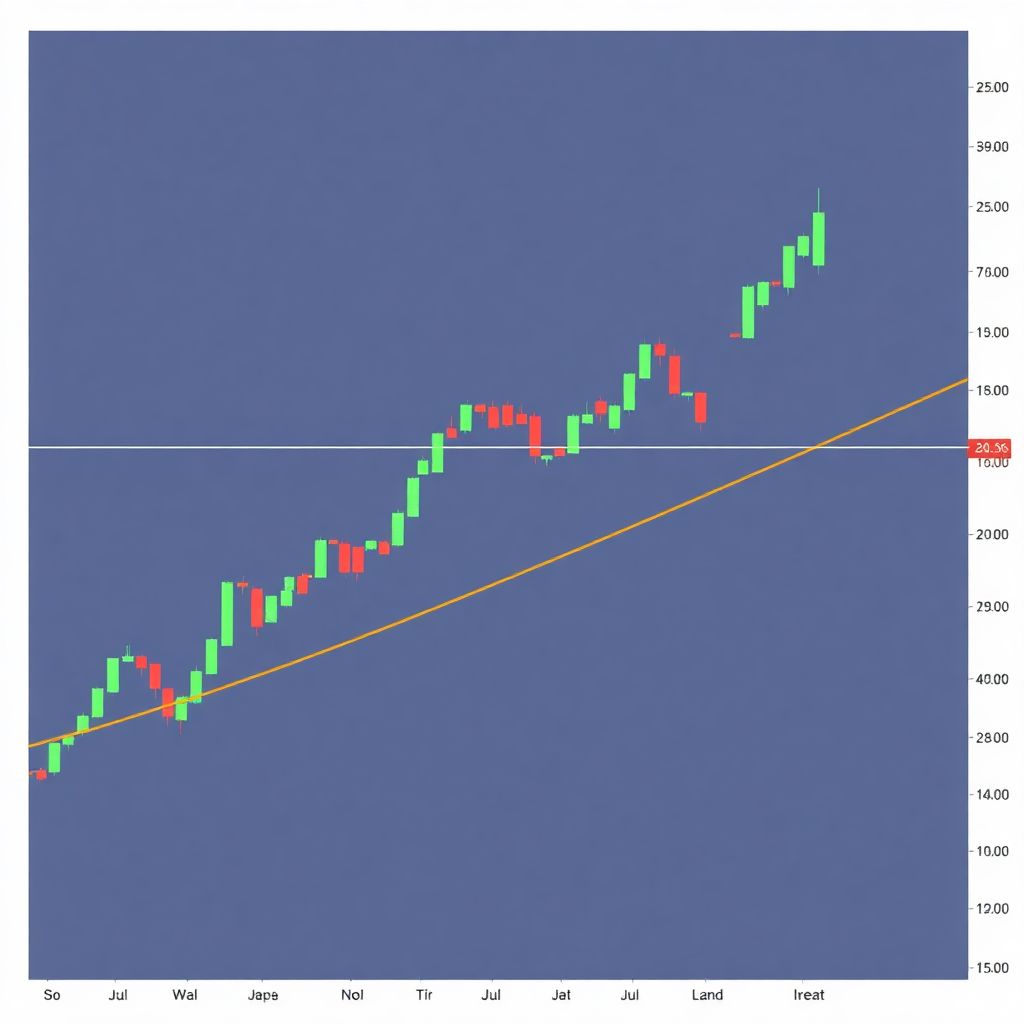
Solana’s price has been locked in a tight trading corridor ever since the sharp correction in early February. Since then, most of the action has unfolded between $78 and $92, with that band defined by a single, highly volatile daily candle on 5 March, when SOL plunged from $92 down to $78 in a matter of hours.
Price remaining largely inside that one daily candle suggests a classic consolidation phase. On the surface, this kind of sideways movement often gives bulls hope that the market is just “recharging” before another leg up. But the underlying structure – particularly around the 50-day moving average (MA) – hints that this calm could precede a deeper downturn instead.
Why the 50-day moving average matters so much for SOL
Crypto analyst Ali Martinez recently highlighted on X that the 50-day MA has been a decisive battleground for Solana’s broader trend since November 2025. Each time SOL has tried to climb back above this moving average, the move has been brief and unsustainable, followed by renewed selling pressure.
As of the latest data in the article, the 50-day MA sits at $85.43. SOL has been consolidating below this line, and historically, similar periods of sideways action under the 50-day MA have given way to fresh sell-offs. In other words, the longer SOL stays capped beneath this indicator, the greater the risk that a new downward leg is forming rather than a base for a bullish breakout.
This puts the current $78-$92 range on the daily chart in a very different light. Instead of being a constructive accumulation zone where buyers defend local lows and build new demand, the price action could simply be a pause in an ongoing downtrend – a compression phase before another move lower.
A pattern of “failed reclaim” attempts
The pattern Martinez pointed out is subtle but important:
– SOL approaches or briefly climbs above the 50-day MA
– Buyers fail to hold price above that level for long
– Price rolls over, and a new wave of selling begins
Since November 2025, this sequence has repeated more than once, turning the 50-day MA into a dynamic resistance zone rather than a support level for a sustainable uptrend. When a moving average repeatedly rejects price, it usually reflects strong supply from traders eager to exit on any bounce.
In such conditions, consolidations under the 50-day MA are often not accumulation by confident long-term holders, but distribution by short-term players selling into any strength. If that is the case here, the current range could be “coiling” for another extension to the downside.
Bearish long-term structure points toward sub-$50 levels
The short- to mid-term picture lines up with a broader bearish outlook on higher timeframes. Earlier in February, analysis based on the weekly chart projected $47.9 as the next major long-term downside target for SOL. That target stems from the larger market structure, where lower highs and decisive rejections at resistance keep confirming a negative bias.
One key event reinforcing this view was the retest of the 2025 lows at $95.26 in March. This level, which once acted as a floor, flipped into resistance. The rejection from around $95.26 did not just halt a recovery attempt; it solidified the perception that the path of least resistance remains downward.
Taken together – the inability to reclaim the 50-day MA, the rejection near $95.26, and the consolidation below crucial moving averages – the probability that Solana ultimately slips beneath the psychologically important $50 mark later in 2026 remains elevated.
Could bulls still turn this around?
Despite the mounting bearish signs, a breakdown below $50 is not guaranteed. Markets rarely move in straight lines, and technical setups can fail. For the bullish case to reassert itself, SOL would need to:
1. Decisively reclaim the 50-day MA and hold daily closes above it, turning $85-$90 into a firm support zone rather than resistance.
2. Break and sustain above $95.26, invalidating the latest lower high on the weekly chart and signaling that sellers are losing control.
3. Show increasing volume on up days, indicating genuine demand rather than weak, low-liquidity bounces.
If these conditions start to appear together, the current consolidation might transform from a bearish coil into a springboard for a more durable recovery. Until then, every rejection at the 50-day MA reinforces the current downside narrative.
What a move under $50 would mean for the market
A slide beneath $50 would be more than just another dip. It would:
– Confirm that the $50 “round number” psychological level offers little protection when the higher-timeframe structure is bearish.
– Likely trigger additional liquidations and forced selling from overleveraged traders whose stop-loss orders cluster below prior lows.
– Potentially push SOL into zones where long-term investors may start reassessing whether the token is undervalued relative to network activity and ecosystem growth.
Such a move could extend volatility across the broader altcoin market as well, as Solana is one of the major large-cap assets watched by institutional and retail traders alike.
How traders might approach the current range
For active market participants, this kind of setup calls for clear planning rather than guessing the exact next move. Some common approaches to a structure like this include:
– Range trading with tight risk controls: Selling near the top of the $78-$92 band and buying near the bottom, but exiting quickly if price breaks convincingly out of the range in either direction.
– Waiting for confirmation: Standing aside until SOL either reclaims the 50-day MA (bullish signal) or breaks below the lower boundary of the range and continues downward with momentum (bearish continuation).
– Using the 50-day MA as a directional filter: Only considering long setups if SOL is trading above the 50-day MA and short setups while it remains below.
No single tactic fits everyone, but all of them rely on respecting the role of the 50-day MA and the range boundaries rather than ignoring them.
Investors vs. traders: different perspectives on the same chart
Short-term traders see the $78-$92 consolidation and the 50-day MA as tactical levels for entries and exits. Long-term investors, however, might be more focused on the weekly and monthly trend. For them, a gradual drift toward the $47.9 region could be interpreted as:
– A validation of the existing downtrend, suggesting patience is key before committing full capital.
– A potential long-term accumulation opportunity if the fundamentals of the Solana ecosystem remain strong or improve while price falls.
This divide in time horizons means that what looks like a worrying drawdown to a scalper can appear as a routine correction to a multi-year holder. Still, both groups benefit from understanding when price is repeatedly failing to reclaim critical moving averages.
Risk management in a high-volatility environment
The heightened risk of a new sell-off underscores the importance of disciplined risk management. Some practical principles many market participants rely on include:
– Position sizing according to volatility, so that a sudden drop does not cause disproportionate losses.
– Predefined invalidation levels, such as a break below key supports or above resistance, to avoid emotional decision-making.
– Diversification, so that a sharp move in SOL does not overexpose the entire portfolio to a single asset.
With scenarios on the table that include both a recovery through the 50-day MA and a deeper dump toward or below $50, controlling downside exposure often becomes more crucial than attempting to predict each short-term fluctuation.
The bottom line: calm now, but pressure is building
Solana’s current price behavior – confined mostly within the $78-$92 band since early February – masks growing technical tension. The persistent failure to reclaim the 50-day moving average near $85.43, the repeated pattern of short-lived rallies followed by sell-offs, and the rejection from $95.26 all align with a bearish long-term structure.
Historical behavior since November 2025 suggests that consolidation below the 50-day MA has tended to resolve with fresh downward extensions. Combined with the previously identified long-term target around $47.9, this makes a future break below the $50 mark a realistic, if not inevitable, scenario as 2026 progresses.
Whether SOL ultimately breaks down or stages a surprise recovery, the key levels are clear: the 50-day MA, the $78-$92 range, the $95.26 resistance, and the longer-term target zone near $47.9. How price reacts around these points will likely define Solana’s next major trend – and determine whether this consolidation was a resting phase for the bulls or the calm before another storm.