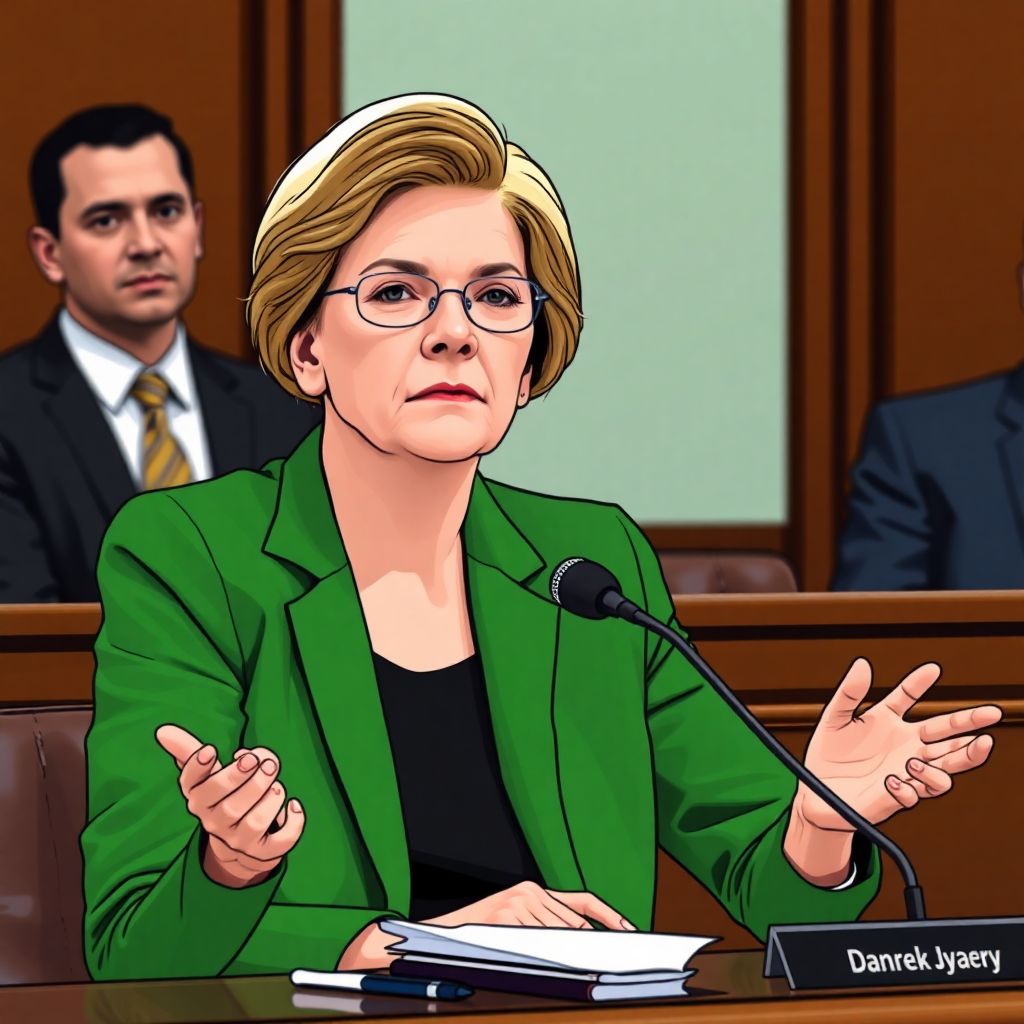
Sen. Elizabeth Warren questions MrBeast’s $200M Step deal over crypto access for minors
Senator Elizabeth Warren has raised concerns over YouTuber Jimmy “MrBeast” Donaldson’s expansion into financial services, pressing his company Beast Industries to explain how it plans to manage cryptocurrency access for underage users on its newly acquired fintech platform, Step.
Warren, a senior member of the U.S. Senate Banking Committee, sent a formal letter on March 23 addressed to Donaldson and Beast Industries CEO Jeff Housenbold. In it, she requested detailed information about the company’s strategy for enabling investments by minors, including its plans around crypto, non-fungible tokens (NFTs), and possible decentralized finance (DeFi) content.
$200M-backed acquisition under political and regulatory spotlight
In February, Beast Industries acquired Step, a financial app targeting younger users, in a deal backed with $200 million from BitMine Immersion Technologies, led by Tom Lee. BitMine is described as one of the largest holders of Ethereum globally, and the investment was framed as a way to turn Step into a “Robinhood” equivalent for Generation Z and Generation Alpha.
Step markets itself as a tool that lets teens and other young users open and manage an account under parental supervision. The app offers features that are meant to introduce minors to banking and personal finance at an early age.
However, reports that Step has historically allowed users under 18 to trade cryptocurrencies and NFTs have alarmed Warren. Those allegations, along with other governance and risk concerns, are central to the senator’s questions about the direction of the platform under Beast Industries’ control.
Warren’s concerns: minors, crypto, and banking risk
In her letter, Warren flagged several key issues:
– Step’s prior history of permitting minors to trade crypto assets and NFTs
– The app’s partnership with Evolve Bank & Trust, a bank that faced scrutiny after approximately $96 million in customer funds reportedly disappeared in 2024
– Beast Industries’ lack of prior experience in financial services or banking
– Past accusations that MrBeast was involved in or adjacent to crypto “pump-and-dump” schemes
Warren pressed Beast Industries to explain why Evolve Bank & Trust was selected as a partner despite its problematic record, and how the company evaluated alternatives. She also asked whether Step will continue or expand its crypto offerings, and if those offerings have previously gone beyond Bitcoin into other, more speculative digital assets.
The senator specifically inquired whether Beast Industries plans to produce DeFi-related crypto content that could be viewed as promotional, and whether children and teens would be targeted or incidentally exposed to such content through the Step platform or MrBeast’s broader media presence.
“Entering a highly regulated market” with no track record
Warren underscored that Beast Industries has built its name in entertainment and consumer products, not finance. Her letter notes that the company has “no reported prior experience offering financial services, investment services, or banking products,” yet is now moving into a sector governed by complex rules on investor protection, anti-money laundering, advertising, and disclosures.
The concern, from a policy perspective, is that a company rooted in viral content and mass youth engagement could bring millions of inexperienced young users into contact with highly volatile assets. When combined with the credibility and trust attached to a figure like MrBeast, regulators fear that teens could equate entertainment fame with financial expertise.
For lawmakers like Warren, that combination raises questions about suitability, marketing practices, and whether minors can meaningfully understand the risks of crypto speculation, especially when those risks are presented in an entertaining or gamified format.
Beast Industries’ response: open to engagement
In response to the letter, a spokesperson for Beast Industries acknowledged Warren’s concerns and signaled willingness to cooperate with regulators.
“We appreciate Senator Warren’s outreach and look forward to engaging with her as we build the next phase of the Step financial platform,” the spokesperson said.
The statement suggests that the company is aware of the regulatory and political stakes of turning Step into a youth-focused financial app with potential crypto functionality. However, Beast Industries has not publicly released detailed plans on how it will structure crypto access for minors, what protections will be in place, or whether it intends to scale back any of Step’s previous crypto-related features.
A broader clash over crypto’s place in the financial system
Warren is among the most outspoken crypto skeptics in Congress. She has repeatedly argued that digital assets increase systemic risk, enable fraud and scams, and can be used to evade sanctions or launder money. From her perspective, opening the door for minors to invest in or trade crypto amplifies these dangers.
Her objections fit into a wider debate over how aggressively the U.S. should regulate crypto platforms, exchanges, and fintech apps. While some lawmakers support innovation and consumer choice, others prioritize strict oversight, particularly when vulnerable or inexperienced users could be affected.
The MrBeast-Step deal becomes a high-profile flashpoint in this larger discussion because it combines three powerful elements: youth-focused fintech, celebrity influence, and speculative digital assets.
Why fintechs for minors draw extra scrutiny
Regulators typically see financial services for minors as a sensitive category. Products aimed at teenagers often claim to promote financial literacy and responsible money management. At the same time, they carry built-in asymmetries:
– Parents may not fully understand the technological or investment products their children are accessing.
– Teens are more susceptible to social pressure, influencer marketing, and “fear of missing out,” especially in fast-moving markets like crypto.
– Disclosure documents, fine print, and risk explanations are rarely read closely by adult investors, let alone minors.
When a platform such as Step potentially allows minors to buy volatile assets or NFTs, it raises questions about how “education” is defined, what limits are imposed on risk-taking, and who is ultimately responsible when losses occur.
Warren’s letter implicitly asks Beast Industries to clarify whether Step’s mission is genuine financial education or something closer to speculative trading wrapped in a youth-friendly interface.
The Evolve Bank & Trust factor
One of the most pointed parts of Warren’s letter involves Step’s banking partner, Evolve Bank & Trust. The institution reportedly came under investigation after customers’ funds-around $96 million-went missing in 2024, sparking concerns over internal controls and consumer protection.
By asking why Evolve was chosen over other banks with cleaner histories, Warren is probing Beast Industries’ risk assessment and due diligence process. The question hints at a broader fear: that rapid expansion into finance, driven by big backing and celebrity clout, may prioritize growth and marketing over safety and regulatory compliance.
For a youth-oriented platform, the reputational and financial implications of partnering with a troubled bank are even more serious, because any failures could directly affect minors and their families.
MrBeast, influence, and earlier crypto criticism
Warren’s letter also references prior accusations that MrBeast has, at minimum, been associated with crypto promotions that critics labeled as “pump-and-dump” schemes. While the letter does not adjudicate those claims, it uses them to illustrate concerns about ethical standards and conflict of interest.
Influencers promoting crypto projects can face serious legal and reputational risks if they fail to disclose compensation or if the assets collapse after hype-driven campaigns. Several celebrities have already faced regulatory action or civil lawsuits over their crypto endorsements.
In MrBeast’s case, the senator is effectively asking: if there have been past controversies around crypto promotions targeting adults, what assurances will there be when the audience now includes or centers on minors?
What Warren is likely looking for
Although the full text of Warren’s letter is not detailed point by point in public summaries, her questions suggest she wants Beast Industries to provide:
– A clear statement on whether Step currently allows minors to access crypto and, if so, under what conditions
– A roadmap of any future crypto, NFT, or DeFi-related offerings for Step users
– Risk controls, including parental consent mechanisms, spending limits, and educational safeguards
– An explanation of Step’s relationship with Evolve Bank & Trust and any contingency plans if regulatory issues escalate
– Compliance policies to prevent deceptive or overly aggressive marketing to minors, especially via MrBeast’s media channels
How fully and transparently Beast Industries responds could influence not only its own regulatory path, but also how other youth-focused fintechs structure their products.
Potential ripple effects for youth fintech and crypto
The scrutiny around this deal may push other companies operating at the intersection of fintech, youth banking, and digital assets to reassess their models. Possible outcomes include:
– Stricter internal age verification and parental control features
– Voluntary limits or bans on crypto trading for users under 18
– Clearer separation between “financial education” tools and actual investment functionality
– More conservative bank partnerships and compliance frameworks
If lawmakers decide that existing regulations are insufficient to protect minors in the digital asset economy, this case could contribute to future legislative efforts on advertising standards, disclosures, and product design for financial apps targeting young users.
Balancing innovation, education, and protection
Supporters of platforms like Step argue that teaching teens about money, budgeting, and investing early can be beneficial, particularly in a world where digital payments and online finance are the norm. They contend that supervised, app-based experiences can prepare young people for real-world financial decisions.
Warren’s intervention highlights the tension between that vision and the risks posed by complex, high-volatility instruments being packaged alongside basic banking functions. The critical policy question is where to draw the line between age-appropriate financial education and exposing minors to speculative markets they may not fully comprehend.
As Beast Industries moves forward with its plans for Step, the company now has to navigate not only market expectations and user growth, but also a heightened level of political and regulatory attention-attention that is likely to intensify if crypto remains central to its strategy for younger users.