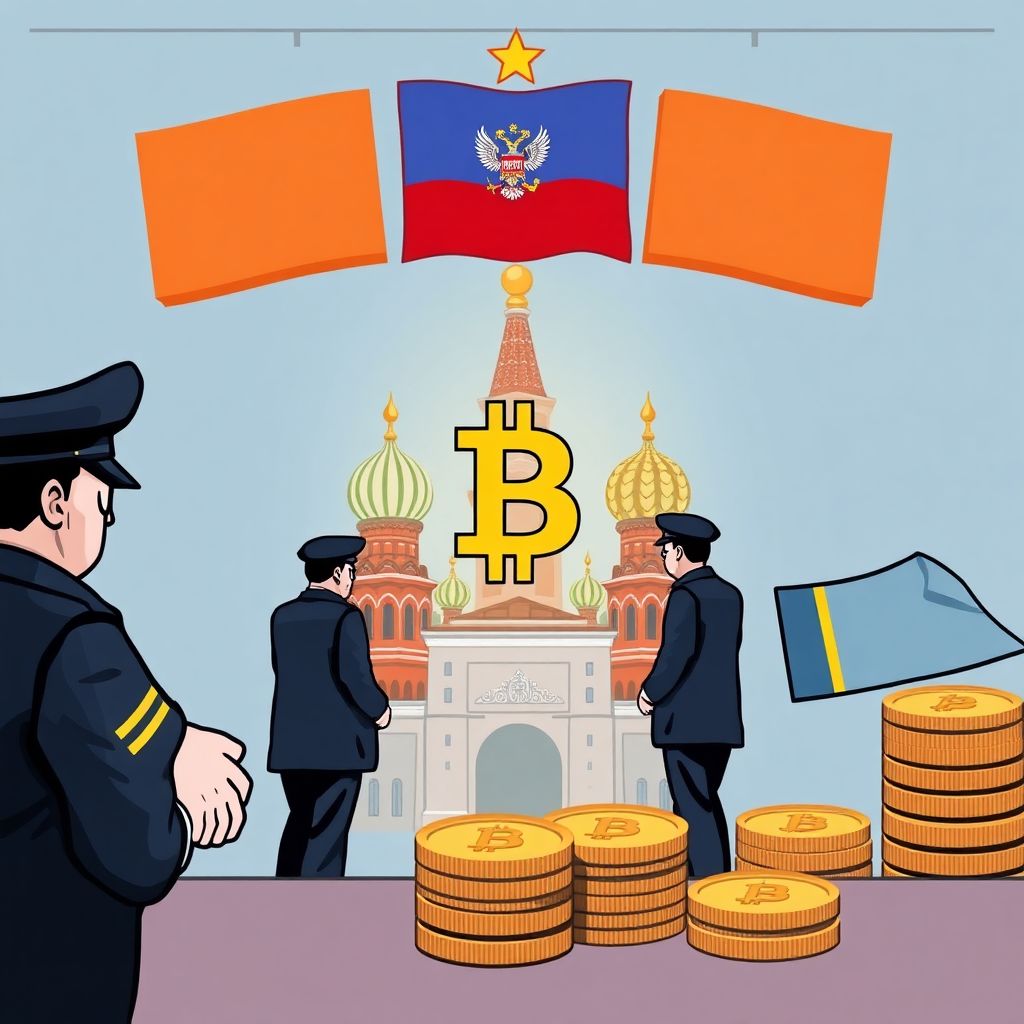
Russia moves to corral crypto trading under licensed intermediaries, curb retail access
Russia is preparing a sweeping reset of how digital assets can be bought and sold in the country, pushing most domestic crypto activity into a tightly controlled, licensed environment and sharply narrowing the options available to ordinary retail traders.
According to the Finance Ministry, the government has endorsed a package of draft laws that would, for the first time, fully formalize crypto trading in Russia under a unified framework. The proposed rules revolve around a simple principle: any legal crypto transaction inside the country must pass through “regulated intermediaries” operating under state supervision.
Under this framework, access to digital assets will remain possible but will differ drastically depending on investor status. Qualified investors, such as professional market participants and high-net-worth individuals who meet specific regulatory criteria, would see their opportunities broadened. Non-qualified, or retail investors, by contrast, would face a set of strict limitations designed to cap risk and reduce speculative exposure.
One of the core restrictions for ordinary users is a cap on annual purchases. Retail traders would be permitted to buy crypto worth up to 300,000 rubles per year, and that limit would apply per intermediary. To gain access at all, they would first need to pass a knowledge test confirming they understand the risks and mechanics of digital assets, echoing approaches seen in other markets where complex financial products are walled off behind suitability checks.
In addition, retail buyers would be confined to a narrow basket of what regulators deem the “most liquid” digital currencies. The Bank of Russia will be responsible for defining which assets qualify as sufficiently liquid and presumably less prone to manipulation or catastrophic volatility. That means speculative trading in small-cap tokens, niche projects, and many emerging altcoins could become effectively off-limits to the mass market.
Despite the tightening grip on domestic channels, the draft laws stop short of a complete ban on foreign-market activity. Russian traders would still be legally allowed to buy and sell crypto using accounts and platforms located abroad. However, such overseas operations would no longer be invisible: transactions must be reported to the tax authorities, giving the state a clearer line of sight into cross-border capital flows linked to digital assets.
The legislative package goes beyond trading limits and reporting rules. It also amends a series of existing Russian laws and introduces updates to the code governing administrative offenses. A new licensing regime is at the heart of the overhaul. Any company seeking to run a crypto exchange, offer custodial wallet services, or otherwise intermediate digital asset transactions will need to secure a license and operate under detailed regulatory standards.
Traditional financial institutions are explicitly invited to participate in this new market structure. Banks and brokers will be allowed to act as intermediaries, provided they comply with prudential norms tailored to crypto-related risks. These may include enhanced capital requirements, robust internal controls, segregated client asset handling, and strengthened anti-money-laundering and know-your-customer procedures.
To discourage “gray zone” activity, the bills introduce administrative liability for entities and individuals who engage in exchange operations without the necessary authorization. That could translate into fines, suspensions, or other penalties aimed at squeezing out unlicensed platforms and informal over-the-counter dealers that have long acted as gateways for Russian users into the global crypto ecosystem.
The Finance Ministry’s initiative comes against the backdrop of a broader push by Russian regulators to bring the entire digital asset sector into a more controlled orbit. Authorities are seeking to reconcile several competing aims: reducing financial stability risks, preventing capital flight, enforcing sanctions and tax compliance, and at the same time leaving room for domestic financial innovation where it aligns with state priorities.
Earlier this month, officials signaled work on a separate bill focused on digital assets pegged to fiat currencies, often referred to as stablecoins. Such instruments are increasingly used for cross-border settlements and dollar-denominated transfers, and Russia is exploring how to regulate them in a way that supports its own financial infrastructure without ceding control to foreign issuers.
What tighter rules mean for Russian retail investors
For non-professional traders, the new framework could mark the end of the relatively freewheeling era of crypto investing in Russia. Many retail users currently access a broad spectrum of tokens through a mix of foreign exchanges, peer‑to‑peer marketplaces, and domestic intermediaries that operate in a lightly regulated environment.
If the bills become law in their present form, the experience will begin to resemble that of traditional brokerage accounts. Retail investors will face onboarding tests, asset lists curated by the central bank, annual purchase ceilings, and full traceability of their activity. The ability to chase high-risk, high-reward coins through local platforms will be significantly constrained.
At the same time, the rules do not completely close the door to crypto use. Individuals with higher incomes, better financial literacy, or professional status who can qualify as sophisticated investors will gain broader latitude. For them, the emerging regime could bring clearer legal protections and the comfort of working with licensed institutions rather than unregulated entities.
Impact on Russian crypto businesses and foreign platforms
Domestic firms that have built services around crypto trading, custody, or payment processing will need to adapt quickly. Obtaining a license implies not just legal registration, but also staff training, risk management systems, compliance departments, and ongoing reporting to regulators. Some smaller companies may find the barrier too high and exit the market, while others may seek partnerships with banks or large brokers to stay afloat under the new rules.
Foreign platforms serving Russian users will face a more complex landscape as well. On paper, Russian residents will still be allowed to use overseas services, but the tax reporting obligation and potential scrutiny from local regulators could discourage casual use. Any foreign exchange that wishes to maintain trust with Russian clients might need to improve transparency and provide tools that make it easier for users to report their holdings and trades.
Over the medium term, this could accelerate a shift toward a bifurcated market: regulated, ruble‑linked crypto activity inside Russia through licensed bodies, and a parallel, more speculative ecosystem accessed via foreign accounts and often routed through stablecoins or major global assets like bitcoin and ether.
Why regulators are acting now
Several forces are driving Russia’s determination to tighten oversight. Volatile crypto markets have periodically inflicted heavy losses on retail investors, creating political and social pressure to impose safeguards. Authorities are also wary of digital assets as tools for moving money abroad, evading sanctions, or hiding income from tax authorities.
At the same time, crypto and tokenized assets are increasingly integrated into global finance. Ignoring them is no longer an option for a major economy. By setting up strict rules instead of banning the sector outright, regulators are trying to position the country to benefit from certain uses of blockchain technology-such as cross‑border payments, tokenized commodities, or digital financial assets-while retaining control over domestic capital flows.
Possible consequences for innovation
There is a clear trade‑off in the new approach. Stricter supervision and licensing are likely to enhance investor protection and reduce outright fraud, but could also dampen grassroots innovation. Startups and developers working on new tokens, decentralized applications, or experimental financial products may find it harder to test ideas when access to retail capital is limited and compliance costs are high.
On the other hand, a well‑defined regulatory perimeter can attract institutional interest. Banks, state‑linked corporations, and conservative investors are more likely to participate in tokenization projects, custody solutions, or compliant trading platforms when the legal status of digital assets is unambiguous. In that sense, the new laws could seed a more institutional, less speculative crypto segment in Russia.
How individual users can prepare
For Russian residents who already hold crypto or plan to continue investing, the draft laws highlight a few practical considerations:
– Documentation will matter more: keeping records of purchases, sales, and transfers will be essential for tax reporting and compliance.
– Choice of intermediaries will narrow: licensed platforms and banks may become the primary legal gateways, so users should evaluate their reliability, fees, and asset offerings.
– Education will become a formal requirement: passing regulatory tests means understanding basic concepts such as private keys, volatility, leverage, and counterparty risk.
– Diversification strategies may need adjustment: with access to many small or illiquid tokens constrained, portfolios will likely tilt toward major assets that the central bank recognizes as liquid.
Those who continue to operate exclusively on foreign exchanges without proper reporting may face increasing legal and tax risks as authorities refine their monitoring tools.
The broader direction of Russian crypto policy
Taken together, the new trading rules, the planned regulation of fiat‑pegged digital assets, and the extension of licensing to exchanges and custodians indicate a clear strategic direction. Russia is not abandoning digital assets, but is steering them into a framework that looks much closer to the conventional financial system, with central‑bank‑defined asset lists, licensed intermediaries, and formal investor categories.
How strictly these rules will be enforced in practice, how many licenses will be granted, and how aggressively the state will pursue unlicensed activity will determine whether the Russian crypto landscape becomes a tightly controlled but functional market, or fragments into an official sector and a large underground one.
For now, the approval of the draft laws signals that the era of largely unregulated, retail‑driven crypto enthusiasm in Russia is drawing to a close, to be replaced by a model where access to digital assets is conditional, monitored, and heavily mediated by licensed financial institutions.