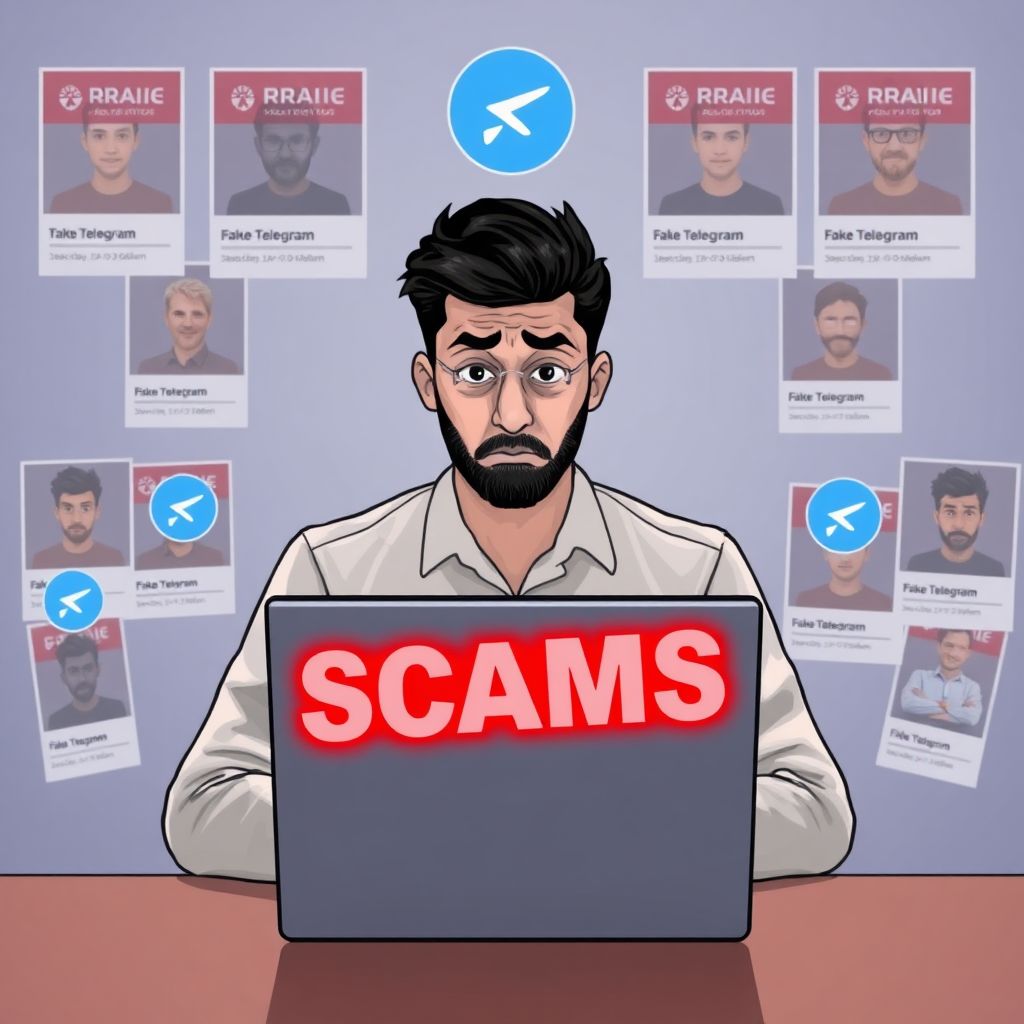
Ripple sounds alarm on surge of fake Telegram profiles posing as staff
Ripple is stepping up its fight against crypto fraud after detecting a wave of bogus Telegram accounts mimicking company employees and official support. The firm has issued a clear and urgent message: it does not operate an official Telegram channel and does not use the app to conduct business, offer support, or recruit.
According to RippleX, Ripple’s developer-focused division, scammers have recently intensified their presence on social platforms such as Telegram, setting up look‑alike profiles that claim to represent Ripple or its staff. These accounts often pretend to be:
– Recruiters offering jobs at Ripple
– Customer support agents ready to “assist” with XRP issues
– Senior staff members or advisors
To bolster their credibility, fraudsters frequently copy Ripple’s branding, logos and color schemes, and even use photos and video stills of CEO Brad Garlinghouse and other known executives. At first glance, many of these profiles can appear legitimate to an unsuspecting user.
No official Ripple Telegram – and no unsolicited outreach
Ripple has reiterated a simple rule: any account claiming to be an official Ripple or RippleX Telegram presence is fake. The company stresses that it does not:
– Provide customer support through Telegram
– Ask users for passwords, private keys, or seed phrases
– Request payments or “verification deposits”
– Proactively reach out to individuals with investment opportunities or giveaways
All corporate communication, product updates and support are handled through Ripple’s verified and clearly identified official channels. If a message originates from anywhere else, it should be treated as suspicious.
How the scams typically work
The fraudulent schemes follow a handful of recognizable patterns. Among the most common:
1. Fake giveaways and airdrops
Scammers promote “exclusive XRP giveaways” or “limited-time airdrops,” often claiming they are sponsored by Ripple as part of a promotion. Victims are asked to send a small amount of XRP or another cryptocurrency to “verify” their wallet or to “unlock” a larger reward. Once the funds are sent, they are gone for good.
2. Impersonated support agents
A fake representative offers to help resolve a supposed account issue, stuck transaction, or blocked wallet. During the interaction, the victim is pushed to share sensitive information such as private keys, seed phrases, or remote access to their device. This information is then used to drain the user’s holdings.
3. Bogus job offers and recruiting
Fraudsters pose as Ripple recruiters, promising remote roles, generous salaries, or special programs. Candidates may be asked to pay a “processing fee,” “training deposit,” or provide detailed personal and financial data under the guise of background checks.
4. Fake investment programs
Some accounts present “partnership investment opportunities” allegedly backed by Ripple. They boast unrealistic, guaranteed returns and try to rush victims into sending funds quickly, citing limited seats, deadlines, or insider access.
To make the schemes more convincing, scammers often recycle footage from genuine Ripple interviews, conference talks and public appearances, then overlay new text or captions that reference fabricated promotions or giveaways. Links in these posts typically redirect to counterfeit websites or wallets controlled by the fraudsters.
Why Telegram is attractive to fraudsters
Telegram has become a preferred platform for many crypto communities because of its speed, group features and pseudo-anonymity. Those same qualities also make it fertile ground for scammers:
– Easy account creation: Dozens of fake profiles can be launched in minutes.
– Username confusion: Impersonators can register usernames that differ from real ones by a single character or symbol.
– Forwarded content: Videos, messages and images circulated from authentic sources can be re‑shared out of context to fake legitimacy.
Ripple’s warning is a reminder that the presence of a logo, a familiar face, or even a large follower count is not proof that an account is genuine.
Practical steps to verify any Ripple-related contact
For XRP holders and anyone interacting with Ripple-branded content, a few basic checks can dramatically reduce the risk of falling victim to these scams:
1. Double-check the platform
If someone claims to represent Ripple on Telegram, treat it as a red flag by default. Ripple has clearly stated it does not use Telegram as an official communication or support channel.
2. Inspect the message content
Be extremely cautious if the message:
– Promises guaranteed returns
– Asks you to send funds first to receive more
– Requests private keys, seed phrases, or full access to your wallet
– Pressures you to act quickly
Legitimate companies do not force urgency or secrecy when it comes to user funds.
3. Compare with official announcements
Any major promotion, partnership or product initiative from Ripple will be publicly announced through its verified outlets. If you see a “special offer” that has not been mentioned anywhere else, assume it is fraudulent until proven otherwise.
4. Check for inconsistencies
Poor spelling, awkward language, non‑professional formatting, and inconsistencies in titles or job roles are common in scam communications, even when the branding looks polished.
Growing XRP adoption makes scams more tempting
Ripple’s warning comes at a time when the XRP ecosystem is expanding. The XRP Ledger now boasts more than 7.7 million wallets holding XRP, with wallet addresses rising steadily. This kind of growth naturally draws more attention not only from legitimate participants-developers, investors, and businesses-but also from criminals looking for easy targets.
The more widely adopted a digital asset becomes, the greater the incentive for scammers to exploit brand recognition, especially among newer users who may not yet be fully familiar with official channels and best practices for security.
Why users must take security into their own hands
While companies like Ripple can issue alerts and take action against obvious impersonators, there is a hard reality in crypto: users remain the ultimate line of defense for their own funds. Blockchain transactions are irreversible, and once funds are transferred to a scammer, there is usually no central authority to reverse the damage.
That makes personal security habits just as important as the underlying technology. Verifying every communication, refusing to share sensitive data, and treating unsolicited offers with skepticism are not optional-they are essential.
Best practices for staying safe in the XRP and broader crypto ecosystem
To reduce the risk of falling into similar traps, users can adopt a few long-term habits:
– Use hardware or reputable non-custodial wallets for significant balances, and never store private keys or seed phrases in cloud notes, screenshots, or messaging apps.
– Enable two-factor authentication (2FA) on exchanges, email accounts, and any services tied to your crypto holdings.
– Separate wallets for daily use and savings: Keep only limited funds in wallets used for frequent transactions or experimentation.
– Be wary of “too good to be true” offers: High returns with zero risk or requirements to prepay are classic scam indicators.
– Educate yourself continuously: The tactics of fraudsters evolve. Staying informed about common schemes can prevent costly mistakes.
Ripple’s broader push for a safer environment
Beyond this specific warning about Telegram, Ripple’s stance reflects a wider industry need: as digital assets enter the mainstream, user protection must evolve from an afterthought to a central pillar. Efforts to strengthen legal frameworks, improve wallet usability, and standardize communication practices are increasingly seen as necessary to sustain long-term trust.
Ripple’s emphasis on official verification, transparent communication, and clear boundaries around how it interacts with users is part of that process. By drawing a hard line-no business conducted via unofficial channels, no unsolicited offers, no requests for personal keys-the company gives users a simple rule set they can rely on.
What users should do if they encounter a fake account
If you come across an account claiming to represent Ripple or its staff on Telegram or any other social platform:
– Do not engage, send funds, or share any personal data.
– Take screenshots of suspicious messages or profiles for your own records.
– Report the account to the platform using its built‑in reporting tools.
– Inform others in your circle so they are less likely to be deceived by the same profile or scheme.
Awareness spreads quickly, and collective vigilance is often the fastest way to undermine a scam campaign.
The bottom line
Ripple’s message is unambiguous: it has no official Telegram presence and will never approach users there for support, investments, jobs, or giveaways. Any account claiming otherwise is an impersonator aiming to exploit the growing interest in XRP and the broader Ripple ecosystem.
As XRP adoption accelerates and more newcomers enter the market, the most effective shield remains a combination of company transparency and user caution. Verifying every claim, mistrusting unsolicited offers, and keeping control of confidential data are the key steps that ensure enthusiasm for digital assets does not turn into an open door for fraud.