Polygon defends crucial support after 100M POL burn: What’s on the horizon?
Polygon has hit a major deflationary landmark, permanently removing 100 million POL tokens from circulation. Yet, despite this significant burn event, the token’s scarcity signal remains weak, and sell-side pressure continues to weigh on price action.
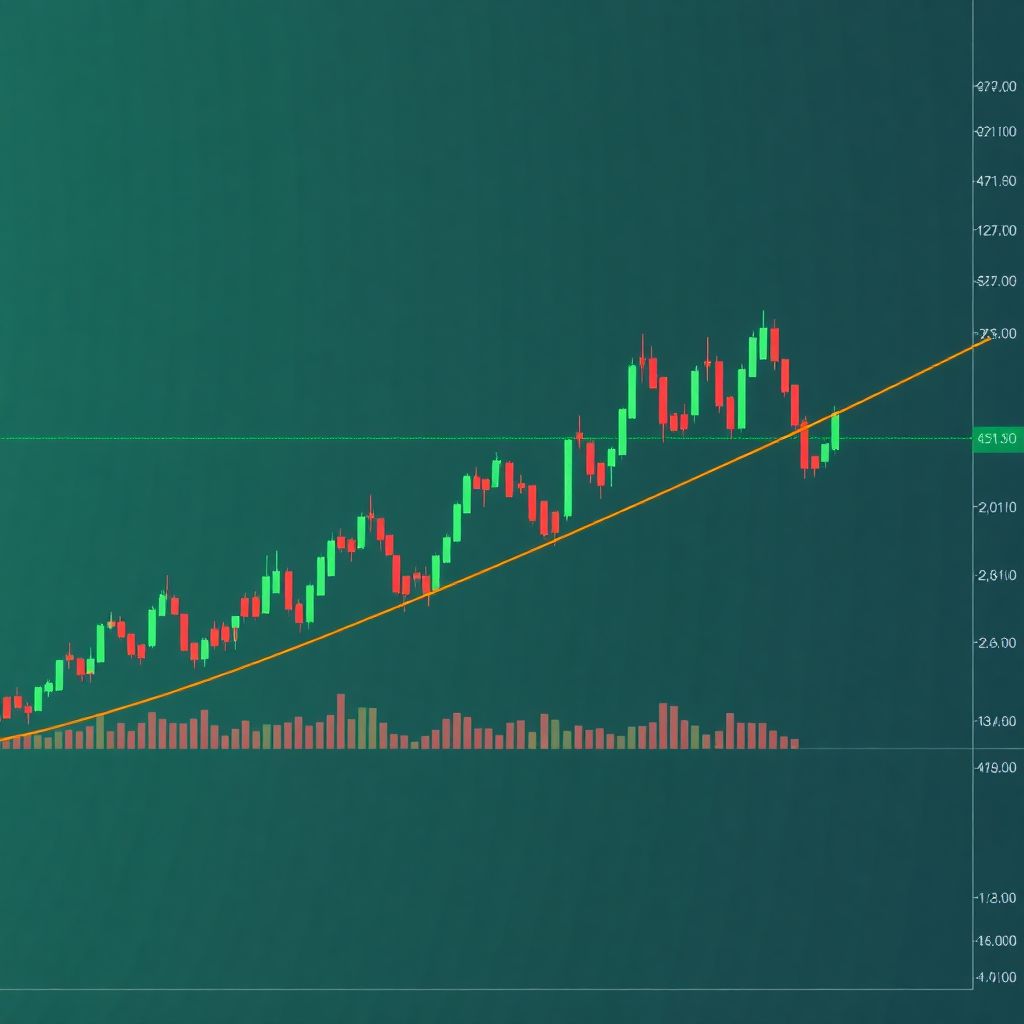
At the time of writing, POL is trading around 0.108 dollars, marking roughly a 4% gain on the day. This modest advance coincided with a 17% jump in trading volume, pointing to a noticeable pickup in on-chain and exchange activity. Price is still hovering just above the key 0.10 dollar support level, indicating that buyers are defending this zone but have not yet established a convincing uptrend.
From a technical standpoint, POL has flipped its short-term 20-day exponential moving average (EMA20), a development that often suggests improving bullish momentum. However, this signal remains tentative and needs follow-through from buyers to confirm a sustainable shift in trend.
100M POL burned: Why it matters – and why it may not be enough
Polygon’s latest milestone – burning 100 million POL – is designed to act as a long-term deflationary lever. In most token economies, permanent burns help decrease circulating supply, slow down inflation, and, over time, can support higher valuations if demand holds or increases.
Token burns are not just a cosmetic metric. Consistent burning is usually tied to real economic activity on the network, since burns are frequently funded by protocol fees or transaction revenues. This means higher burn rates can be a proxy for growing network usage, as more applications and users generate more fees that can then be partially destroyed.
Recent data shows that Polygon’s daily fees and revenue have stabilized above 200,000 dollars, with application-related fees topping 500,000 dollars. These levels suggest that the network is maintaining a healthy baseline of economic activity. A chain that consistently earns several hundred thousand dollars in fees per day is not dormant; it is being actively used by developers, traders, and applications.
In theory, as network revenue grows, demand for the native token should increase – either through direct use (gas, staking, governance) or indirectly via speculation on future utility. When this demand meets a gradually shrinking supply, the setup can become structurally bullish. The key caveat is timing: fundamentals can improve for long periods before the market fully reflects them in price.
Short-term price reaction: Burn gives only a modest bounce
Historically, Polygon’s token burns have triggered short-lived positive reactions in POL’s price, and this instance appears similar. Following the latest burn milestone, POL bounced from the lower end of its recent trading range, but the move remains modest and far from a breakout.
The Stochastic RSI, a momentum oscillator, has made a bullish crossover and climbed to about 88.27, while the associated signal line lingers around 88 as well. A Stoch RSI reading near these levels usually indicates strong upside momentum and an overbought condition in the short term. It shows that buyers have stepped in, but it also warns that the market may be stretched after a quick move.
The fact that the signal line has not significantly diverged suggests that sellers are still very much present and willing to fade rallies. This alignment often reflects a tug-of-war phase where neither side has complete control, but bulls are testing the resistance set by bears.
Key levels to watch: Bulls vs bears at a crossroads
Given the current technical setup, the battle lines are relatively clear:
– For a stronger bullish case, buyers need to drive POL to a decisive daily close above both the 20-day and 50-day EMAs clustered around 0.11 dollars. A sustained break and close above this zone would open the door for a move toward 0.12 dollars and potentially higher if momentum builds.
– If the current bounce proves to be a temporary relief rally and sellers use the strength to exit, price could retreat back toward 0.106 dollars, with the psychologically important 0.10 dollar level once again coming under pressure.
This narrow range highlights the market’s uncertainty. A break below 0.10 dollars could trigger a larger wave of selling, as it would signal that bulls have failed to defend a widely watched support zone. Conversely, a clear reclaim and hold above 0.11-0.12 dollars would strengthen the argument that the worst of the correction may be behind POL in the near term.
Why scarcity is still weak despite the burn
The most concerning aspect for bulls is that, despite the 100 million POL burn, the token’s broader inflationary environment remains elevated. One of the key metrics that captures this is the Stock-to-Flow Ratio (SFR), which compares the existing stock (current supply) to the rate of new issuance (flow).
Recent readings show that POL’s SFR has declined to about 8.6. A falling SFR indicates diminishing scarcity: the supply is being replenished relatively quickly compared to its existing base. In other words, even though a sizable amount has been burned, ongoing emissions or unlocked tokens are offsetting much of the deflationary pressure.
Low scarcity tends to increase the amount of immediately available tokens in the market. When supply grows faster than demand, or when demand slows while supply remains high, the natural result is greater downside risk for price. In such an environment, even relatively large burn events may have a muted or only temporary effect.
Rising exchange balances: A clear sign of selling pressure
Another red flag for POL’s short-term outlook is the behavior of its Exchange Supply Ratio (ESR). This metric tracks how much of the circulating supply is currently held on exchanges. An uptick in ESR generally signals that holders are moving tokens to trading platforms, often in preparation to sell.
POL’s ESR has recently jumped to a one-month high of 0.003. While that number may appear small in absolute terms, the direction and relative change are what matter. A noticeable rise in the share of tokens sitting on exchanges points to growing readiness to offload holdings, which can amplify sell pressure during any period of weakness.
When more tokens are parked on exchanges and fewer are in long-term wallets, staking contracts, or DeFi positions, the market becomes more vulnerable to sharp moves down. A wave of market sells or large limit orders above current price can easily cap upside moves and trigger liquidations or stop-loss cascades.
Interplay between on-chain strength and market psychology
Polygon’s position right now reflects a classic disconnect between improving on-chain fundamentals and cautious market psychology. On one hand, protocol revenues are stable to rising, application activity is generating significant fees, and the project is executing on its deflationary roadmap through ongoing burns. On the other hand, traders and investors remain wary, as evidenced by rising exchange supplies and subdued follow-through after bullish technical signals.
This tension is not unusual in crypto markets. Prices often lag fundamentals, especially during or after risk-off phases when participants are more focused on capital preservation than aggressive positioning. In such periods, any positive catalyst – even one as substantial as a 100 million token burn – can be overshadowed by broader market sentiment and macro uncertainty.
For POL to break out of this stalemate, the market will likely need a combination of factors: sustained network growth, a continued or accelerated burn schedule, and a shift in risk appetite across the crypto sector. Only when these pieces align does a strong and durable uptrend usually emerge.
Medium-term scenarios: What could happen next?
Looking beyond the immediate resistance and support levels, several medium-term paths are plausible:
1. Gradual accumulation and slow grind higher
If fees remain robust, burns continue, and POL consolidates above 0.10 dollars without major breakdowns, patient buyers may slowly accumulate. This could set up a series of higher lows, with price gradually pushing beyond 0.11-0.12 dollars and potentially forming a more constructive trend.
2. Extended range trading with fakeouts
POL may spend more time oscillating between the lower band near 0.10 dollars and resistance around 0.12 dollars, repeatedly trapping both bulls and bears. In this scenario, traders focusing on short-term swings and range strategies may fare better than those chasing breakouts.
3. Breakdown if macro or sector sentiment worsens
Should overall crypto sentiment deteriorate or if large holders decide to realize gains or cut losses, the elevated exchange balances could accelerate a move below 0.10 dollars. That would likely shake out weaker hands before any longer-term recovery attempt.
4. Repricing on a major catalyst
An unexpected catalyst – such as a large partnership, significant protocol upgrade, or a surge in ecosystem usage – could quickly shift market perception. In such cases, the existing burn narrative and revenue base could become much more powerful drivers of price revaluation.
What long-term holders might focus on
While short-term traders concentrate on levels like 0.10, 0.11, and 0.12 dollars, investors with a longer horizon tend to watch different indicators:
– Sustainability of fees and revenue: Are daily fees above 200,000 dollars a temporary spike, or the new baseline? Is there a clear uptrend over months, not just days or weeks?
– Net issuance vs. burns: How does ongoing POL inflation compare to the burn rate? Is the effective inflation rate trending down over time?
– Exchange balances over months: Are tokens gradually flowing out of exchanges into long-term holdings, or is the opposite happening?
– Ecosystem growth: Are more developers, dApps, and users choosing Polygon? Are new verticals (such as gaming, DeFi, or enterprise use cases) gaining traction?
If these variables move in a positive direction while price remains range-bound, some long-term participants might view it as an opportunity rather than a warning sign. Conversely, if fundamentals stagnate or weaken, even an aggressive burn program may not be sufficient to support valuations.
Risk management in a high-volatility environment
For anyone engaging with POL in trading or investment strategies, the current landscape reinforces several risk management principles:
– Be prepared for volatility: With elevated exchange balances and a delicate support zone, sharp intraday swings are likely.
– Define time horizons clearly: Short-term momentum plays around the EMA20, EMA50, and the 0.10-0.12 dollar band are very different from multi-month investment theses based on protocol growth.
– Avoid relying on a single metric: Token burns, SFR, ESR, and technical indicators each tell only part of the story. A balanced view uses multiple data points.
– Consider position sizing carefully: In a market with firm seller presence and mixed signals, conservative sizing can help manage downside risk.
Bottom line: A critical balance between deflation and sell pressure
Polygon’s burn of 100 million POL marks a significant step in building a deflationary narrative around the token. Network revenues above 200,000 dollars per day and app fees above 500,000 dollars show real and ongoing usage, providing fundamental backing.
However, the drop in the Stock-to-Flow Ratio to around 8.6 and the rise in the Exchange Supply Ratio to a monthly high underscore that the market is still grappling with high effective supply and notable sell pressure. The token is effectively caught between improving structural factors and cautious, distribution-heavy market behavior.
In the near term, POL’s trajectory will likely depend on how it handles the 0.10 dollar support and whether bulls can secure a convincing break above the 0.11-0.12 dollar resistance zone. Over the longer run, the interplay between continued burns, evolving inflation, exchange flows, and network expansion will determine whether this deflationary milestone becomes a real turning point or just another chapter in a broader consolidation phase.