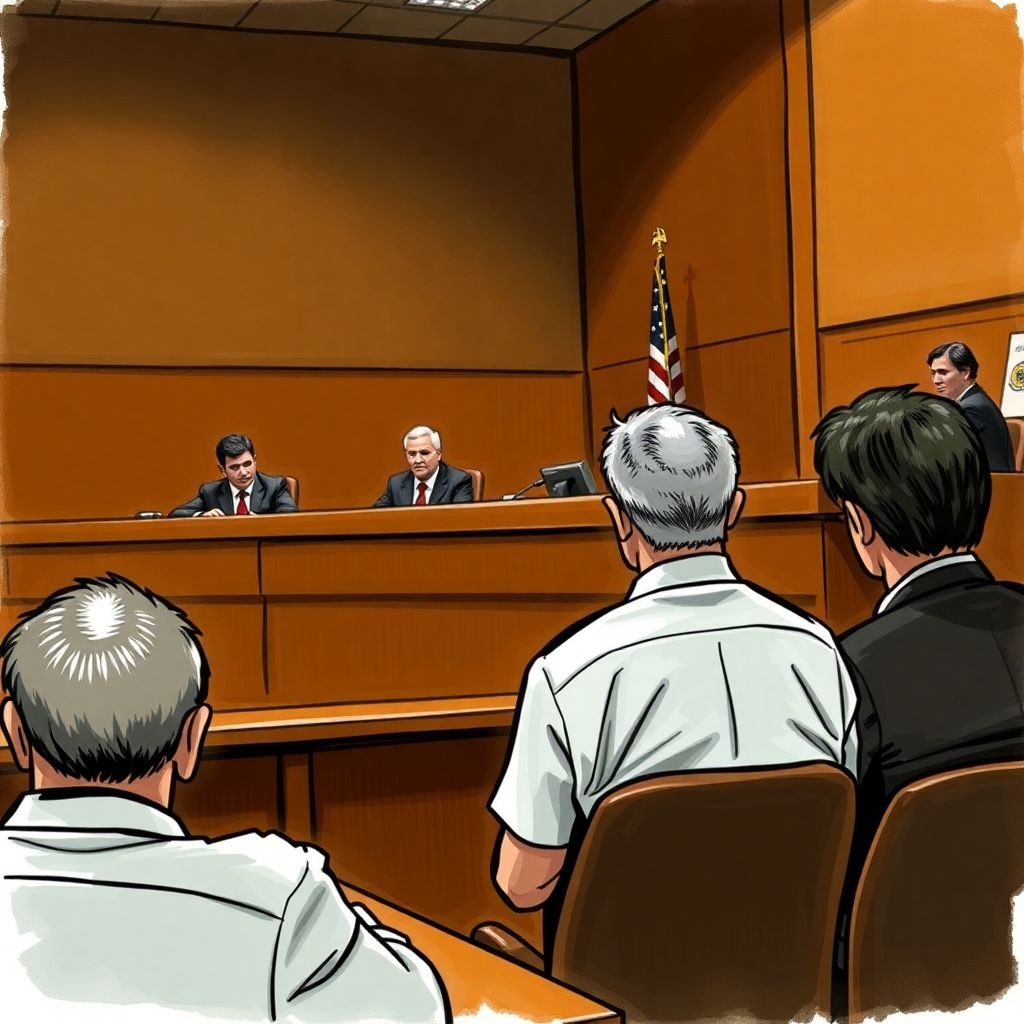
Federal Appeals Court Denies Kalshi Request to Halt Nevada Crackdown, Clearing Way for State Action
A federal appeals court has refused an emergency bid by prediction-market platform Kalshi to temporarily block enforcement efforts by Nevada regulators, a move that significantly raises the stakes for the company’s operations in the state and could ripple across the broader event-contracts industry.
According to filings summarized by gaming and sports-betting attorney Daniel Wallach on X, a three-judge panel of the U.S. Court of Appeals for the Ninth Circuit on Tuesday denied Kalshi’s motion for an administrative stay. That type of stay would have acted as a short-term freeze, preventing Nevada authorities from pursuing civil enforcement while the court weighed a more extensive request for interim relief.
By rejecting the administrative stay, the Ninth Circuit removed what would have been a procedural shield for Kalshi. Without it, Nevada regulators now have a clearer path to move quickly against the company’s operations, including efforts to treat some of its markets as unlicensed gambling under state law. For Kalshi, that means it must either comply, exit, or immediately find another legal strategy to avoid being shut down in Nevada.
The dispute sits at the intersection of two regulatory regimes: federal oversight of derivatives markets and state control over gambling. Kalshi, which operates as a federally regulated prediction market, positions many of its contracts as event-based derivatives cleared under federal commodities rules. Nevada, by contrast, is examining those same products through the lens of state gambling statutes that restrict or prohibit wagering on certain real-world events.
The Ninth Circuit’s refusal to grant the emergency stay does not decide the merits of Kalshi’s case. It is a procedural ruling, not a final judgment on whether Nevada’s actions are lawful or whether Kalshi’s products are correctly classified as derivatives rather than gambling instruments. However, it is an early signal that the appeals court is not prepared to step in immediately to freeze the state’s enforcement powers while the litigation unfolds.
For Kalshi, the practical impact is immediate. Without temporary protection from the court, Nevada agencies may now seek to compel the platform to halt specific markets, impose penalties, or otherwise restrict activity involving Nevada residents or entities. Even the threat of such action can be enough to force a company to scale back or suspend services in a state while it reassesses its legal exposure.
The case is also unfolding at a moment when U.S. regulators are tightening their stance toward prediction markets more broadly. Federal authorities have already scrutinized event contracts that touch on elections, economic data, and politically sensitive outcomes, questioning whether some products cross the line into prohibited gaming or unapproved forms of wagering. State regulators, including those in Nevada, are increasingly wary of platforms that allow the public to bet on non-traditional events under the banner of financial instruments.
That tension raises a core question for the industry: when is a contract on the outcome of a real-world event a legitimate financial derivative, and when is it simply a bet? Federal regulators may approve or tolerate certain event contracts under commodities law, but that does not automatically override state gambling rules, which operate independently and often define “wagering” more broadly. The Kalshi-Nevada clash is becoming a test case for how those overlapping jurisdictions will be reconciled in practice.
Legal experts note that the denial of an administrative stay often reflects a court’s skepticism that the moving party has met the demanding standard for emergency relief-showing both a strong likelihood of success on the merits and a risk of irreparable harm without immediate intervention. At the same time, such denials are common, and they do not preclude the court from later granting a more fully briefed motion for an injunction or ultimately ruling in the company’s favor.
From a strategic perspective, Kalshi now faces a narrower set of options. It can try to negotiate some accommodation with Nevada authorities, such as limiting or redesigning certain markets that are particularly objectionable under state law. It can voluntarily restrict access for Nevada users, effectively geofencing the state. Or it can double down on litigation, seeking to convince the courts that federal law preempts or constrains Nevada’s ability to regulate its products as gambling.
For other prediction-market operators, the developments in the Ninth Circuit are a warning sign. Platforms that rely on federal derivatives oversight as their primary regulatory shield may not be insulated from state-level enforcement, especially in jurisdictions that tightly regulate any form of wagering. Companies offering markets on politics, entertainment, sports-adjacent events, or macroeconomic outcomes may now feel pressure to conduct detailed state-by-state legal analyses rather than assuming that federal registration alone is sufficient.
Investors, traders, and users of these platforms should also recognize the practical risks. Regulatory actions, even when contested, can lead to abrupt market suspensions, forced liquidations, or changes in contract terms. Participants who treat prediction markets as stable venues for hedging or speculation may find that regulatory uncertainty is itself a significant source of volatility.
The decision also underscores the broader policy debate around whether prediction markets serve a valuable economic and informational function or simply represent another form of unregulated betting. Proponents argue that allowing people to trade on real-world outcomes can improve price discovery, generate useful forecasts, and offer legitimate hedging tools for businesses and individuals. Critics counter that such markets can encourage gambling addiction, raise ethical concerns-particularly when they involve sensitive events like elections or public health-and undermine public trust.
How courts resolve the Kalshi-Nevada fight could help shape the future regulatory model. If judges ultimately side with Nevada’s interpretation, states may feel emboldened to crack down aggressively on similar platforms, pushing the industry toward either explicit gambling licenses or more restrictive product offerings. If Kalshi prevails, it could strengthen the argument that certain federally overseen prediction markets occupy a protected space distinct from traditional gambling, though that would not eliminate all state authority.
In the meantime, companies in the sector are likely to reconsider how they design and present their products. Clearer distinctions between “hedging” and “pure betting,” more rigorous compliance controls by geography, and explicit avoidance of certain categories of sensitive events may become standard practice. Some operators may also explore more direct engagement with state regulators to secure tailored approvals or carveouts, rather than relying solely on federal registrations or no-action positions.
For Nevada, a state whose economy is deeply intertwined with regulated gambling, the case is about maintaining control over what qualifies as legal wagering within its borders. Regulators there have long insisted that new forms of betting-especially technology-heavy or financialized variants-must fit within the same strict licensing and oversight frameworks that apply to casinos and sportsbooks. Allowing unlicensed prediction markets to flourish could be seen as eroding that model.
As the litigation proceeds, attention will focus on how the Ninth Circuit handles Kalshi’s broader request for relief and, eventually, the underlying legal questions. The denial of an administrative stay is only the first skirmish in what is likely to be a lengthy fight over jurisdiction, preemption, and the future boundaries of prediction markets in the United States. For now, though, Nevada is free to act-and Kalshi must navigate that reality while trying to preserve its business and legal position.