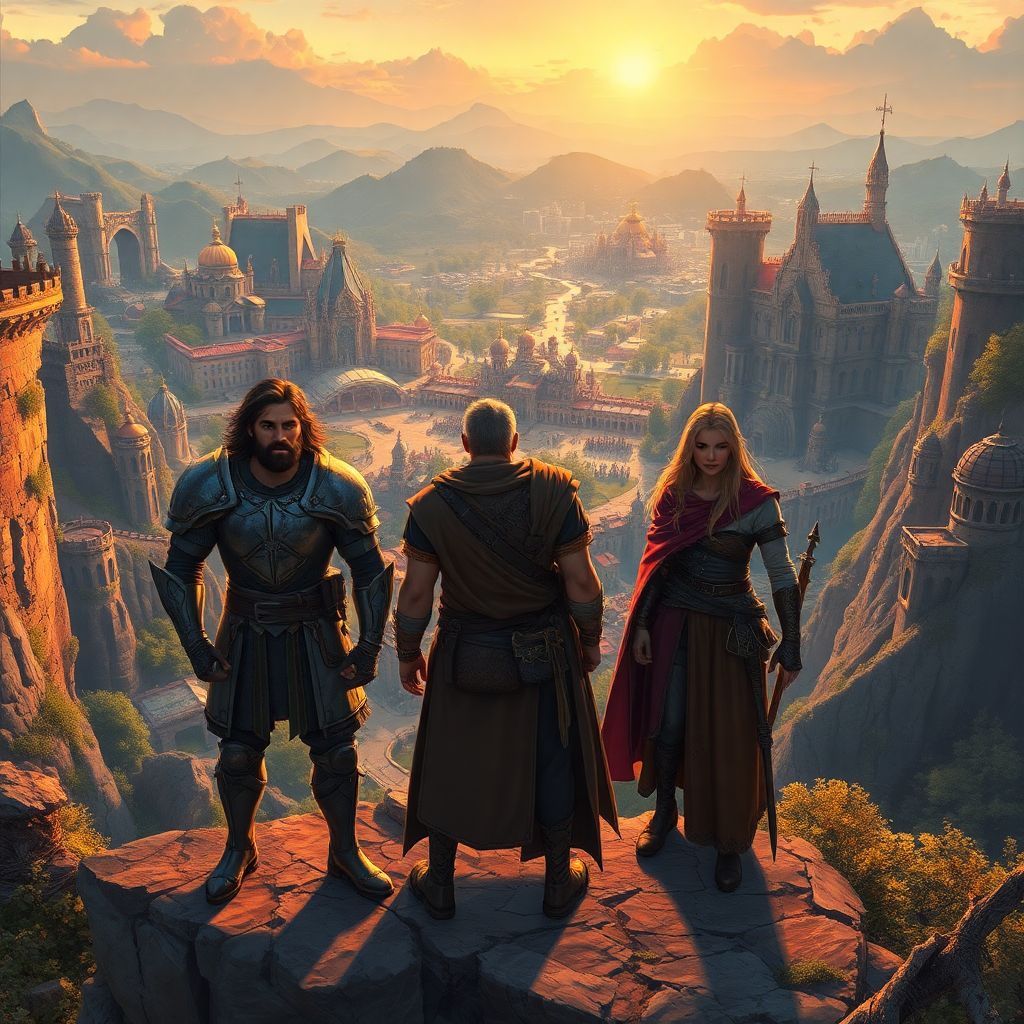
“Baldur’s Gate 3” creator Larian Studios is drawing a clear line in the sand: its next big RPG in the Divinity universe will not feature AI-generated art. While the studio is open to experimenting with certain AI-powered tools behind the scenes, all visual content that appears in the finished game will be created by human artists.
Studio founder and CEO Swen Vincke explained that the team has experimented with AI-assisted tools in very narrow, internal contexts, such as early idea exploration. However, he stressed that this does not translate into outsourcing actual artwork to generative AI models or letting algorithms replace the studio’s art team. According to him, anything that ends up in the final product will be crafted by real people, not machines.
Vincke acknowledged that conversations around AI in games have grown more intense, especially as generative image and text tools become more powerful and more widely used across the industry. Artists and players have increasingly voiced concerns that AI tools, trained on massive datasets scraped from the internet, may replicate or remix existing works without consent, erode job security, and flatten the distinct visual identities that human-led studios are known for. Against that backdrop, Larian’s commitment is meant to reassure both its team and its audience.
The studio’s stance is especially notable because Baldur’s Gate 3 succeeded in large part due to its human touch: intricate character animations, lovingly detailed environments, expressive portraits, and bespoke cinematic sequences. Fans praised the game for feeling handcrafted and personal—qualities many worry could be diluted if studios lean heavily on AI-generated assets to cut costs or speed up production. Larian is signaling that it sees that handcrafted feel as a core part of its identity, not an optional flourish.
At the same time, Vincke stopped short of demonizing every form of AI. He distinguished between “GenAI art” that directly replaces artists’ output and more limited tools that might help with mundane or experimental tasks. For example, AI could potentially assist with organizing references, quickly mocking up mood variations, or automating repetitive technical chores that don’t contribute to the creative heart of the project. In this framing, AI is a utility in the pipeline, not a creative lead.
This nuance reflects a wider tension in game development. Many studios are under pressure to produce bigger, denser worlds on tighter schedules and budgets. AI promises faster asset creation, automatic upscaling, procedural variation, and even dialogue generation. But these promises clash with growing public skepticism about how AI models are trained, whether they rely on unlicensed data, and what they mean for the livelihoods of writers, concept artists, illustrators, and animators. Larian’s approach tries to balance practical experimentation with a clear ethical boundary: no generative art in the shipped game.
For players, the decision also has a trust dimension. Modern RPGs ask audiences to invest hundreds of hours in their characters, choices, and stories. When fans feel that a studio respects the craft and the people behind it, they are more willing to invest emotionally and financially. By committing to human-made art for Divinity, Larian is essentially telling its community that the studio values authenticity over shortcuts, even as new technologies tempt the industry toward rapid automation.
From the perspective of working artists, the studio’s statement can be seen as a form of solidarity. Many illustrators and concept artists fear being replaced not because they oppose technology, but because generative systems are often built on top of their work without consent, credit, or compensation. A studio publicly affirming that it will not swap them out for AI-generated art sends a message: their skills and individual styles are still central to the studio’s creative identity. It also suggests that Larian sees the long-term value in nurturing an in-house artistic culture rather than treating visuals as a commodity that can be rapidly produced by a model.
The choice is also strategically smart from a branding standpoint. After the success of Baldur’s Gate 3, Larian now occupies a rare space in the market: a large, independent studio known for deep role-playing systems and high production values. Doubling down on human-driven art reinforces that image. In a future where many games may converge visually because they rely on the same trained models, a studio that champions distinct, human-authored art direction can stand out more clearly.
Beyond artwork, Larian’s position touches on broader questions about where AI does and does not belong in creative production. Scripted dialogue, narrative branches, and voice performances are all areas where AI is starting to appear. If a studio is cautious about using AI for visuals, it’s reasonable to assume it will be equally careful about using synthetic voices or AI-written story content in narrative-heavy games. Fans of Divinity and Baldur’s Gate value complex writing and strong character performances; any hint that these core elements might be delegated to machines could easily backfire.
This is part of a larger cultural shift. As AI tools spread, audiences are becoming more attuned to the difference between “assistance” and “replacement.” Tools that help organize, prototype, or iterate are generally seen as acceptable if they remain firmly under human direction. But when AI begins to generate finished, ship-ready content—especially when trained on human work without proper agreements—it crosses into ethically fraught territory. Larian’s pledge sets a clear expectation: any art you see in Divinity will originate from human intention and effort, not from a black-box algorithm.
There is also a long-term business angle. Relying heavily on generative AI can lock studios into specific tools, models, and providers whose terms or capabilities might change. Building a pipeline around human artists, supported where sensible by small-scale AI utilities, offers more control and continuity. Studio culture, communication between departments, and shared visual language are built over many years; replacing that with a dependency on external models could weaken a studio’s ability to define its own look and feel.
At the same time, the debate is unlikely to disappear. As AI models improve, the temptation to use them for more parts of production will only grow. Larian’s current stance may evolve in the future, particularly as regulation, licensing practices, and fair-compensation frameworks mature. However, its emphasis on transparency and on protecting the human authorship of visible assets provides a framework for how other studios might communicate their own policies: by drawing specific lines, rather than offering vague assurances.
For players awaiting the new Divinity title, the message is straightforward: expect a game built on the same philosophy that powered Baldur’s Gate 3—human-written, human-drawn, and human-directed. New tools may quietly assist behind the curtain, but the soul of the game, from character portraits to sweeping landscapes, will come from the hands and minds of real artists. In a rapidly changing technological landscape, that human commitment is becoming a selling point in itself, and Larian is leaning into it as a core part of what makes its games distinctive.