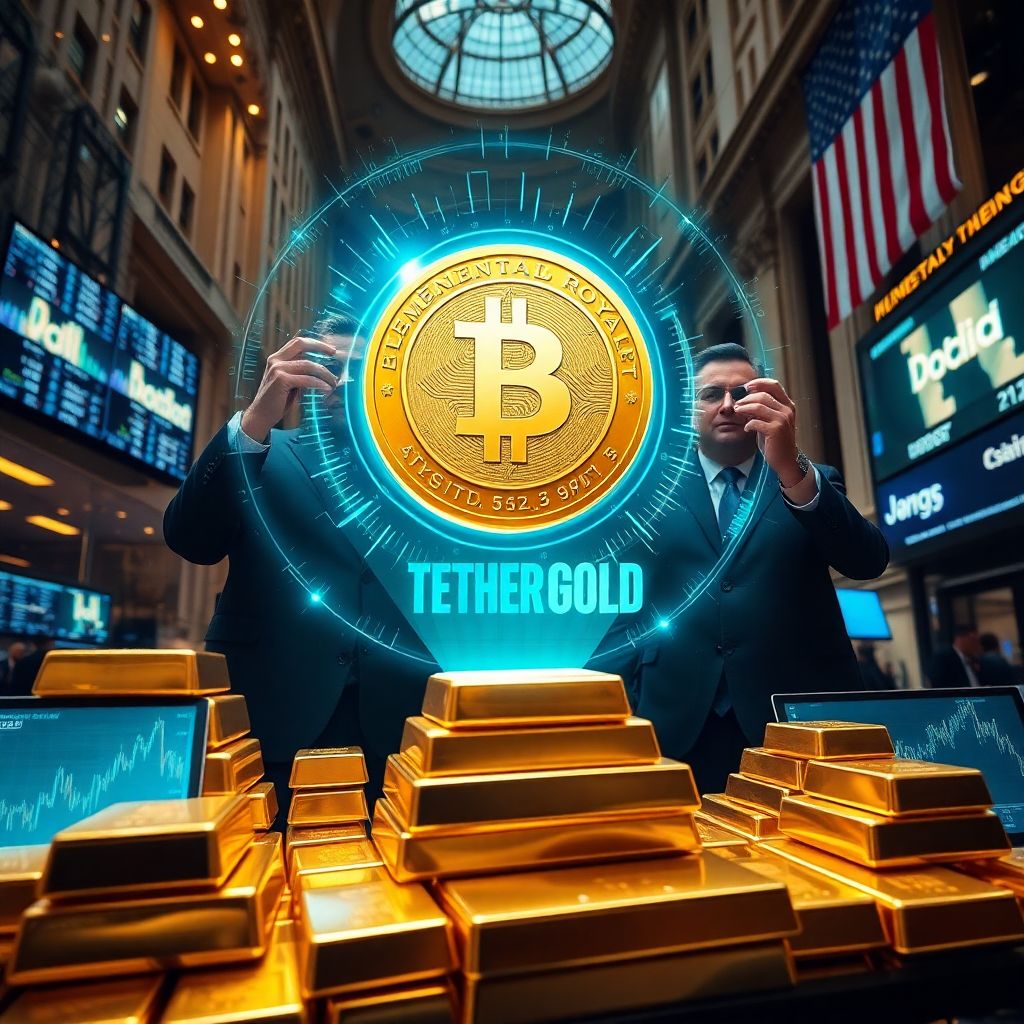
Precious metals royalties company Elemental Royalty is preparing to break new ground on Wall Street by paying dividends in Tether’s tokenized gold, XAUT, instead of only in cash.
The Colorado-based firm announced that its shareholders will soon have the option to receive their dividend distributions in Tether Gold, a digital token that represents ownership of physical gold held in reserve. According to the company, the total payout for investors will amount to 12 cents per share, spread over multiple quarterly dividend payments.
While cash will remain the default and traditional payout method, Elemental is positioning the XAUT option as a way for investors to gain direct exposure to physical gold through a modern, blockchain-based instrument. Rather than simply receiving fiat currency, shareholders who opt in will receive a digital asset backed by allocated gold.
Elemental CEO David Cole framed the decision as both a technological and strategic step forward. He emphasized that offering a “dividend in kind” – in this case, in the form of Tether Gold – is intended to set the company apart from other royalty and mining-related investments. By aligning itself with tokenized commodities, Elemental aims to present itself as a “forward-thinking, growth-oriented investment” that blends traditional resource exposure with digital asset innovation.
Tether Gold (XAUT) is a token that represents ownership of physical gold bars stored in secure vaults. Each token is designed to correspond to a specific quantity of gold, giving holders a digital claim on a tangible asset. For investors accustomed to receiving cash or paper shares, the availability of tokenized gold as a dividend is an unusual, and potentially attractive, alternative.
From Elemental’s perspective, the move also closes a conceptual loop: investors back a company that earns royalties from gold projects, and in return, they can receive part of their reward directly in gold exposure rather than only in money. This tightens the link between the underlying commodity and the financial return, something that many resource-focused investors often seek.
The initiative is notable because it introduces a concrete, real-world use case for tokenized gold within the traditional equity markets. Until now, many tokenized commodity products have existed largely within the crypto trading ecosystem. By tying XAUT to dividends on a publicly traded royalties business, Elemental is effectively testing how comfortable mainstream investors are with receiving and holding tokenized assets.
For shareholders, the practical implications will revolve around custody and access. Those who choose to accept dividends in Tether Gold will need a compatible digital wallet and a basic familiarity with handling tokenized assets. Some may prefer the simplicity of cash, which the company continues to offer. Others, particularly those already interested in digital assets or inflation hedges, may view XAUT as an efficient way to accumulate gold exposure without dealing with physical delivery, storage, or traditional gold certificates.
There are potential advantages for investors who opt for Tether Gold dividends. Tokenized gold can, in many markets, be transferred quickly and traded around the clock, unlike physical bullion. It also allows for fractional holdings, making it easier to accumulate smaller amounts of gold over time through recurring dividends. For long-term shareholders, repeated quarterly distributions in XAUT could gradually build a meaningful position in gold.
At the same time, this approach introduces new considerations. Investors accepting digital assets face the usual risks associated with custody and security, such as safeguarding private keys and protecting wallets from hacks or loss. They must also be comfortable with the regulatory and counterparty profile of the issuer of the tokenized gold, in this case Tether, and understand any jurisdictional or tax implications of receiving dividends in a digital commodity rather than in cash.
From a corporate strategy standpoint, Elemental’s decision reflects a broader trend: the slow but steady convergence of traditional finance and blockchain-based instruments. By incorporating a tokenized asset into a standard corporate action like a dividend, the company is signaling that it sees digital representations of commodities as a legitimate part of the financial toolkit, not a passing speculation.
The move could also serve as a test case for other firms in the natural resources and royalties sector. If Elemental’s experiment is well received, other mining, energy, or asset-backed businesses might explore similar models-whether through tokenized metals, tokenized treasuries, or other blockchain-based representations of real-world assets as part of their capital return policies.
For the tokenized gold market, this development may help shift the narrative from purely trading and arbitrage toward utility. When a listed company uses XAUT as a mechanism to return value to shareholders, it effectively endorses tokenized gold as a medium suitable for corporate finance and investor relations, not just for speculative trading.
This dividend structure may also appeal to different investor profiles within Elemental’s base. Income-focused shareholders can still rely on cash payouts, while those with a more macro or hedge-oriented mindset can accumulate gold-linked tokens. In an environment where inflation, currency risk, and geopolitical uncertainty often push investors toward hard assets, receiving dividends directly denominated in gold exposure could be perceived as a built-in hedge.
There is also a branding dimension. By adopting Tether Gold for dividends, Elemental differentiates itself in a crowded space of royalty and streaming companies that often compete on similar metrics: portfolio quality, jurisdiction risk, and production growth. Adding a digital-asset angle allows Elemental to market itself as not only tied to the timeless value of gold, but also aligned with the next generation of financial infrastructure.
Over time, the success of this initiative will likely be measured by adoption rates: how many shareholders actually elect to receive XAUT instead of cash, how they use or hold the tokens, and whether the presence of a tokenized dividend option affects liquidity or valuation of the stock. If it proves popular, Elemental could choose to expand the share of dividends offered in tokenized form or integrate other blockchain-based services into its investor offering.
For now, the company is maintaining flexibility. Investors can stick with cash if they prefer, or experiment with tokenized gold if they are comfortable in the digital asset space. By structuring the total 12-cent dividend across several quarters, Elemental also gives shareholders multiple opportunities to reconsider their choice and gradually adjust to the new format if they wish.
Whatever the eventual uptake, the decision marks an important signal from a traditional-sector company: tokenized commodities are no longer just a crypto-side curiosity, but are starting to be woven into conventional corporate finance practices. For Elemental, it is a bet that combining gold royalties with tokenized gold dividends will resonate with a new generation of investors seeking both hard-asset exposure and digital-age flexibility.