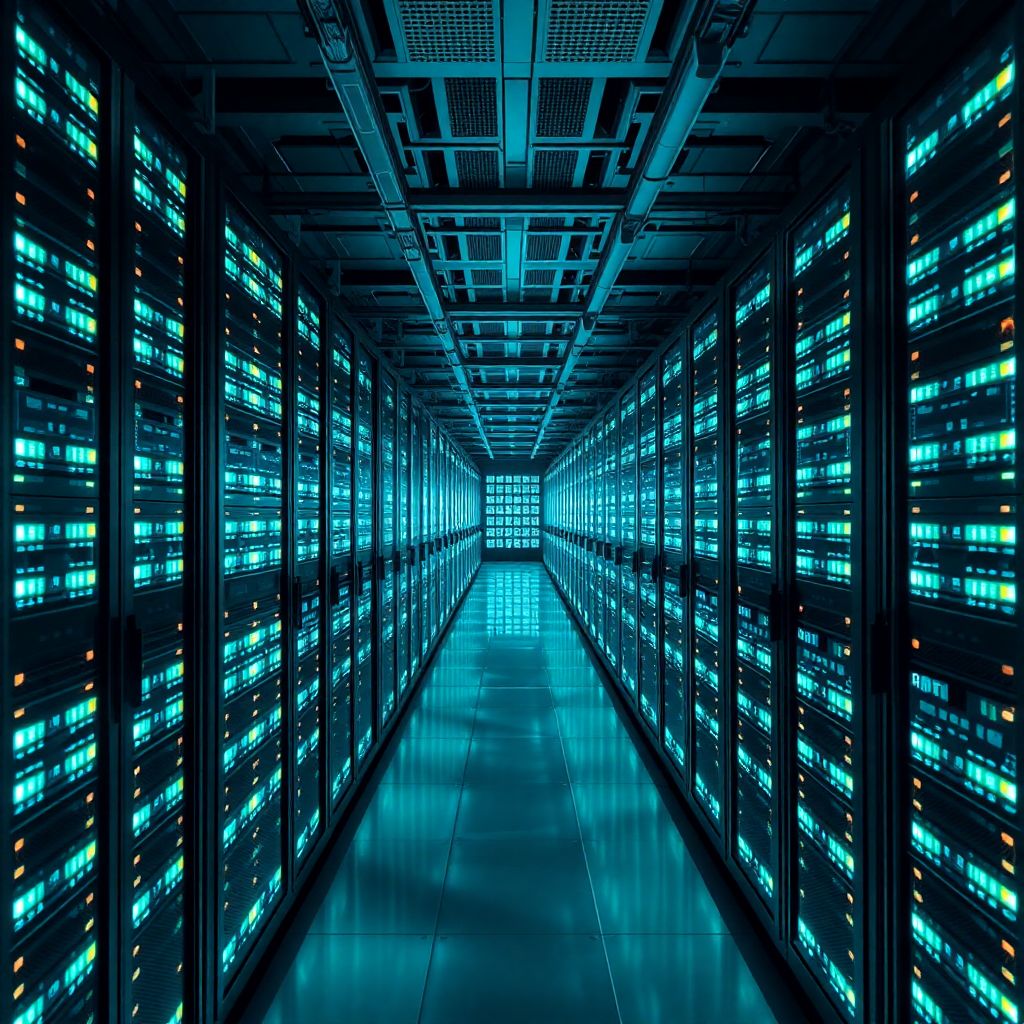
CoreWeave has dramatically deepened its role in the global AI race, expanding its long‑term infrastructure agreement with Meta Platforms to a staggering 21 billion dollars and extending the partnership through 2032. The deal cements CoreWeave as one of the central suppliers of high‑performance GPU computing to one of the world’s largest social and advertising ecosystems, at a time when artificial intelligence is becoming the engine of both product innovation and revenue growth.
Under the revised terms, CoreWeave will deliver dedicated AI compute capacity to Meta across multiple geographically distributed data center locations. Rather than concentrating power in a small number of sites, the company is designing a more federated infrastructure footprint. This approach is aimed at enhancing resilience, reducing latency for Meta’s users around the world, and ensuring that critical AI workloads can be shifted between sites with minimal disruption if local issues arise.
A key technical component of the expanded agreement is the early deployment of systems based on NVIDIA’s next‑generation Vera Rubin platform. By committing to such cutting‑edge hardware, CoreWeave is positioning Meta to access some of the most powerful compute available in the market for training and running large‑scale models. These systems are expected to underpin a wide range of Meta’s AI initiatives, from recommendation engines and ad targeting to generative AI features built directly into its apps.
CoreWeave emphasized that the infrastructure being rolled out is specifically tailored for increasingly complex and compute‑hungry workloads. As large technology companies scale up models with hundreds of billions of parameters and experiment with multimodal systems that blend text, images, audio, and video, demand for specialized GPU clusters has surged. General‑purpose cloud infrastructure is no longer sufficient for these use cases; hyperscalers are looking for tightly optimized, AI‑first environments that can deliver both raw performance and predictable costs.
Distributing AI capacity across multiple locations also brings meaningful performance benefits. Proximity to end users can cut down on latency in inference workloads, improving responsiveness in real‑time features such as content ranking, recommendations, and AI‑assisted creation tools. At the same time, geographic diversity strengthens business continuity, enabling Meta to maintain critical AI services even in the face of local outages, extreme weather, or grid constraints.
The structure of the Meta-CoreWeave agreement highlights a broader shift in the AI infrastructure market toward long‑term, contract‑backed revenue models. Building and operating advanced data centers loaded with GPUs requires immense up‑front capital. Multi‑year commitments from hyperscalers give providers like CoreWeave the financial visibility they need to justify large investments in land, power, cooling, and hardware, while also reassuring lenders that the assets will be fully utilized.
To support its rapid expansion and deliver on the Meta contract, CoreWeave is now raising more than 4 billion dollars in fresh capital. The financing package is centered around a proposed 3 billion dollar issuance of convertible senior notes maturing in 2032. Investors will also have the option to purchase up to an additional 450 million dollars of these securities, potentially lifting the total size of the convertible offering to 3.45 billion dollars.
Alongside the convertible notes, CoreWeave plans to launch a separate 1.25 billion dollar offering of senior unsecured notes due in 2031. Taken together, the instruments are designed to provide a mix of flexibility and long‑term funding, aligning closely with the extended duration of the Meta agreement and the long life cycle of the underlying infrastructure assets.
The convertible notes will pay cash interest and grant holders the right to convert their holdings into cash, shares of CoreWeave, or a combination of both, depending on the final terms established at pricing. This structure enables the company to tap lower interest rates than it might face on straight debt, while giving investors equity‑like upside if CoreWeave’s valuation rises as the AI infrastructure market continues to expand.
To mitigate the risk of dilution that typically accompanies convertible instruments, CoreWeave intends to use part of the proceeds on capped call transactions. These derivative structures are common in growth companies issuing convertibles: they are designed to offset share issuance above certain price levels, effectively “capping” the dilution impact if the stock performs strongly. The remainder of the funds will go toward broad corporate purposes, including data center construction, network build‑outs, and potential hardware procurement.
Proceeds from the senior unsecured notes could also be directed toward refinancing existing obligations. This indicates a deliberate effort to optimize CoreWeave’s capital structure-lengthening debt maturities, smoothing interest costs, and freeing up flexibility to continue scaling without overburdening its balance sheet. With AI infrastructure projects often requiring multi‑billion‑dollar investments before generating steady cash flows, such financial engineering has become a core strategic capability for companies in this space.
The company’s aggressive financing push is emblematic of a wider industry trend. Across the AI infrastructure landscape, providers are racing to line up massive pools of capital to meet surging demand from hyperscalers, large enterprises, and AI model companies. GPU clusters, high‑voltage power connections, advanced cooling systems, and specialized networking hardware are all in short supply, and the players that can secure both funding and supply chain access early are likely to gain a durable advantage.
CoreWeave has already been moving decisively to stake out that position. Before this latest round, it had secured an 8.5 billion dollar delayed‑draw term loan facility tied to its infrastructure assets. That facility gives CoreWeave the ability to call down funds over time as specific data center projects hit construction or deployment milestones, rather than taking on the entire sum at once. Such structures help match borrowing more closely to actual capital needs, limiting interest expense on idle cash.
On the demand side, Meta is pursuing an ambitious strategy to weave AI more deeply into its core products and revenue engines. One of the company’s key focus areas is social commerce-turning user engagement across platforms such as Instagram and Reels into more direct, measurable shopping behavior. This requires sophisticated AI systems capable of understanding user intent, predicting what content and products are most relevant, and surfacing the right mix of ads, creator posts, and shopping experiences in real time.
A central pillar of this strategy is the elevated role of creators. Meta is developing tools that enable creators to act as an integrated bridge between brands and consumers, rather than serving merely as independent influencers. AI systems help match creators with suitable brands, generate or enhance promotional content, and optimize the timing and placement of that content for maximum impact. Behind the scenes, large models continuously evaluate which combinations of creator, message, and format are most likely to drive both engagement and purchases.
Meta is also using AI to blur the line between content discovery and shopping. Instead of users stumbling on products passively while scrolling, the company wants engagement to translate more seamlessly into transactions. AI recommendations, interactive ad formats, and generative tools that allow creators and advertisers to rapidly produce tailored content all depend on high‑performance compute. The more AI is embedded into these flows, the higher the demand for robust and scalable infrastructure like that provided by CoreWeave.
In this context, the Meta-CoreWeave deal is not just about raw technical capacity; it is a strategic bet on where the internet’s business model is heading. As social platforms evolve from simple ad‑supported feeds into complex commerce ecosystems, the underlying AI models must ingest and interpret vast streams of behavioral signals, product data, and creative assets. They must operate at enormous scale, with extremely tight latency budgets and strict reliability requirements. The architecture CoreWeave is building is meant to sustain exactly this kind of workload for the remainder of the decade and beyond.
For CoreWeave, locking in a multi‑year, multi‑billion‑dollar commitment from Meta substantially de‑risks its expansion plans. The predictable revenue stream supports investments in new campuses, energy‑efficient cooling technologies, and specialized interconnects tuned for GPU‑heavy clusters. It also strengthens the company’s hand in negotiations with suppliers of chips, power equipment, and construction services, as it can point to contracted demand rather than speculative growth projections.
At the same time, the partnership underscores how concentrated and strategic the AI supply chain has become. NVIDIA remains the dominant provider of GPUs for large‑scale AI workloads, and platforms like Vera Rubin will shape the performance envelope for years to come. Providers such as CoreWeave, which have aligned themselves closely with NVIDIA’s roadmap and built software stacks optimized for these chips, stand to benefit as hyperscalers prioritize time‑to‑market and reliability over trying to assemble fragmented solutions.
Looking ahead, the extended agreement through 2032 suggests that both parties anticipate AI requirements to remain on a steep upward trajectory. Model sizes are likely to continue growing; inference workloads will proliferate as AI features are embedded into almost every surface of Meta’s apps; and new categories such as AI‑generated media, virtual agents, and personalized shopping experiences will bring fresh computational burdens. Long‑term, scale‑oriented deals like this one are a logical response to that environment.
Taken together, the expanded 21 billion dollar contract with Meta and more than 4 billion dollars in new financing signal that CoreWeave is no longer a niche GPU cloud provider, but a central player in the next phase of internet infrastructure. As AI shifts from experimental feature to foundational layer across social media, advertising, and commerce, the companies that can reliably deliver specialized compute at scale are setting the pace for the entire digital economy.