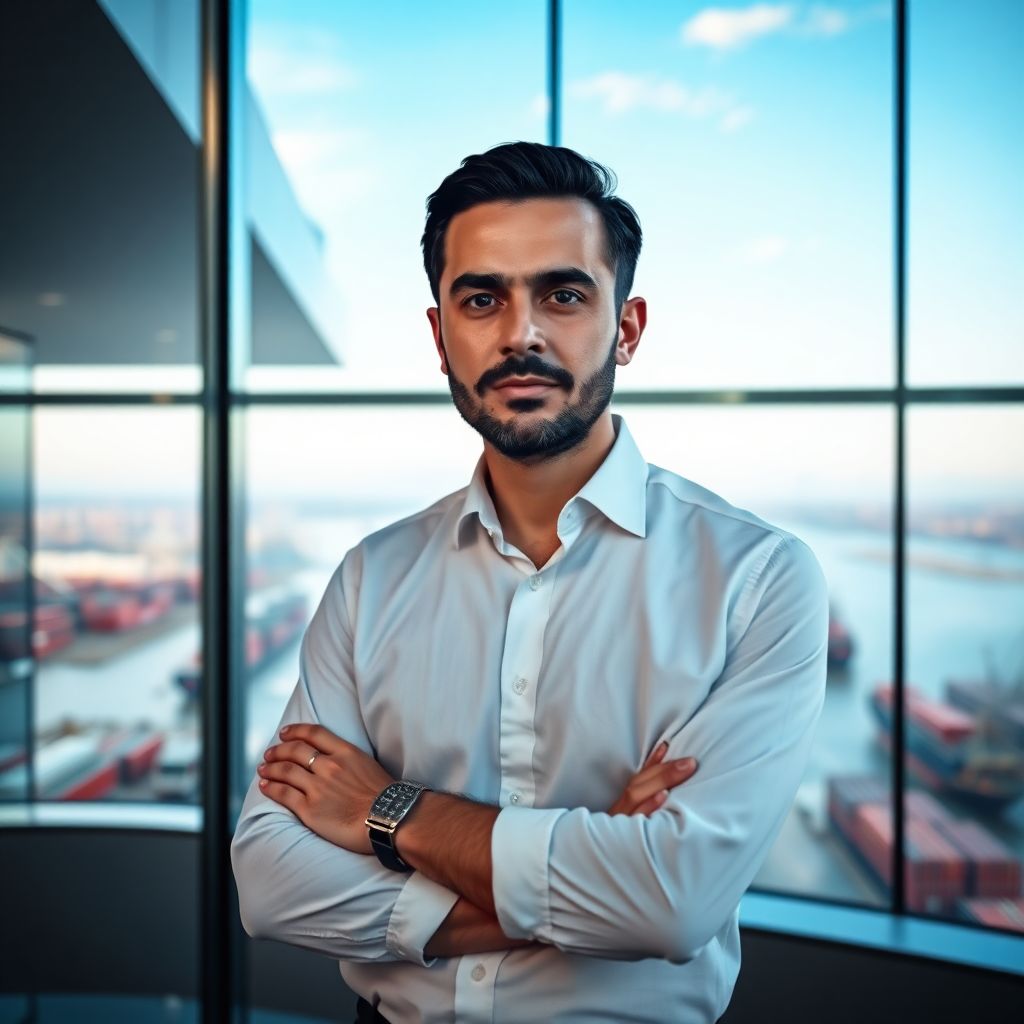
Brutal simplicity: how Gurhan Kiziloz built a $1.2 billion revenue empire without venture capital
Turkish‑British entrepreneur Gurhan Kiziloz has grown Nexus International into a business generating around $1.2 billion in annual revenue, while keeping 100% ownership and refusing venture capital. His explanation for this trajectory comes down to two core ideas: a ruthless commitment to simplicity and a strict self‑funding philosophy.
“Brutal simplicity” as a business operating system
Kiziloz describes Nexus International’s entire approach as “brutal simplicity.” In practice, this means cutting out anything that adds unnecessary layers of complexity: no sprawling hierarchies, no bloated processes, no endless strategic frameworks that slow execution.
According to him, the company deliberately blocks attempts to overengineer systems or management structures. The guiding question is always: *Does this make us faster and more efficient, or slower and more complicated?* If it’s the latter, it gets eliminated. Simplification is treated not as a one‑off project, but as the central pillar of the business model.
This mindset shapes everything from daily operations to long‑term planning. Instead of elaborate roadmaps and rigid multi‑year plans, Nexus focuses on a small number of clear priorities and executes them aggressively. Decision‑makers are given room to act, but not to bury the business under internal politics or procedural drag.
From rejection to total ownership
The 100% ownership structure that now defines Nexus was not born from some grand master plan. It was born from rejection.
Before Nexus, Kiziloz was building Lanistar, a fintech startup. In that world, venture capital is often seen as the default path. Yet when he went out to raise funding, his pitches were turned down. The usual route closed, he decided to become his own investor instead.
That experience reshaped his philosophy: rather than chasing institutional money, he would build companies that could fund themselves from retained earnings. Nexus International became the vehicle for that vision. He kept all the equity, financed operations from profits, and designed the group so it could scale without relying on external capital.
Over time, that constraint turned into a defining advantage. With no investors to please and no board to convince, he retained full independence and creative control. Strategic shifts, product bets, hiring decisions – all of it could move at the speed of his conviction instead of the speed of consensus.
Why he avoids outside capital – almost entirely
Kiziloz has been explicit about the price of bringing in external money: influence and control. In his view, venture capital comes with invisible strings, even when terms look attractive on paper. Investors want growth on their timeline. Boards demand reporting, justification, and alignment with their risk profiles.
By contrast, a fully founder‑owned structure lets Nexus International prioritize long‑term positioning over short‑term optics. If profits need to be reinvested for several years, he can do that without defending the decision to anyone else.
He has said that Nexus would only seriously consider outside capital if the offer exceeded one billion dollars, and even then only as fully liquid cash. This figure is less about a valuation target and more a statement of confidence: the business model is designed to be self‑sustaining, not dependent on external finance.
Decentralized companies, centralized ownership
Within Nexus International, each company operates with its own CEO and dedicated team. Spartans.com, Megaposta, and Lanistar all sit under the Nexus umbrella, but they are not micromanaged from a single controlling office.
Kiziloz says each unit is given room for “creativity, maneuverability, and vision.” The individual CEOs are empowered to make decisions appropriate to their markets, rather than waiting for approval up a long chain. What unites the group is ownership and philosophy, not heavy-handed operational integration.
This decentralized execution is another expression of brutal simplicity. Instead of building a labyrinthine group structure with cross‑functional committees and slow joint decisions, Nexus keeps governance light. Teams focus on what works for their particular product and audience.
The result is a portfolio that is operationally segmented but strategically aligned. Nexus holds the equity and sets the overarching direction, while each business runs lean and reacts quickly.
Self‑funding at scale: $200 million for Spartans.com
Nexus’s most striking demonstration of its self‑funding model is Spartans.com, an online casino brand competing with major players such as bet365 and Stake.
Rather than raising a giant round to launch and scale Spartans.com, Kiziloz committed approximately $200 million to the project directly from accumulated profits. That level of internal funding shows how far a retained‑earnings strategy can go when discipline is applied over time.
Spartans.com itself embodies the same simplicity-first mindset. Instead of trying to be a universal entertainment platform or fintech‑gaming hybrid, it focuses tightly on casino gaming. There is no attempt to be “everything for everyone.” The product offering is narrow by design so that execution can be wide in impact.
Leaving fintech for gaming: a calculation about complexity
Kiziloz did not remain in fintech after Lanistar. His move into gaming was driven less by trend‑chasing and more by a practical evaluation of friction.
Fintech, in his experience, is dominated by regulation and compliance burdens. The layers of oversight, licensing, and constantly evolving regulatory expectations create an environment where even simple ideas become operationally heavy.
Gaming, by comparison, still requires licensing, capital, and serious execution, but the path is clearer: secure the right approvals, fund the platform, and operate to known standards. For someone obsessed with cutting complexity, the relative straightforwardness of regulated gaming made more sense than the ever‑tightening rules of financial technology.
A $1.2 billion milestone that he refuses to celebrate
For many founders, hitting $1.2 billion in annual revenue would be the story. For Kiziloz, it is explicitly not the destination. He has said that he views this figure as an intermediate stop on the road to a much larger ambition: building a group with $100 billion in scale.
This refusal to treat current success as a finish line feeds back into how Nexus operates. The company does not act like it has “arrived.” Instead, it behaves more like a large startup: lean structures, fast decisions, reinvestment of profits rather than aggressive cash extraction, and ongoing experimentation.
His personal net worth has been estimated at around $1.7 billion, but he notes that most of that is illiquid. It is tied up inside the businesses, not sitting as disposable cash. That reinforces the notion that value is being built and compounded inside Nexus rather than harvested out of it.
Challenging the venture capital narrative
One reason Kiziloz is open about revenue numbers and ownership is to send a message to other founders: hypergrowth and large‑scale outcomes are still possible without raising from venture capital.
In recent years, the dominant technology story has suggested that serious scale requires big rounds, fast burn, and constant fundraising cycles. By showcasing a self‑funded $1.2 billion revenue group, he is offering a counter‑narrative: discipline, persistence, and reinvested profits can still build very large companies.
This does not mean his path is “better” for everyone. It is, however, proof that venture capital is a choice, not a prerequisite. Nexus International stands as a case study in how far a company can go when it commits to building from cash flows instead of capital injections.
How “brutal simplicity” works in practice
Behind the phrase sits a set of practical habits that other entrepreneurs can adapt:
– Radical focus on core products: Instead of chasing every adjacent opportunity, Nexus brands concentrate on what they can do exceptionally well. Spartans.com sticks to casino gaming rather than layering on extra verticals just to appear diversified.
– Short decision paths: Fewer stakeholders means faster calls. Each company has a CEO trusted to act. Approval processes are kept deliberately light.
– Minimal bureaucracy: Internal processes exist to support execution, not to justify headcount. Meetings, reports, and committees are trimmed to what is strictly necessary.
– Continuous pruning: Complexity tends to creep in over time. The “brutal” part is the willingness to regularly cut back structures, projects, and workflows that no longer serve the main mission.
For founders, the takeaway is not to copy Nexus line by line, but to ask: *What could be removed from my business without destroying performance? What would get faster if fewer people needed to sign off?*
The upside and downside of total control
Maintaining 100% ownership has clear advantages, but it also comes with trade‑offs that Kiziloz has accepted.
On the upside, he can move aggressively without external permission, shape company culture directly, and avoid dilution. The long‑term compounding of value remains with him and his organization.
On the downside, self‑funding imposes natural speed limits. There are markets where raising a large round might buy immediate dominance or let a company outspend competitors in marketing and hiring. Kiziloz chose instead to grow within the bounds of what profits could sustain, supplemented by his own risk tolerance.
His case suggests that, for certain industries and business models, controlled, profit‑driven expansion can still lead to billion‑dollar‑plus revenue figures, even without “rocket fuel” funding.
Lessons for founders aiming to build without venture capital
Kiziloz’s journey offers several practical insights for entrepreneurs who either cannot or do not want to raise from investors:
1. Design for profitability from the start. Self‑funding requires a business model that can reach positive cash flow in a reasonable timeframe. Purely speculative “growth at all costs” strategies are incompatible with this path.
2. Choose industries carefully. He moved from regulation‑dense fintech to comparatively clearer gaming licensing. Founders should weigh not just market size, but also regulatory drag and operational complexity.
3. Keep structures lean as you scale. It is easier to add complexity than to remove it. Building a culture where simplicity is protected helps maintain speed even as headcount and revenue rise.
4. Reinvest intelligently. Nexus’s $200 million commitment to Spartans.com from retained earnings illustrates the power of patient reinvestment. Profits are raw material for the next growth phase, not just rewards to be extracted.
5. Accept a longer timeline. Without large external injections of cash, some growth stages will take more time. Kiziloz compensates by maintaining tight focus and reducing friction wherever possible.
Why simplicity becomes a competitive edge at scale
As organizations grow, the natural tendency is toward complication: more managers, more tools, more parallel projects. Each seems justifiable in isolation, but collectively they slow the company down.
Nexus International flips that logic. By treating simplicity as a non‑negotiable principle rather than a “nice to have,” the company tries to preserve something most large organizations lose: the ability to decide and act quickly.
In markets like online gaming, where competitors move fast, regulations shift, and customer preferences change quickly, speed becomes a strategic asset. Brutal simplicity is less about aesthetics and more about protecting that speed.
From a billion in revenue to a hundred billion in ambition
Kiziloz’s target of reaching $100 billion in scale might sound extreme, but it frames how he runs his current operations. If the goal is that large, there is little room for complacency at $1.2 billion.
His model suggests a future in which Nexus continues to expand its portfolio, deepen its presence in existing verticals, and possibly enter new ones that fit his criteria: high‑margin, scalable, and less burdened by regulatory complexity than traditional finance.
Whatever direction he chooses, the core formula is unlikely to change: keep ownership tight, keep operations simple, and let profits fund the next step. In an era defined by huge funding rounds and complex corporate structures, Gurhan Kiziloz is betting that brutal simplicity can be not just a philosophy, but a long‑term competitive advantage.