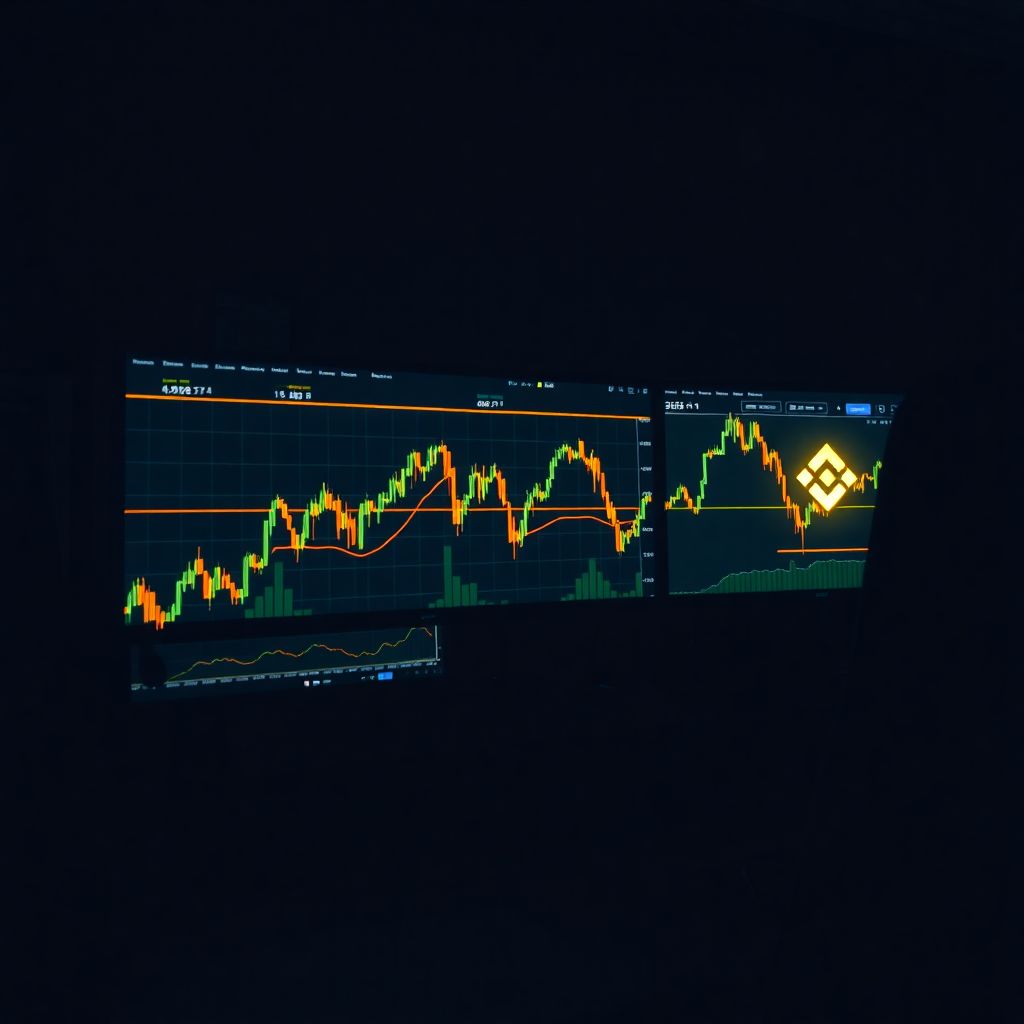
BNB’s $640 wall under pressure: is a short squeeze brewing for bears?
Binance Coin [BNB] has staged a sharp rebound above the 600-dollar mark this week, putting a key resistance area under sustained pressure and raising the risk of a painful squeeze for short-sellers. Price action and derivatives data together point to a realistic chance of another 10% upswing, even though the broader trend is still tilted to the downside.
BNB flips the 20‑day moving average back into support
On Wednesday, 25 February, BNB jumped by roughly 7.85%, reclaiming the psychologically important 600-dollar level in a single strong daily candle. On the daily chart, the 20‑day moving average (20DMA), currently hovering around 618.75 dollars, has now been turned from resistance into support.
That same bullish candle also cleared a previously significant imbalance and supply zone between 602 and 610 dollars. This area had been acting as a short-term ceiling where sellers repeatedly stepped in; breaking through it and closing above it gave buyers a clear technical victory.
The daily candle took the form of a bullish engulfing pattern, where the day’s body fully consumed the prior day’s range. This is often interpreted as a sign that buyers have decisively seized control in the short term. However, while the intraday and short-term picture has brightened, the larger daily market structure for BNB remains classified as bearish.
Long‑term trend: still in a downtrend despite the bounce
For swing traders and long-horizon investors, it is crucial to keep that higher timeframe context in mind. Despite the recent burst of strength, BNB is still trading within a broader downtrend that has been unfolding for months.
Price is currently retesting the 601-dollar swing low, a level that previously launched a powerful rally in the second half of 2025. From a value perspective, there is a case to be made that current prices represent a “deep discount” relative to past peaks. Yet discounts in crypto downtrends can remain “cheap” for a long time if macro conditions do not improve.
A sustained trend reversal would typically require a series of higher highs and higher lows on the daily timeframe, accompanied by steadily rising volume. So far, BNB has only completed the first step – defending a prior swing low and reclaiming a short‑term moving average. The market has not yet confirmed a full-fledged bullish reversal pattern.
Why Bitcoin’s drawdown still matters for BNB
No analysis of a major altcoin is complete without placing it in the context of Bitcoin’s behavior. BNB’s latest rally is occurring while Bitcoin [BTC] is in the middle of a drawdown phase. BTC has bounced back to around 69,000 dollars in recent sessions, but there is little evidence that the correction has fully run its course.
Market structure for Bitcoin suggests the process of forming a durable bottom can stretch out over several months, marked by multiple retests of support, false breakouts, and choppy price action. If BTC resumes its decline or remains stuck in a sideways, volatile range, it can cap upside in altcoins like BNB or trigger renewed selling pressure.
From that perspective, traders should be cautious about extrapolating BNB’s short-term strength into a long-lasting bullish trend. Unless Bitcoin can achieve and hold decisive breakouts above 70,000 and 73,000 dollars, any rallies in BNB may still be vulnerable to sharp reversals driven by macro market risk.
Four‑hour chart: bearish structure, bullish pressure
Zooming into the 4‑hour timeframe provides a more nuanced picture. Structurally, this chart still leans bearish: BNB has not yet broken and held above all the key lower highs that define the current downtrend.
However, there are clear signs of building upside pressure. A bearish order block around the 640-dollar zone, established earlier in February, has been tested multiple times as resistance. Each test that fails to push price sharply lower weakens the seller’s grip on that level.
At the same time, the On‑Balance Volume (OBV) indicator has not printed decisive new highs, showing that spot buying volume remains somewhat restrained. Even so, the very fact that price keeps revisiting local resistance suggests persistent accumulation by bulls or steady short-covering, which can precede a more explosive move.
Potential breakout scenario above 640 dollars
Taken together, the technicals imply that a high-volume breakout above the 640-dollar resistance zone is a realistic possibility. If such a move occurs with strong volume and is followed by a successful retest of 640 dollars as new support, it could generate a favorable setup for long positions.
In that bullish breakout scenario, traders would likely eye upside targets in the 680-dollar and 730-dollar regions. These levels correspond to prior swing highs and areas where selling pressure previously emerged, making them logical points for partial profit-taking or tighter risk management.
However, the key is confirmation. A clean breakout should ideally feature:
– A strong candle closing well above 640 dollars
– Noticeably higher trading volumes compared to recent sessions
– A retest of the 640 zone that holds as support rather than failing back into the range
Without those elements, a brief spike above resistance could still turn into a bull trap.
What the liquidation heatmap is signaling
Derivatives data reinforces the possibility of a squeeze higher. A one‑month liquidation heatmap highlights a dense cluster of short liquidations between 643 and 680 dollars. This means that a sizeable number of leveraged traders have placed their invalidation levels in this region.
If price pushes into that band with momentum, it could trigger a cascade of forced buy orders as short positions are automatically closed. This type of “liquidation chain reaction” often accelerates moves far beyond what spot market buying alone would achieve.
Further north, another significant liquidation cluster appears around the 800-dollar level. While this is considerably above current prices and not a near-term base case, it represents a long‑range magnet if an aggressive short squeeze gains traction and broader market conditions turn more favorable.
Is this a real recovery or a liquidation hunt?
Despite the reclaim of the 20DMA and the intense focus on the 640-dollar level, current price action looks less like the start of a sustainable bull market and more like the opening phase of a targeted liquidation hunt.
In such environments, large players may deliberately drive price into zones loaded with stop-losses and liquidation levels to harvest liquidity. This can create rapid, seemingly irrational spikes that do not reflect genuine long-term demand, only to be followed by equally sharp pullbacks once that liquidity has been consumed.
As long as Bitcoin has not convincingly cleared the 70,000-73,000 dollar band and held above it, BNB traders and investors should treat bullish short‑term moves with a degree of skepticism. Rallies could be driven more by derivatives mechanics than by structural improvement in fundamentals or macro sentiment.
How short‑term traders can navigate BNB now
For active traders, the current environment in BNB offers both opportunity and risk:
– Aggressive bulls might look for a breakout above 640 dollars, with clearly defined invalidation below that level and initial targets around 680 and 730 dollars.
– Conservative participants may prefer waiting for a confirmed retest of 640 as support after a breakout before committing capital.
– Those holding short positions should be aware of the crowded short-liquidation band from 643 to 680 dollars; placing stops too close to this zone may increase the chance of being caught in a squeeze.
In all cases, position sizing and strict risk management are paramount. Using leverage during a potential liquidation hunt can amplify gains but also dramatically increase the speed and magnitude of losses.
Considerations for longer‑term holders
Long-term investors looking at BNB’s “discounted” prices should balance opportunity with caution. Key points to consider include:
– The broader trend remains down; any long-term accumulation strategy should be prepared for continued volatility and possible further downside.
– Gradual scaling in, rather than all‑in entries, can help average into positions while managing risk.
– Monitoring Bitcoin’s macro trend is essential, as a renewed BTC sell‑off could drag BNB lower regardless of its individual technical setup.
Fundamental factors – such as regulatory developments around major exchanges, ecosystem growth, and on‑chain activity – also matter for long-term conviction, even if they were not the main focus of this technical overview.
Risk‑management tips in a squeeze‑prone market
In a market where a short squeeze is increasingly likely, traders may want to:
– Avoid overcrowded positions with no clear exit plan
– Set stop‑losses at levels that reflect their strategy rather than simply clustering near obvious resistance or support
– Refrain from over‑leveraging, especially when liquidation bands are close to current price
– Regularly reassess bias as new data appears on higher timeframes
Remaining flexible is crucial; what begins as a short‑term squeeze can occasionally evolve into a more sustained uptrend, but the opposite is also true.
Bottom line
BNB’s reclaim of the 20‑day moving average and its persistent assault on the 640-dollar barrier point to intensifying bullish pressure and a growing threat to short‑sellers. A decisive breakout could quickly carry the price into the 680-730 dollar range, powered in part by liquidation flows between 643 and 680 dollars.
Yet, with the higher‑timeframe trend still bearish and Bitcoin’s broader drawdown unresolved, this move currently resembles a tactical hunt for liquidity more than the start of a durable bull market. Traders and investors should approach any upside with measured optimism and disciplined risk management.
Nothing in this analysis constitutes financial, investment, trading, or any other form of professional advice. The information reflects opinion and is intended for informational purposes only. Trading and investing in cryptocurrencies involve substantial risk, and every reader should carry out their own research and consider their financial situation and risk tolerance before making any decision.