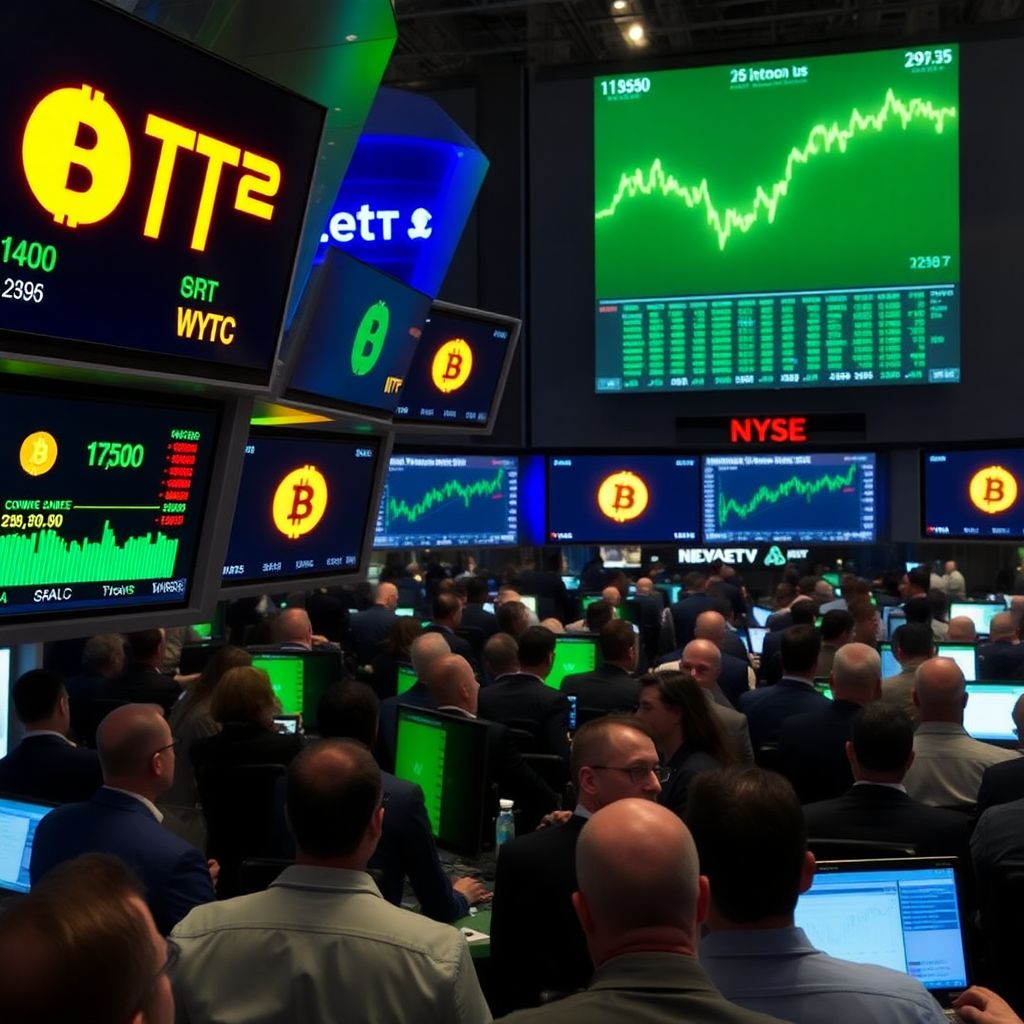
Bitcoin exchange-traded funds are rapidly clawing back earlier losses, with nearly $2.5 billion in net inflows over the past month-just one strong trading session away from fully erasing their year-to-date outflow “hole,” according to analysts.
Despite Bitcoin suffering roughly a 40% price decline over the last six months, spot Bitcoin ETFs have continued to attract fresh capital at a remarkable pace. Bloomberg Intelligence analyst Eric Balchunas described this performance as showing “incredible fortitude,” highlighting how resilient investor demand has been even as market sentiment wobbled and negative headlines piled up.
Data for March shows a particularly impressive run. Over the course of the month, there were nine separate trading days where aggregate inflows into Bitcoin ETFs topped $150 million. Among those, March 2 stood out as a blockbuster day, with approximately $458.19 million pouring into the products. Later in the month, March 16 and 17 delivered back‑to‑back days with inflows above $200 million, underscoring the persistence of institutional and retail interest.
The steady tide of new money has nearly wiped out the net redemptions seen earlier in the year. At the start of the recent rally in ETF flows, spot Bitcoin funds were sitting on sizable year-to-date outflows, raising questions about whether the initial launch frenzy had fizzled. Instead, the latest numbers suggest that many investors are viewing the price weakness in Bitcoin as an opportunity to build or add to positions via regulated ETF vehicles.
One of the standout products in this story is BlackRock’s iShares Bitcoin Trust, traded under the ticker IBIT. Balchunas noted that IBIT has already moved beyond breakeven on the year and now ranks in the top 2% of all ETFs by year-to-date inflows across the entire market. That puts it among a very small group of funds attracting the most cash in 2024-across all asset classes, not just crypto.
This kind of performance is significant because it indicates that Bitcoin exposure is no longer a niche side bet for a limited group of speculators. Instead, it is increasingly being treated as part of the mainstream toolkit investors use to express macro views or diversify portfolios. ETFs in particular make it far easier for large allocators-such as asset managers, advisory platforms, and some institutions-to access Bitcoin without dealing directly with exchanges, custody, or private keys.
The resilience of flows in the face of a steep drawdown also hints at a shift in how investors perceive Bitcoin’s volatility. Historically, large pullbacks often scared away new entrants for months at a time. This time, however, significant amounts of capital have continued to move into Bitcoin ETFs even as prices corrected. That pattern suggests that a growing cohort of buyers is thinking in multi‑year timeframes and treating pullbacks as entry points rather than exit signals.
Another factor helping support inflows is the structural simplicity of the ETF wrapper. For many financial advisors and wealth managers, adding a spot Bitcoin ETF into a client portfolio is operationally no different from buying an equity or bond fund. Compliance, reporting, and custody are all handled within existing brokerage infrastructure. This lowers friction compared to previous crypto investment routes and can unlock allocations from investors who were previously blocked by operational or regulatory constraints.
Regulatory clarity around these products is also playing a role. While broader crypto regulation remains a moving target in many jurisdictions, the fact that multiple spot Bitcoin ETFs have been approved and are trading on major exchanges provides investors with a degree of confidence. That regulatory stamp of approval, even if narrow, helps some institutions justify allocating to Bitcoin using these vehicles rather than staying completely on the sidelines.
The inflow story is not just about momentum chasing, either. Some market observers point out that Bitcoin’s macro narrative-digital scarcity, potential hedge against monetary debasement, and uncorrelated return potential-remains intact even amid price corrections. For investors who buy that thesis, a 40% drawdown may look less like a red flag and more like an attractive discount relative to long‑term expectations.
From a market-structure perspective, sustained ETF inflows can have a tangible impact on underlying Bitcoin demand. Authorized participants and market makers must source physical Bitcoin to back new ETF shares, which can tighten available supply if net inflows persist. While the immediate effect on price can be overshadowed by broader market forces, a consistent pattern of net buying through ETFs supports the idea of a structural bid for Bitcoin coming from traditional finance.
The relative success of IBIT and a handful of other leading funds may also reshape the competitive landscape among ETF issuers. As assets under management grow, scale advantages kick in: larger funds tend to benefit from tighter spreads, deeper liquidity, and often more attention from platforms and advisors. This can create a feedback loop where the biggest products attract an even larger share of new inflows, further cementing their dominance in the category.
For investors, the current data offers several takeaways:
1. Resilient demand: Strong inflows despite price weakness suggest that many buyers are using ETFs to build longer‑term positions in Bitcoin rather than speculate on short‑term moves.
2. Institutionalization of access: The ETF channel is helping bridge the gap between crypto-native markets and traditional investment platforms, broadening the base of potential Bitcoin holders.
3. Growing role in diversified portfolios: With products like IBIT ranking alongside the top inflow‑gathering ETFs globally, Bitcoin exposure is increasingly competing for space in multi-asset portfolios, similar to gold or emerging market equities.
4. Market sentiment signal: Persistent inflows during a drawdown can be read as a sign of underlying confidence in Bitcoin’s long‑term prospects, even if near‑term price action remains choppy.
Looking ahead, one key question is whether ETF inflows will continue if Bitcoin’s price remains under pressure or moves sideways. If the recent pattern holds and investors keep adding exposure through dips, it would strengthen the case that Bitcoin has entered a new phase of adoption driven more by allocation decisions than by speculative manias.
Another consideration is how macroeconomic conditions will affect demand. Shifts in interest rates, inflation expectations, and risk appetite across traditional markets all filter into how investors view Bitcoin. ETFs make it easier for macro‑oriented funds to quickly scale positions up or down, which could, over time, increase Bitcoin’s integration into broader risk‑on/risk‑off dynamics.
There is also the question of how these flows interact with Bitcoin’s own supply schedule, especially in the context of halving events that periodically reduce new issuance. If ETF demand remains strong around such structural supply reductions, it could amplify the impact on price cycles compared with past halving periods when access channels were more limited and institutional participation was smaller.
Finally, the success of Bitcoin ETFs may pave the way for similar products tied to other digital assets, though regulatory and market challenges remain higher outside of Bitcoin. For now, however, Bitcoin stands alone as the primary beneficiary of this new wave of regulated, exchange‑traded products-drawing billions in fresh capital and, at least for the moment, defying the bearish implications of its recent price drop.
In sum, nearly $2.5 billion in monthly inflows, nine separate days above $150 million, a $458.19 million spike on March 2, and consecutive $200 million-plus days on March 16 and 17 all tell a consistent story: despite volatility and skepticism, demand for Bitcoin exposure through ETFs is not only alive-it is robust. With funds like IBIT sitting in the top tier of all ETFs by new money this year, Bitcoin’s foothold in the traditional investment landscape looks stronger than ever.