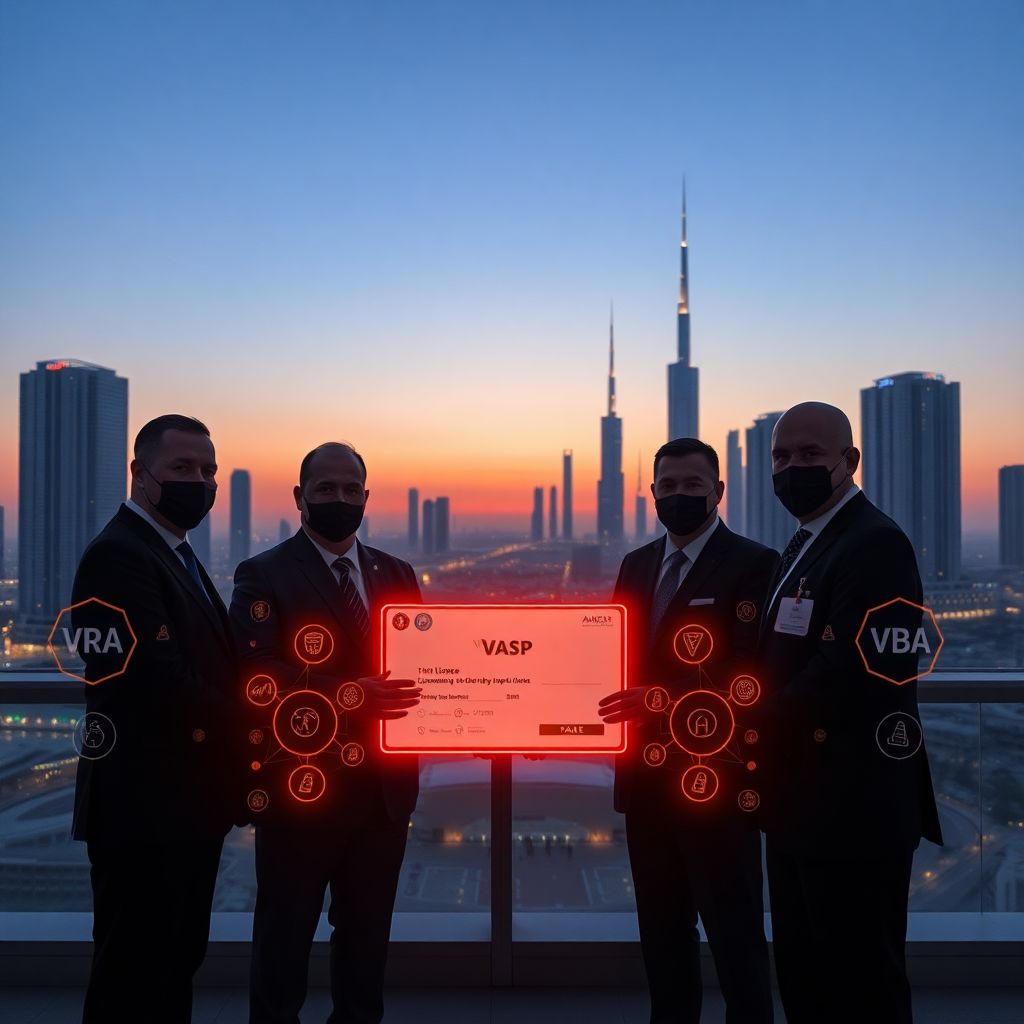
Animoca Wins Dubai VASP License as Emirate Doubles Down on Regulated Crypto
Animoca Brands has secured a key regulatory milestone in the United Arab Emirates, obtaining a Virtual Asset Service Provider (VASP) license from Dubai’s Virtual Assets Regulatory Authority (VARA). The approval positions the Web3-focused investment group to roll out broker-dealer and asset management services for institutional and qualified investors both in Dubai and from the emirate to global markets.
The license, announced on Monday, allows Animoca to operate across the wider emirate of Dubai, with the exception of the Dubai International Financial Centre (DIFC), which has its own regulatory regime. It underscores Dubai’s ambition to be a tightly regulated yet innovation-friendly hub for digital assets at a time when international scrutiny of the crypto sector is intensifying.
What the VASP License Allows Animoca to Do
Under VARA’s framework, the VASP license is a mandatory gateway for companies offering key crypto-related activities. For Animoca, the approval opens the door to:
– Providing broker-dealer services, including facilitating trades in virtual assets for institutional and qualified clients.
– Offering asset management services, such as managing portfolios of digital assets and Web3-related investments on behalf of sophisticated investors.
– Operating from Dubai as a regional and international base, serving clients in the emirate and potentially using Dubai as a launchpad into other regulated markets.
The focus on institutional and qualified investors highlights Dubai’s intent to attract large, compliance-conscious capital rather than unregulated retail speculation.
Dubai’s Strategy: Growth, but With Guardrails
Dubai has been courting blockchain and digital asset firms for years, but the regulatory tone has evolved. The latest framework from VARA emphasizes:
– Licensing and registration requirements for all major virtual asset activities.
– Stricter compliance standards, including anti-money laundering rules, risk management, and governance obligations.
– Clear geographic scope, with VARA overseeing activity across Dubai outside the DIFC, while DIFC maintains its own rules and financial regulator.
By granting Animoca a license under this tightened regime, Dubai signals that it wants to remain a magnet for global crypto and Web3 players-but only those willing to operate under robust oversight.
Why Animoca Sees Dubai as a Strategic Hub
Animoca Brands, best known for its investments in Web3, metaverse, and blockchain gaming projects, has been steadily expanding its global regulatory footprint. The company views Dubai as a strategic node for several reasons:
– Regional access: Dubai offers proximity to capital from the Middle East, North Africa, and South Asia, regions that are rapidly increasing their exposure to digital assets.
– Regulatory clarity: Compared to many jurisdictions where rules remain ambiguous or constantly shifting, VARA’s licensing structure provides a more predictable environment for long-term planning.
– Institutional appetite: The emirate is home to family offices, sovereign wealth funds, and asset managers with growing interest in Web3, tokenized assets, and digital infrastructure.
For Animoca, a regulated base in Dubai strengthens its pitch to large investors who demand compliance-grade operations before allocating significant capital to the sector.
A Signal to the Wider Web3 and Crypto Industry
Animoca’s approval is more than a single corporate milestone; it’s also a signal about where the industry is heading:
– Regulation-first models are becoming the norm: Global Web3 leaders are increasingly seeking formal licenses rather than relying on regulatory grey areas.
– Jurisdictions are competing on compliance: Dubai aims to differentiate itself not just with tax or lifestyle advantages, but by offering a structured, enforceable set of rules for digital assets.
– Institutionalization of crypto is accelerating: As firms like Animoca obtain broker-dealer and asset management permissions, the industry continues to move closer to the standards of traditional finance.
How Dubai’s Tighter Oversight Changes the Game
Dubai’s more stringent approach doesn’t just affect firms applying for new licenses-it reshapes the operating environment across the board:
– Higher entry barrier: Smaller, lightly capitalized startups may find the compliance requirements challenging, pushing the market toward more mature players.
– Reputational upgrade: For licensed companies, operating under VARA’s supervision can become a competitive advantage when dealing with banks, institutional partners, and cautious investors.
– Risk containment: By enforcing standards around custody, segregation of client assets, and disclosure, Dubai aims to avoid the kind of failures and scandals that have hit other crypto hubs.
In this context, Animoca’s ability to pass the licensing process suggests the company has committed significant resources to governance, compliance, and risk management infrastructure.
The Role of VASP Licenses in the Future of Web3
As regulators worldwide move to bring digital assets within established financial frameworks, VASP licenses are becoming central to how serious players structure their operations. For companies like Animoca, they serve multiple functions:
– Legitimacy: A license validates that the firm meets baseline regulatory requirements in at least one jurisdiction.
– Operational flexibility: It enables the company to offer a broader set of services-trading, custody, investment management-under a coherent legal umbrella.
– Cross-border leverage: Regulated status in one respected jurisdiction can make it easier to negotiate approvals, partnerships, or passports in others.
Dubai’s model, with its combination of dedicated virtual asset authority and clearly defined categories of licensed activities, is likely to be watched closely by other regulators seeking to balance innovation with investor protection.
What This Means for Institutional and Qualified Investors
For institutional and qualified investors considering exposure to crypto and Web3, the Animoca-Dubai development carries several implications:
– They can access digital asset and Web3 strategies through a regulated entity based in a globally connected financial hub.
– Risk and compliance teams gain greater comfort when dealing with a firm that has undergone a formal licensing process.
– The availability of broker-dealer and asset management services in a single regulated environment simplifies operational workflows, from onboarding to reporting.
While the license itself does not eliminate market risk, it introduces a framework for accountability and oversight that many large investors now view as non-negotiable.
Dubai’s Position in the Global Web3 Map
With this move, Dubai reinforces its status as one of the leading jurisdictions seeking to integrate digital assets into its broader economic strategy. Compared with more restrictive regimes that have leaned on outright bans or aggressive enforcement, Dubai is opting for:
– Regulate, don’t prohibit: Allow key activities but require licenses, compliance processes, and ongoing supervision.
– Target serious players: Attract established companies with long-term plans, rather than short-lived speculative projects.
– Build an ecosystem: Combine regulators, service providers, technology firms, and investors in a single jurisdiction to create network effects.
Animoca’s presence as a licensed VASP contributes to that ecosystem, particularly in the overlapping areas of metaverse, gaming, and tokenized assets.
Looking Ahead
Animoca’s newly granted VASP license marks a significant step in the convergence of regulated finance and Web3 innovation. For Dubai, it is another brick in the construction of a compliance-led digital asset marketplace. For the broader industry, it illustrates a path forward: operate under clear rules, focus on institutional-grade services, and treat regulation as a foundation rather than an obstacle.
As more firms pursue similar licenses and jurisdictions refine their frameworks, the competitive landscape will likely tilt in favor of those able to combine technological innovation with regulatory discipline-exactly the position Animoca is now seeking to occupy from its new base in Dubai.