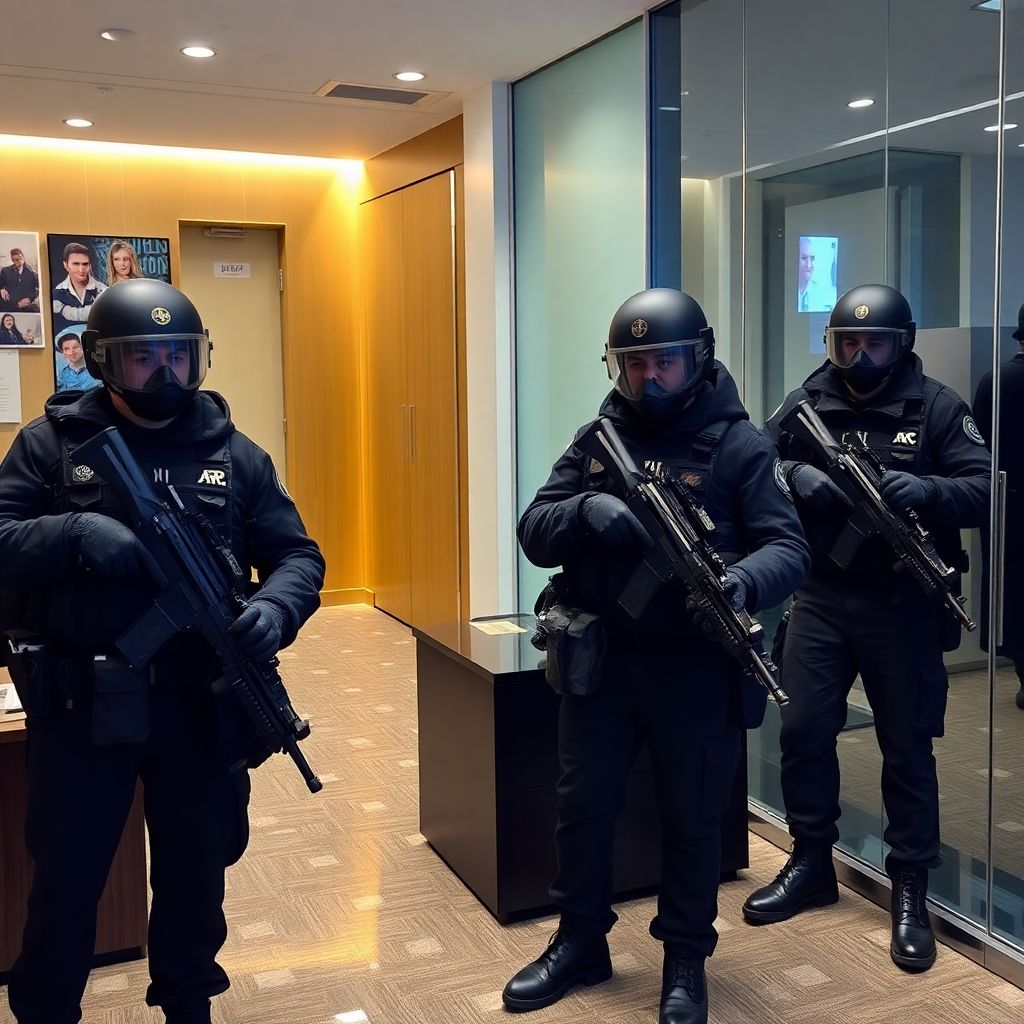
Russia shutters 9 unlicensed crypto exchanges in sweeping Moscow raid
Russian law enforcement has launched one of its largest recent operations against the domestic crypto market, shutting down nine unregistered cryptocurrency exchanges operating in Moscow and detaining more than 20 people believed to be involved in large-scale money laundering.
The coordinated raid, led by Russia’s Federal Security Service (FSB) together with the Interior Ministry, targeted several offices in the Moscow International Business Center – a key financial hub often referred to as “Moscow City.” According to investigators, the exchanges were allegedly used to turn money stolen from Russian citizens into digital assets and then move those funds abroad.
Alleged role in phone scam laundering
Authorities say the core of the scheme was tied to classic phone-based scams that have plagued Russia for years. Fraudsters reportedly called victims posing as bank employees, law enforcement, or other trusted figures, tricking them into handing over access to their accounts or transferring funds under false pretenses.
Once the money was stolen, it allegedly made its way to the Moscow exchanges, where it was converted into cryptocurrency. From there, the funds were moved to wallets and accounts believed to be controlled by handlers in Ukraine. This crypto layer, investigators argue, served to obscure the origin of the money and complicate tracing efforts.
Young couriers at the center of the operation
A notable detail highlighted by the FSB is the use of young, inexperienced intermediaries. Law enforcement claims that couriers – many aged between 18 and 25 – were recruited from various regions of Russia and lured by promises of quick, easy earnings.
These couriers allegedly collected cash directly from scam victims or withdrew it from compromised accounts, then delivered the funds to the unregistered exchanges to be converted into crypto. According to the FSB, most of them had little to no understanding of finance or the broader implications of their work.
In its official statement, the agency emphasized that young people with minimal financial knowledge were being “remotely recruited” to work at the exchanges, suggesting that organizers deliberately sought out vulnerable individuals as expendable front-line workers.
Criminal case and possible penalties
Following the raids, Russia’s Interior Ministry opened a criminal case on charges of large-scale fraud. Under Russian law, such offenses can be punished with prison terms of up to 10 years, depending on the level of involvement and the total losses inflicted on victims.
Authorities are now trying to establish the full scope of the network: how many victims were affected, how much money passed through the exchanges, and whether additional platforms or intermediaries were involved. Investigators are also working to determine whether those detained were simply low-level employees or active participants in organizing the scheme.
Part of a broader enforcement push
The shutdown of the nine exchanges does not appear to be an isolated move. It comes amid an intensifying campaign by Russian authorities against what they describe as illegal financial infrastructure, including crypto platforms suspected of facilitating fraud, terrorism financing, or sanctions evasion.
In parallel, officials have also escalated their stance toward major tech and messaging platforms accused of enabling illegal activities. Russian law enforcement recently stepped up its case against the founder of Telegram, Pavel Durov, placing him on an international wanted list over alleged links to terrorism-related activities conducted via the platform.
While the issues around Telegram and the Moscow exchanges differ in nature, both cases illustrate a clear trend: regulators and security services are sharpening their focus on digital channels that can be used to move money and coordinate illicit operations.
Why unregistered exchanges are a prime target
Unlicensed or “gray” crypto exchanges have long been in the crosshairs of regulators worldwide, and Russia is no exception. These platforms typically operate outside existing financial oversight, making them attractive to criminals who want to launder proceeds from scams, ransomware, or other illegal enterprises.
Because they often skip thorough know-your-customer (KYC) and anti-money-laundering (AML) checks, unregistered exchanges can become informal cash-in/cash-out hubs. In the Moscow case, investigators allege exactly this: that the exchanges served as bridges between stolen fiat cash and relatively harder-to-trace cryptocurrencies.
From the authorities’ perspective, shutting down such hubs is not only about punishing the operators but also about disrupting the broader criminal ecosystem that depends on them.
Potential impact on Russia’s crypto ecosystem
For ordinary Russian crypto users, this kind of crackdown carries mixed implications. On one hand, aggressive action against criminal networks can help clean up the market and reduce the risk that unsuspecting users transact through platforms tied to scams. On the other hand, if enforcement is broad or poorly targeted, it can create uncertainty for legitimate traders and small over-the-counter brokers operating in regulatory gray zones.
Many Russian users rely on informal exchanges and peer-to-peer services due to lingering ambiguity around the status of cryptocurrencies in the country. When entire clusters of such platforms are taken down at once, people may temporarily lose access to familiar channels for buying or selling digital assets, prompting them either to migrate to more regulated services or to seek out new underground options.
Regulatory backdrop: Russia’s evolving crypto stance
Russia’s approach to cryptocurrencies has been cautious and at times contradictory. On paper, some forms of digital assets and mining activities are recognized, while the use of crypto as a direct means of payment remains restricted. Regulatory agencies have alternated between exploring the use of digital assets for cross-border settlements and tightening controls over domestic trading and exchange services.
Against this backdrop, law enforcement actions like the Moscow raids serve a dual function: enforcing existing criminal laws and signaling what kinds of crypto-related business models will no longer be tolerated. Platforms that operate without registration, that fail to implement KYC/AML procedures, or that knowingly service high-risk flows are increasingly at risk of being targeted.
Implications for scammers and cross-border money flows
The alleged transfer of funds to Ukrainian accounts underscores another concern for Russian authorities: cross-border money flows routed through crypto. Digital assets make it relatively easy to move value across borders quickly, sometimes avoiding the traditional banking system entirely.
From a security standpoint, this is especially sensitive in the context of geopolitical tensions, where any perceived financial support to actors abroad can be framed as a national security risk. By publicizing that stolen money was moved to accounts connected to handlers in another country, law enforcement is also sending a message that the issue is not only criminal but strategically important.
For scam networks, the shutdown of nine exchanges may disrupt their current cash-out routes. However, experience from other jurisdictions suggests that unless broader structural controls are introduced, new intermediaries and shadow platforms may emerge to fill the gap.
What this means for young job seekers
The case also highlights a growing social risk: young people being drawn into illegal schemes under the guise of “remote work,” “financial services,” or “courier positions.” In an environment where gig jobs and flexible online work are increasingly popular, offers that promise fast, high pay with minimal skills can be particularly tempting.
The FSB’s focus on the age and financial illiteracy of couriers appears intended not only to describe the scheme but also to warn the public. For young job seekers, the lesson is straightforward: roles that involve handling large amounts of cash, delivering envelopes, or converting money through informal channels can carry serious criminal liability, even if the person does not fully understand the origin of the funds.
A sign of what comes next
Taken together, the Moscow raids and the parallel pressure on major tech platforms indicate that Russia is moving into a phase of more active enforcement in the digital financial space. Rather than targeting only high-profile crypto projects or global exchanges, authorities are now also going after domestic, mid-level operators who serve as the infrastructure for everyday fraud and illicit transfers.
For the crypto industry inside Russia, the key takeaway is that operating in legal gray zones is becoming riskier. Exchanges and brokers that want to survive in the long term will likely need to align more closely with regulatory expectations, adopt stronger compliance practices, and demonstrate that they are not a conduit for criminal proceeds.
For users, the safest path will increasingly lie in favoring platforms that can show some degree of transparency and regulatory alignment, even if that comes at the cost of more verification steps or slightly less convenient access to cash. In an environment where security services are expanding their reach, the difference between a “fast and anonymous” service and a legally sustainable one could be the difference between convenience and serious legal consequences.