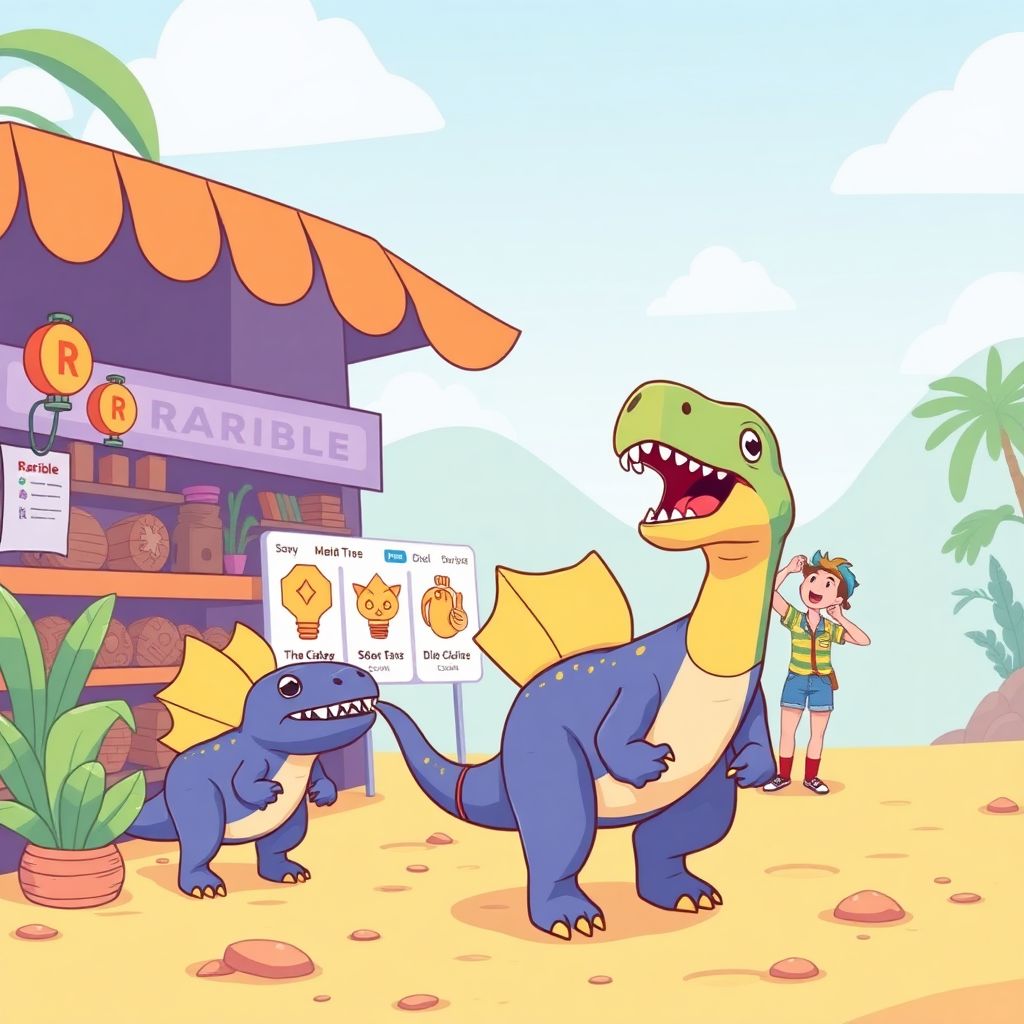
Rarible debuts Solana marketplace with Claynosaurz as flagship collection
Rarible has officially activated trading on the Solana blockchain, unveiling a dedicated marketplace where Claynosaurz – a popular Solana-native NFT and entertainment project built around animated dinosaur characters – takes the spotlight as the first featured collection. The launch follows several months of behind-the-scenes development and marks another step in Rarible’s strategy to operate across multiple blockchains.
The company confirmed that it has been quietly building Solana support for an extended period and is now opening the doors to creators and collectors who operate primarily within the Solana ecosystem. Claynosaurz will initially act as the showcase project, while additional Solana collections are set to appear over the coming days and weeks as Rarible ramps up integrations.
Rarible has not yet shared a detailed roadmap of which collections will be added first or how many drops will be part of the early rollout. Instead, the team is treating the current release as a starting layer that can be iterated on quickly. Future updates are expected to add more projects, refine core trading features, and introduce distinct experiences tailored to individual NFT collections.
According to Rarible, the Solana buildout required several months of engineering, testing, and user research. The company engaged directly with NFT creators, collectors, and project teams to better understand how they present their brands, shape their cultures, and engage their holder bases. Feedback from these conversations reportedly influenced a number of product decisions, with a clear focus on offering more than just a generic grid of tokens.
Rather than replicating the same interface across all chains, Rarible aims to design collection-centric environments on Solana. That could include custom landing pages, bespoke filtering options, or interactive elements that reflect a project’s lore, art direction, or utility. The goal is to make each collection feel like it has its own “home” inside the marketplace, rather than being lost in a sea of undifferentiated listings.
The launch also sheds new light on Gacha Station, a Rarible product that previously appeared on Solana. At the time, Gacha Station looked like a standalone experiment for randomized digital collectibles inspired by capsule-toy machines and loot-box systems. Rarible now frames it as an early preview of its broader Solana strategy – a way to test user behavior, on-chain performance, and product mechanics on the network before rolling out a full-scale marketplace.
Technically, the present marketplace release is described as a foundational layer for a larger expansion. Rarible plans to ship incremental updates, including support for more collections, new discovery tools, enhanced trading flows, editorial features that highlight projects, and campaigns designed to activate both creators and collectors. The company is positioning Solana not as a side experiment but as a core pillar alongside the blockchains it already supports.
What Rarible has not revealed are concrete targets for trading volume, user growth, or market share on Solana, nor detailed plans on how it intends to undercut or outperform incumbent Solana NFT platforms. Success will largely depend on the caliber of collections Rarible manages to onboard, how seamlessly it supports trading, and whether it can persuade existing Solana-native users to add Rarible to their regular marketplace rotation.
Solana itself plays a key role in the strategy. The network is known for low transaction fees and fast finality, making it a favored venue for high-frequency NFT trading, gaming assets, and lower-priced collectibles that would be cost-prohibitive on more expensive chains. By integrating Solana directly, Rarible enables creators and collectors to operate within their preferred network without bridging or moving assets to another blockchain layer.
For creators, the integration means another distribution and monetization channel that speaks the “native language” of Solana tooling and standards. Projects that have already established a holder base on Solana can now list on Rarible without redesigning their token contracts or migrating to different infrastructure. For collectors, it adds one more interface to manage portfolios, discover art, and participate in drops while staying on-chain in the Solana environment.
The launch also arrives at a moment when NFT marketplaces are under pressure to differentiate themselves. With trading fees steadily trending downward due to intense competition, platforms are increasingly defined by their creator tooling, user experience, royalty mechanisms, and the unique ways they showcase collections. Rarible’s emphasis on curated, collection-specific experiences on Solana is part of that wider attempt to escape pure fee-based competition.
In the United States, Rarible’s announcement does not introduce new access limits or geographic carve-outs. How NFTs are treated under U.S. regulation typically depends less on the base blockchain and more on how specific collections are structured, marketed, and whether they exhibit characteristics of securities or other regulated instruments. As a result, simply adding Solana support does not automatically trigger a new regulatory category for the marketplace.
However, the broader regulatory environment is shifting, particularly in Europe. Rarible’s Solana expansion coincides with growing interest among European policymakers in whether NFTs should fall more explicitly under the region’s harmonized crypto rulebook. The European Parliament recently adopted a policy report urging the European Commission to scrutinize several areas of digital finance more closely – including decentralized finance, staking, crypto lending and borrowing, and NFTs – in the wake of the full rollout of the Markets in Crypto-Assets (MiCA) regulation.
The report itself did not amend MiCA or impose immediate new obligations on NFT platforms. Instead, it clarified that lawmakers see NFTs and related services as potential blind spots that may need further review. That stance leaves open the possibility that future legislative or regulatory updates could bring NFT infrastructures more squarely under MiCA or a follow-up legal framework.
MiCA’s transition period formally ended on July 1, meaning crypto-asset service providers covered by the law now need either an EU-wide license or authorization from individual national regulators to keep operating in the bloc. If future rulemaking extends more overtly to NFTs, marketplaces like Rarible will have to evaluate how new licensing, disclosures, or consumer-protection standards apply when they run multi-chain platforms and onboard new networks such as Solana.
From a strategic perspective, Solana support reinforces Rarible’s multi-chain positioning. Operating across several blockchains allows the marketplace to tap into distinct user bases and creative scenes while spreading risk: if activity declines on one chain, another might be surging. For Rarible, becoming a familiar hub wherever NFT activity concentrates is a way to stay relevant as attention cycles between ecosystems.
Claynosaurz’s role as the first featured collection is also significant. As an entertainment-focused brand with a strong visual identity and animated storytelling, it underscores Rarible’s interest in projects that go beyond static image collections. Claynosaurz’s presence can serve as a test case for how narrative-driven IP performs in a tailored marketplace environment and how effectively Rarible can spotlight such brands to a wider audience.
Over time, Rarible may leverage Solana’s strengths for more complex NFT use cases – such as in-game assets, dynamic NFTs that change over time, or large-scale drops that require high throughput. The network’s performance profile makes it suitable for experimentation with interactive collectibles, gamified mint mechanics, and microtransaction-heavy experiences that benefit from extremely low fees.
For creators considering whether to launch on or expand to Solana via Rarible, key factors will include how royalties are enforced across platforms, what discovery and promotion tools are available, and how quickly the marketplace can iterate based on user feedback. Features such as analytics dashboards, flexible listing options, and mechanisms to reward loyal holders could become decisive advantages as more platforms vie for attention.
Collectors, on the other hand, will likely evaluate Rarible’s Solana offering based on liquidity, ease of use, support for wallets common in the Solana ecosystem, and the quality of projects featured. If Rarible can aggregate high-demand collections while providing a smooth trading experience and strong security practices, it stands a better chance of becoming a default choice for at least part of the Solana user base.
In the near term, Rarible plans to grow its Solana presence gradually rather than through a one-time, all-encompassing launch. The next phase centers on onboarding additional projects, refining the marketplace’s interface and features, and continuously adjusting the product in response to the habits and expectations of Solana-focused creators and collectors. As the regulatory landscape evolves and competition intensifies, the effectiveness of this measured, iterative approach will determine how significant Solana becomes within Rarible’s overall ecosystem.