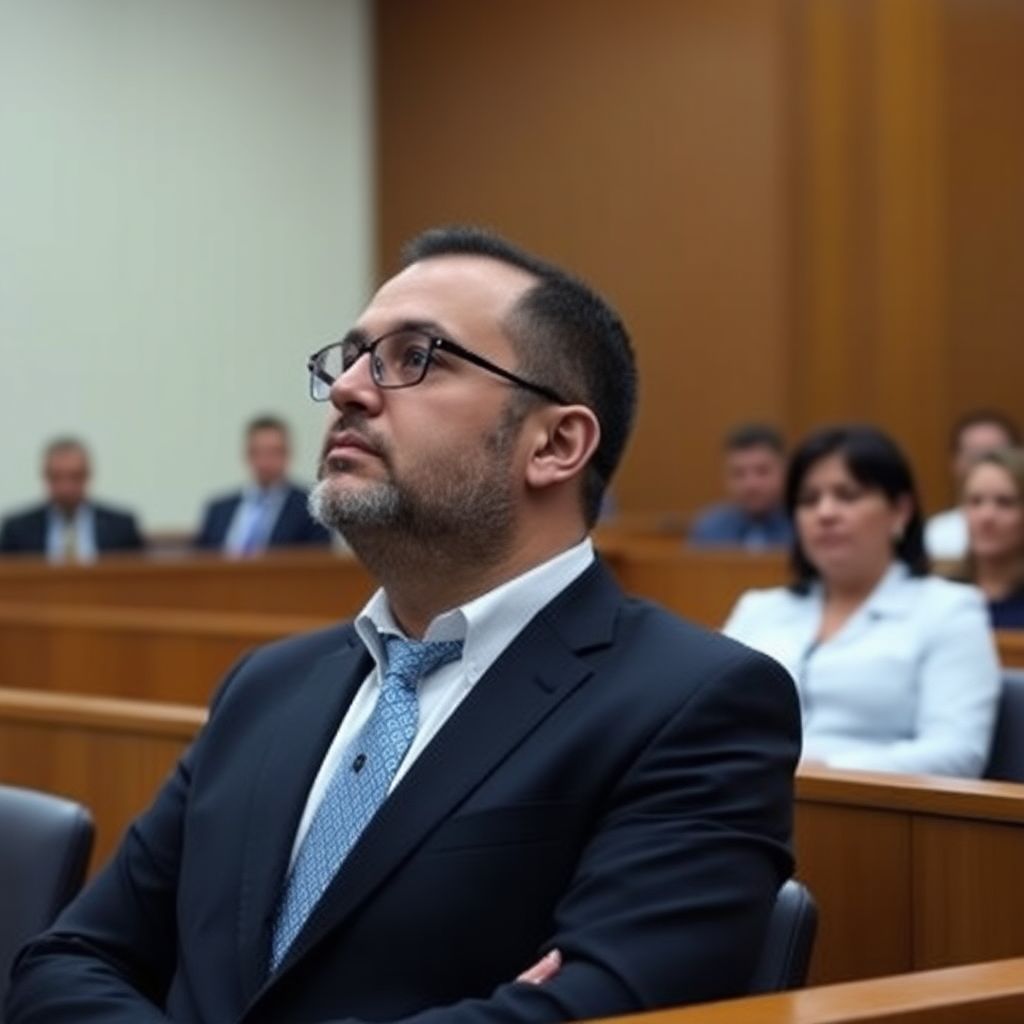
Gurhan Kiziloz wins key appeal in bid to unlock $527m in frozen assets
A Brazilian federal appeals court has ordered a lower court to revisit the sweeping freeze on assets linked to businessman Gurhan Kiziloz, opening the door to a possible release of up to $527 million that has been locked down for months.
The decision, issued by a panel of judges at the Regional Federal Court of the 1st Region (TRF1), does not immediately return the funds to Kiziloz. Instead, it concludes that the original legal basis for the freeze was weaker than prosecutors had argued and instructs the lower court to reassess the measure. In the context of one of the largest asset actions ever brought against a single individual outside the U.S. criminal system, that procedural step is a major turn.
For most of the year, the case looked static. Hundreds of millions of dollars tied to Kiziloz remained immobilized, challenged in court but not moving. The appeals ruling changes that narrative by setting a concrete timeline for when the status of the funds might shift. Court documents suggest that Brazil’s Superior Court of Justice, which must still validate any unfreezing, is expected to complete its review by October, giving the case its first realistic horizon for resolution.
How the freeze was imposed
The dispute traces back to a pair of coordinated actions taken earlier this year. In May, following an order from a Brazilian court, a stablecoin issuer froze roughly $213 million held across 48 digital wallets linked to Kiziloz’s network of companies. The speed of the freeze-executed within hours-surprised even close observers of the digital asset industry and highlighted the power centralized issuers hold over assets often marketed under the banner of “decentralized” finance.
A separate order targeted more conventional holdings, locking down an additional $314 million in bank accounts, corporate balances, and physical property. Combined, these moves placed control of more than half a billion dollars associated with Kiziloz under the authority of Brazilian courts almost overnight.
The underlying conduct: gambling and token sales
Authorities justified the freeze by pointing to Kiziloz’s business activities between 2021 and 2024. During that period, his companies operated offshore online betting platforms aimed at Brazilian customers and organized several cryptocurrency token offerings. For years, Brazil lacked a comprehensive domestic framework to license gambling operators or register token issuers. That changed in 2024, when new regulatory systems for both sectors came into effect.
Instead of treating those rules as forward-looking, Brazilian tax and regulatory authorities applied them retroactively. Revenues from betting and token sales that had been generated during the earlier, unregulated period were assessed as though the new licensing and registration requirements had already been in force. This retroactive application formed the backbone of the government’s argument for the massive asset freeze.
The core of the appeal: limits on retroactivity
Kiziloz’s lawyers attacked that retroactive reach as unconstitutional. Brazilian constitutional law places limits on how far new tax and regulatory obligations can be pushed backward in time. The appeal argued that if no legal mechanism existed to license gambling operators or register token issuers in, for example, 2022, then individuals and companies could not be penalized in 2024 for having failed to comply with rules that did not yet exist.
In practical terms, the defense claim was straightforward: where there is no registration regime, there can be no failure to register; where no license can be applied for, there can be no fault in not holding one. According to the appeal, building a half-billion-dollar asset freeze on such retroactive expectations exceeded the powers of the lower court and violated basic constitutional protections.
Though the argument is technical, the TRF1 panel found it convincing enough to intervene. In its preliminary assessment, the appeals court concluded that anchoring the freeze to tax and regulatory norms that only came into force after the conduct in question stretched beyond what the original judge was authorized to do. The panel responded by consolidating the separate digital and physical freezes into a single case file and issuing an injunction that initiates a potential unwinding of the measures.
Civil, not criminal – and on two tracks
The appeals court’s ruling focuses on the legal propriety of the freeze itself, rather than on the broader investigation into Kiziloz’s activities. The underlying review of his years of business conduct-spanning gambling, token issuance, and cross‑border financial flows-continues on a separate track.
Notably, the dispute has remained a civil matter from the outset. No criminal charges have been filed against Kiziloz in connection with the case. The proceedings center on tax and regulatory authority: who can impose what obligations, from which date, and with what consequences for past behavior. Even after this first appeal has gone in Kiziloz’s favor, the nature of the case remains unchanged-civil, administrative, and heavily procedural.
What happens next
While TRF1’s decision is an important victory for Kiziloz, it does not automatically release the money. Before any of the $527 million can be unfrozen, Brazil’s Superior Court of Justice must review and endorse the appeals court’s reasoning. Legal filings indicate that this higher‑level examination is expected to be completed by October, although specific dates can shift as courts manage congested dockets.
Even if the unfreezing is approved, the logistics will be complex. The money is scattered across dozens of digital wallets, multiple corporate accounts, and assorted physical assets. Reversing an asset freeze of this magnitude is not a quick administrative task; it involves coordinated action among courts, financial institutions, and digital asset issuers, including the careful documentation needed to avoid new legal challenges.
Why the case matters beyond one businessman
Observers in the gambling and cryptocurrency sectors are following the case closely for reasons that go far beyond Kiziloz himself. He was one of many operators active in Brazil’s large, rapidly growing market during the years before a formal licensing regime took shape. Several international companies built substantial revenues in the same regulatory vacuum, offering betting products and digital tokens to Brazilian users at a time when clear domestic rules did not yet exist.
Had TRF1 upheld the freeze in full, it might have created a powerful template for Brazilian authorities to pursue other operators retroactively for activities carried out prior to 2024. That would have raised the prospect of sweeping asset actions targeting years of historic revenue, fundamentally altering the risk calculus for firms that had entered the market amid legal ambiguity.
Instead, the appeals ruling signals that there are limits to how aggressively new rules can be projected backward-even in politically sensitive areas such as online gambling and crypto-assets. The decision does not shield operators from scrutiny for fraud, money laundering, or other established offenses. But it does suggest that simply earning revenue in a period when licensing and registration frameworks did not exist cannot automatically justify draconian asset seizures years later.
Implications for digital assets and stablecoins
The Kiziloz case is also a test for the role of stablecoin issuers and other centralized actors in the digital asset ecosystem. The rapid freeze of $213 million across dozens of wallets demonstrated that, despite the rhetoric of decentralization, key chokepoints remain highly centralized and responsive to state orders. For users, this underscores an often‑overlooked reality: the ability to hold or move certain “on‑chain” assets can depend heavily on the decisions of a small number of private companies.
If the freeze is ultimately rolled back, it may encourage industry participants to push for clearer standards around when and how digital assets can be immobilized at the request of governments. That conversation is likely to touch on due process, transparency, user notification, and the need for courts to scrutinize the legal basis for asset actions as rigorously in the digital realm as they traditionally do for bank accounts and real estate.
Regulatory clarity vs. innovation risk
From a policy standpoint, the case illustrates the tension between regulatory clarity and the risk of stifling innovation. Brazil’s move to formalize oversight of gambling and token offerings in 2024 responded to real concerns about consumer protection, tax evasion, and illicit finance. Yet applying those rules retroactively risks sending a chilling message to entrepreneurs who operate in fast‑moving sectors where laws often lag behind technology.
Businesses can adjust to stricter oversight if they know the rules in advance. What is far harder to manage is a regime in which today’s law is used to judge yesterday’s conduct in ways that could not have been predicted at the time. The appeals court’s emphasis on constitutional limits to retroactivity may be read as a signal that Brazil wants to avoid crossing that line, even as it tightens control over high‑risk industries.
What companies operating in Brazil might take away
Companies that have offered betting services or crypto-related products to Brazilian users during the pre‑2024 period are likely scrutinizing the decision for clues. While the ruling does not grant blanket immunity to anyone who operated in the earlier grey zone, it does suggest that the most aggressive retroactive enforcement strategies could face constitutional obstacles.
In practical terms, operators may respond by:
– Reviewing their historical exposure in Brazil and documenting the legal landscape that existed when they entered the market.
– Assessing whether tax, consumer, or anti‑money-laundering rules that were already in force might still apply to past operations, regardless of the newer licensing regimes.
– Strengthening compliance programs to align with the 2024 frameworks, on the assumption that future enforcement will focus more on post‑regulation conduct.
A precedent still in progress
The TRF1 ruling is best understood as a preliminary precedent: influential, but not final. It clarifies that massive asset freezes cannot rest solely on retroactively applied norms without close constitutional scrutiny. At the same time, it leaves open the possibility that parts of the freeze-or alternative enforcement actions-could be reimposed on different legal grounds if subsequent courts find them justified.
For Gurhan Kiziloz, the decision is a tangible step toward regaining control over a vast pool of assets. For Brazil’s regulators, it is a reminder that rapid institutional catch‑up in new industries must still respect constitutional boundaries. And for global businesses operating at the intersection of gambling, crypto, and cross‑border finance, it is a signal that the country’s evolving legal framework will be shaped not only by new statutes and regulations, but also by how its higher courts interpret the reach of those rules over the past.