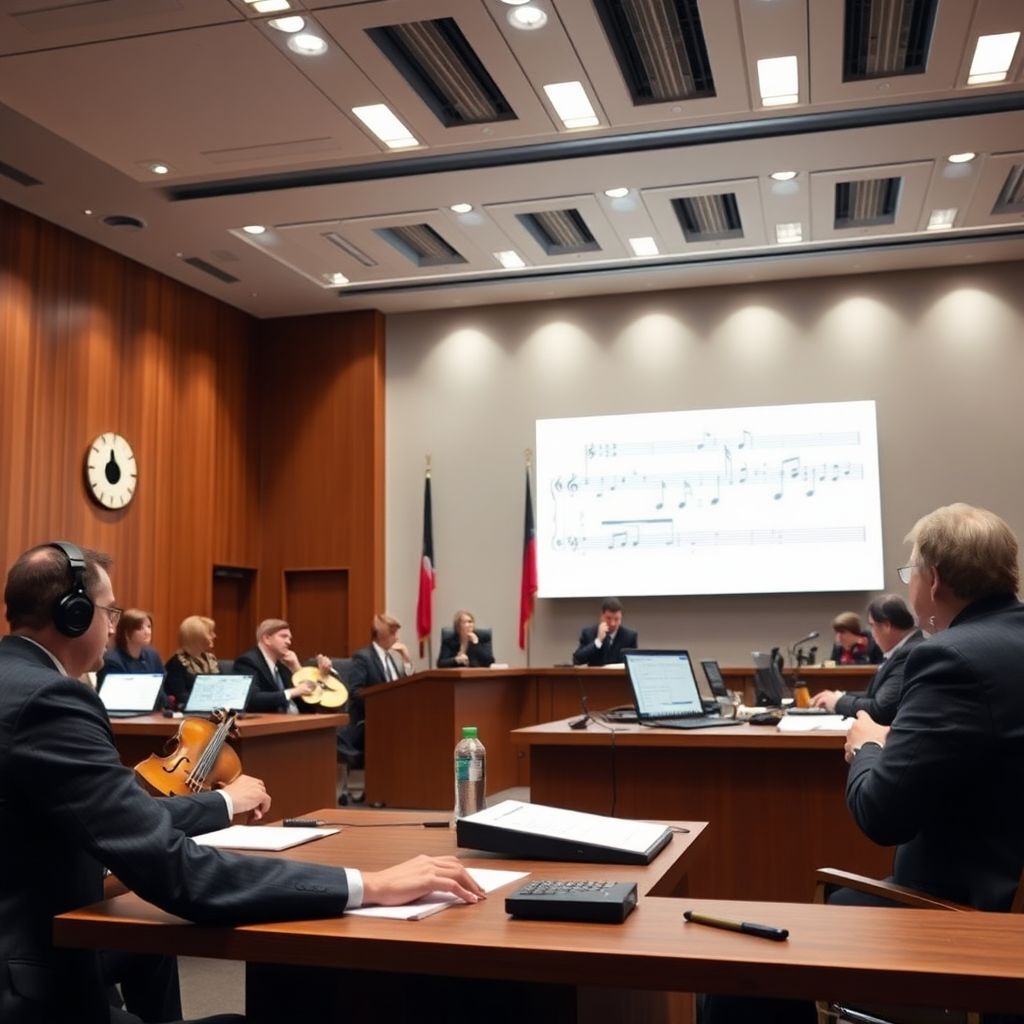
AI music generator Suno has suffered a major legal setback in Germany, where a regional court has ruled that the startup infringed copyright by training its models on protected music and using that material to produce new tracks without a license.
The case was brought by GEMA, the German performance and mechanical rights organization that represents thousands of songwriters, composers, and music publishers. The Munich Regional Court concluded that Suno unlawfully used works from GEMA’s catalog in two distinct ways: first, as training data for its AI systems, and second, by reproducing elements of those works in generated songs-all without obtaining the necessary permissions.
Under the decision, AI companies that wish to make commercial use of GEMA’s repertoire must now secure appropriate licenses. That requirement applies not only to the music that ends up in user-facing outputs, but also to the underlying training process itself when it relies on copyrighted material. The ruling therefore sends a clear signal that invoking “training data” does not automatically exempt AI developers from copyright law.
The dispute focused on six specific tracks, among them widely known hits like “Daddy Cool,” “Rasputin,” “Forever Young,” and “Mambo No. 5.” According to GEMA, Suno’s system was trained on these and other songs from its catalog without authorization, allowing the AI to internalize their melodies, harmonies, and stylistic signatures. GEMA argued that this went beyond acceptable use and constituted a violation of the exclusive rights held by its members.
GEMA’s complaint also highlighted the risk that generated music could reproduce recognizable parts of existing songs or emulate them so closely that the boundary between inspiration and copying becomes blurred. From the organization’s perspective, letting AI companies ingest decades of recorded music without compensation would undermine the livelihoods of creators whose work forms the foundation of these new tools.
Suno, for its part, has positioned itself as a platform for creative experimentation. In a statement responding to the lawsuit, the company said its goal is to enable users to make original compositions, not to duplicate specific, already-released songs. Suno maintains that its technology is designed to produce new material and that it does not intend to facilitate straightforward cloning of known hits.
The startup has also emphasized that it has implemented technical and policy safeguards intended to prevent users from generating direct imitations of copyrighted tracks or specific artists. However, the Munich court’s finding suggests that, in the eyes of German law, those measures were insufficient to offset the initial unlicensed use of protected works in the training pipeline.
Although full details of Suno’s next legal steps were not immediately disclosed, the ruling raises the likelihood of further litigation and possible appeals. The company now faces a strategic choice: adapt its data practices and licensing model to European expectations, or continue to contest the scope of copyright in the context of AI training and output.
For music rights holders in Europe, the judgment represents another important win in a broader campaign to assert control over how their catalogs are used by AI developers. In recent years, music publishers, collecting societies, and labels have increasingly pushed back against what they see as tech firms exploiting their repertoires without fair payment. This German decision strengthens their argument that AI is no exception to existing copyright frameworks.
The case also feeds into a larger international debate over whether training AI models on copyrighted works requires permission, or whether such use can fall under exceptions like quotation, text and data mining, or fair use/fair dealing, depending on the jurisdiction. Germany, through this ruling, has taken a relatively strict position: commercial AI systems that rely on protected recordings and compositions must negotiate licenses rather than assume they can scrape and train for free.
For AI startups, the implications are significant. Developers working with music, images, video, or text may have to budget for licensing costs early in product development, particularly if they target European markets. Some companies are already shifting toward training on licensed, royalty-free, or specially commissioned data sets to mitigate legal risk and maintain long-term access to high-quality material.
This decision may also accelerate the growth of new licensing models tailored to AI. Collecting societies and publishers could develop dedicated “training licenses” that allow companies to feed catalogs into machine learning systems in exchange for fees or revenue shares. Such frameworks would give AI firms legal certainty while ensuring that composers and performers are financially recognized for their contributions.
At the same time, the ruling underscores the technical challenge of proving exactly what an AI model has learned from a given song and whether a specific output crosses the threshold into infringement. Courts and regulators are being forced to grapple with questions that traditional copyright law did not anticipate-such as how to treat latent representations of works encoded inside a neural network and how to evaluate the originality of AI-assisted compositions.
Musicians and songwriters are likely to watch the Suno case closely, as it reinforces their ability to negotiate terms rather than seeing their entire recorded legacy absorbed into opaque AI systems without consent. For many creators, the core issue is not opposition to AI as such, but insistence on transparency, attribution, and fair remuneration when their catalogs become raw material for new technologies.
For end users-artists, hobbyists, and content creators who rely on AI music tools-the outcome may eventually lead to more clearly labeled, fully licensed platforms. While that could translate into higher subscription prices or usage fees, it may also reduce the risk of takedowns, legal disputes, or sudden model changes triggered by copyright complaints.
From a policy standpoint, the Suno ruling will likely inform ongoing work on AI and copyright at the European level. Lawmakers and regulators are seeking to balance innovation and cultural production, looking for ways to support new creative tools without eroding the rights that sustain professional authors and performers. Germany’s stance adds weight to arguments that AI legislation should explicitly address training data and collective licensing mechanisms.
For Suno specifically, the judgment is a warning shot but not necessarily the end of the road. The company could seek new deals with collecting societies, pivot toward more heavily licensed or synthetic data sources, or double down on transparency around how its models are built. Its choices-like those of other AI music firms-will help define what the next generation of music creation tools looks like and how they coexist with the traditional music industry.
In the meantime, the message from the Munich court is unambiguous: in Germany, copyright protection extends into the heart of AI development. Training on copyrighted songs and generating music that draws on those works, when done for commercial purposes, requires permission. For the global AI ecosystem, that precedent is likely to reverberate far beyond Suno’s immediate legal defeat.