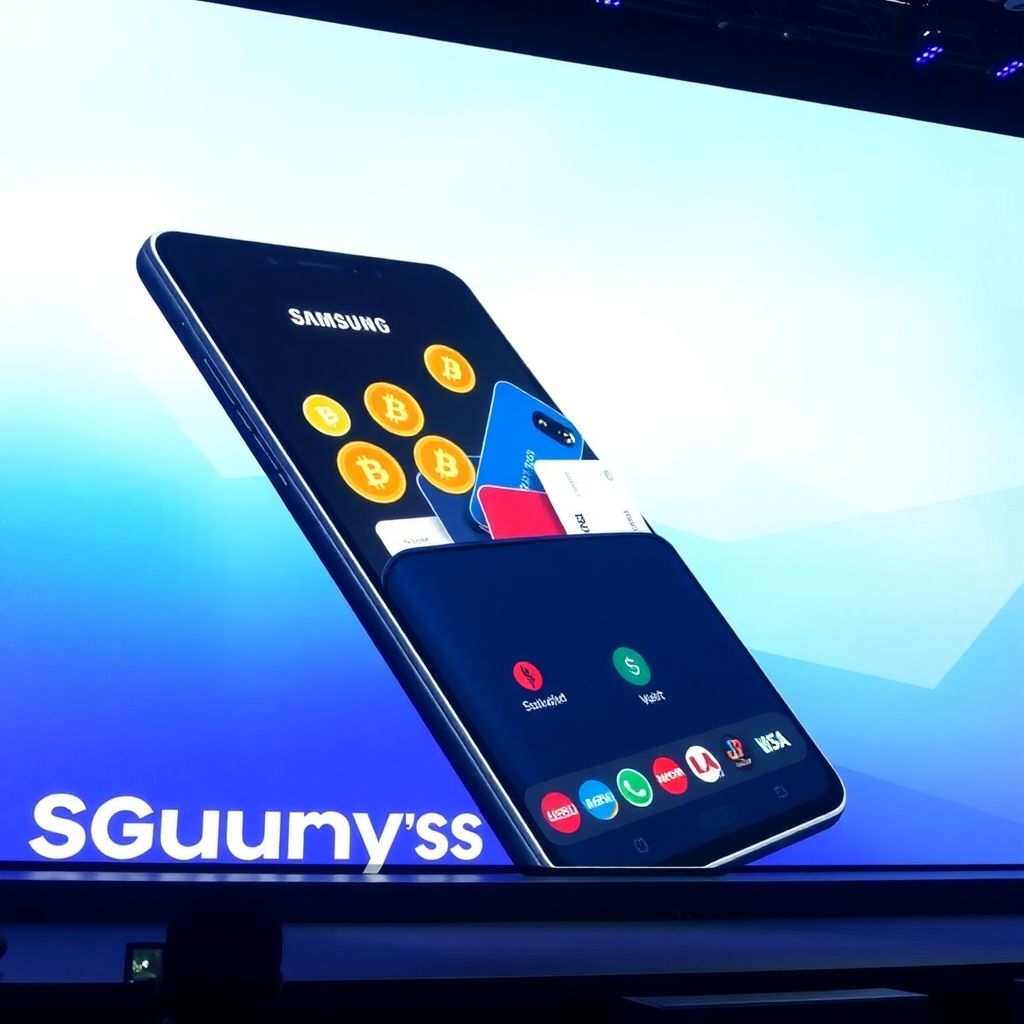
Samsung is preparing to put stablecoins right alongside your boarding passes, credit cards, and digital keys. During its Galaxy Unpacked event in London on July 22, the company announced that Samsung Wallet will receive native support for stablecoins, expanding the app beyond traditional payment cards, IDs, and loyalty passes.
On stage, Samsung product manager Lee Dinham said that the wallet will “expand beyond cash and savings” and begin to “embrace new forms of digital value, including stablecoins.” While the company stopped short of providing a firm launch date, it made clear that this move is meant to position Samsung as one of the first global smartphone brands to embed stablecoins directly at the system level, rather than treating them as a bolt‑on feature.
Samsung has not yet disclosed crucial technical details: it did not specify which blockchain networks will be supported, which regions will get the feature first, or which issuers will be integrated at launch. Nonetheless, a wallet interface displayed at the event showed Circle’s USDC stablecoin sitting inside Samsung Wallet, strongly suggesting that USDC will be among the first supported assets.
Dinham emphasized that bringing stablecoins natively to smartphones is about making digital value transfers both “fast and trusted.” The idea is that users should be able to move value as easily as sending a text message, but with the familiar stability of fiat currencies. In practical terms, that could mean using a dollar‑pegged token instead of a bank transfer, without worrying about crypto volatility.
Stablecoins are digital tokens designed to maintain a steady price, most commonly around one U.S. dollar. They typically achieve this by being backed one‑to‑one with reserves in cash, short‑term government debt, or other highly liquid assets. Instead of fluctuating like Bitcoin or Ethereum, a well‑managed stablecoin aims to act more like a digital version of a bank balance-ideal for payments, remittances, and savings in unstable local currencies.
Samsung’s interest in crypto is not new. Over the past few years, the company has gradually built up a substantial on‑device crypto toolkit. Earlier Galaxy models introduced a secure hardware enclave for private keys, and Samsung’s software stack has supported popular blockchains and decentralized apps through its “Blockchain Keystore” and related features. Adding stablecoins to Samsung Wallet is the next logical step in that trajectory: moving from mere storage of crypto assets to making them usable in everyday financial routines.
The mockup featuring USDC is particularly notable because USDC has become a preferred choice for many regulated institutions, fintech apps, and payment companies. It is widely used for cross‑border transfers, as a trading pair on exchanges, and as a settlement asset behind the scenes in financial applications. If Samsung leans into USDC and similar assets, Galaxy phones could effectively turn into global payment terminals that work across borders without traditional card networks.
From a user‑experience standpoint, native support matters more than it might seem at first glance. Today, managing stablecoins usually requires installing a separate crypto wallet app, writing down seed phrases, and interacting with sometimes confusing blockchain interfaces. Samsung’s approach hints at something more seamless: stablecoins managed inside the same interface where users already store their payment cards and transit passes, likely protected by the phone’s biometric authentication and hardware‑level security.
This integration could also help address a long‑standing problem in crypto: the gap between technically capable users and everyday consumers. Many people have heard of digital currencies but are put off by the complexity. If stablecoins appear as just another balance in a familiar wallet app-denominated in local currency, with clear on‑ramps and off‑ramps-that barrier could shrink dramatically.
There are, however, big open questions. Regulatory treatment of stablecoins differs widely across countries. In some jurisdictions they are welcomed as innovation; in others they face heavy scrutiny or outright restrictions. Samsung will have to navigate this patchwork, likely rolling out functionality region by region and possibly limiting which tokens are visible in which markets. That could explain why the company avoided specifying supported blockchains or issuers at this stage.
Security and compliance will be under the microscope as well. To convince mainstream users, Samsung must show that storing and sending stablecoins on a Galaxy device is at least as safe as using a banking app. That involves not just robust encryption and secure key storage, but also mechanisms for recovery if a user loses their phone. Expect Samsung to lean heavily on its existing Knox security framework and to explore partnerships with regulated custodians or infrastructure providers behind the scenes.
The move also subtly raises the stakes in the competition between major mobile ecosystems. Apple and Google have both integrated digital payments, transit cards, and IDs into their wallets, but neither currently offers full‑blown, native stablecoin functionality. If Samsung executes well, it could carve out a differentiator in markets where stablecoins are already being used for daily commerce or as a hedge against local currency instability.
Merchants and app developers stand to gain new possibilities too. If Samsung exposes stablecoin support through APIs, in‑app purchases or subscription services could, in theory, accept a stablecoin payment as easily as a card payment. This could lower transaction costs in some regions, reduce chargeback risks, and open up alternative settlement rails, especially for cross‑border services and digital goods.
For users in countries with volatile currencies or capital controls, native stablecoin support on widely available smartphones could be transformative. Keeping part of one’s savings in a dollar‑pegged token becomes much more practical when it is managed by an integrated wallet rather than a niche crypto app. At the same time, this raises policy concerns for governments wary of dollarization via digital assets, and Samsung will need to tread carefully to avoid regulatory backlash.
Another key dimension to watch is how Samsung will handle on‑ramps and off‑ramps-converting local fiat into stablecoins and back again. Native support in the wallet is only truly useful if users can easily load funds using local payment methods and cash out when needed. That suggests future tie‑ins with regional payment providers, banks, or licensed crypto brokers, though Samsung has yet to disclose its strategy on this front.
There is also the question of which blockchains will be prioritized. USDC exists on multiple networks, including Ethereum and various high‑throughput, low‑fee chains. Samsung could choose to abstract these technical details away from the user, routing transfers over cheaper networks in the background while presenting a single USDC balance. Alternatively, it could give advanced users more granular control, displaying separate balances per chain. The design choices here will significantly shape how approachable the feature feels to non‑experts.
In the longer term, integrating stablecoins into Samsung Wallet could act as a bridge to more advanced on‑chain activities. Once users grow comfortable holding and sending a stable, they may be more open to exploring tokenized loyalty points, digital collectibles, or yield‑bearing on‑chain savings products, especially if these can be surfaced through the same familiar interface. That would further blur the line between “traditional” finance and crypto‑native services on consumer devices.
For now, Samsung’s announcement is more of a strategic marker than a finished product. The company has signaled its intent to treat stablecoins as a standard financial primitive, on par with bank cards and digital IDs, but has left itself room to adapt as regulations, market preferences, and technology evolve. The exact mix of supported assets, networks, and regions will determine how impactful this move becomes.
What is clear is that one of the world’s largest smartphone manufacturers is betting that stable, blockchain‑based tokens will be part of everyday digital life. If Samsung succeeds in turning that bet into a polished, secure, and intuitive wallet experience, millions of users could soon find themselves paying, saving, and sending money with stablecoins without ever feeling like they are “using crypto” at all.