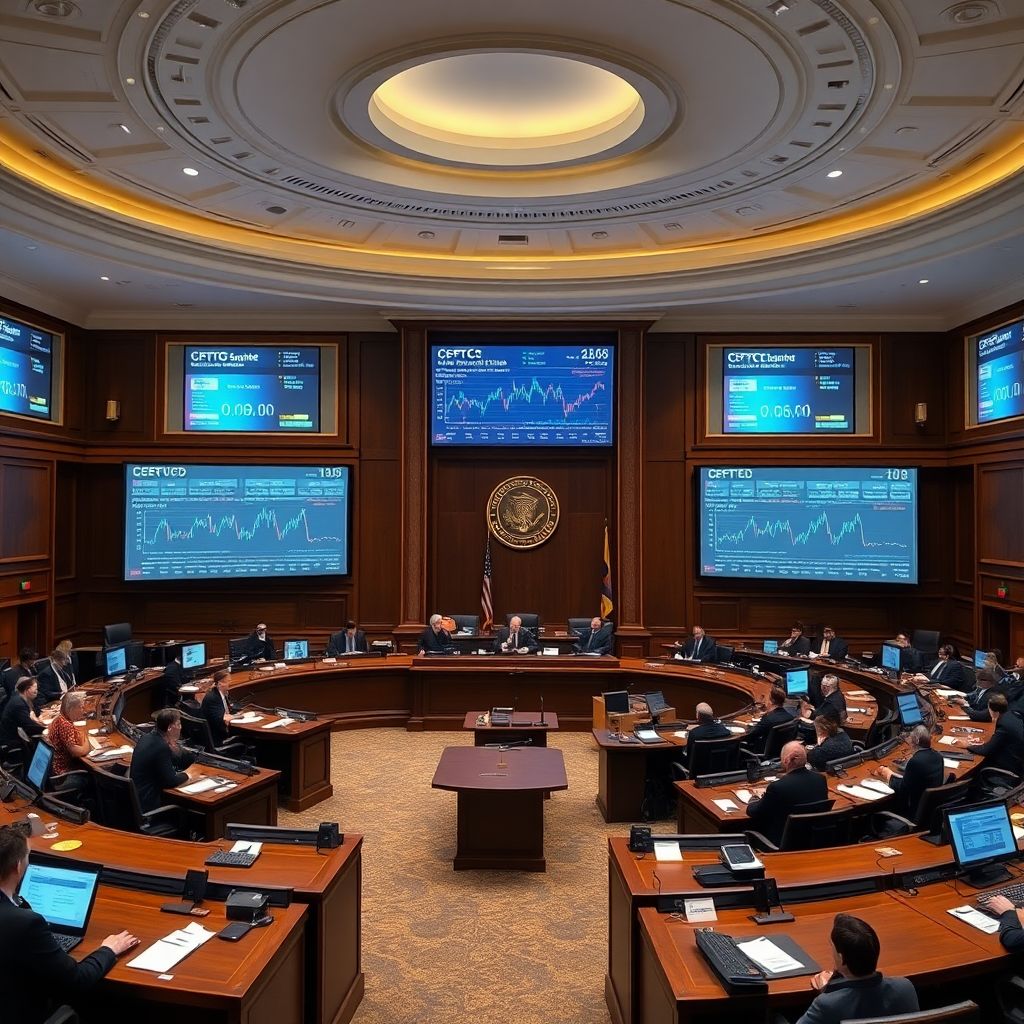
North Carolina has quietly taken a very different path from most of the country in the fast‑growing-and highly controversial-world of prediction markets. Instead of trying to shut them down or force them into a state‑level gambling framework, lawmakers have chosen to explicitly recognize the federal government’s lead role and simply tax the activity.
Governor Josh Stein signed the measure on July 7 as part of the state’s 2026 budget package, Senate Bill 257. Buried in the lengthy appropriations bill is language that directly acknowledges the Commodity Futures Trading Commission (CFTC) as the primary regulator of certain prediction platforms, including well‑known venues like Kalshi and Polymarket.
Formal nod to CFTC “exclusive” authority
The new law states that a prediction market “registered and licensed” by the CFTC may operate legally in North Carolina. It grounds that permission in the federal Commodity Exchange Act, which, the text affirms, grants the CFTC “exclusive federal regulatory authority” over such platforms.
In practical terms, North Carolina is not creating its own license or supervisory regime for these markets. Instead, it is saying: if a platform has gone through the CFTC’s process and is allowed to operate under federal derivatives law, then that is enough for the state. The message to operators is clear: comply with Washington, and North Carolina won’t stand in your way.
That approach stands in stark contrast to the direction taken by many other states, which have treated prediction markets as a form of unlicensed gambling, or at best as something that must be squeezed into existing casino, sports betting, or lottery laws.
A permissive stance with a 6% tax
Rather than building a new bureaucracy, North Carolina’s law focuses on the fiscal side. The state grants CFTC‑regulated prediction markets room to operate, and in exchange claims a modest slice of the economic activity they generate.
The statute imposes a 6% tax on revenue derived from prediction market operations in the state-well below the more aggressive rates that some jurisdictions have pursued for online betting or gaming. For platforms, that relatively light burden could make North Carolina an attractive market compared to states that either ban the activity outright or seek double‑digit tax rates.
Crucially, the law does not attempt to reclassify CFTC‑regulated prediction markets as traditional gambling outfits or casinos. The state is effectively accepting the federal framing: these are financial contracts supervised under commodities law, not just another flavor of sportsbook.
Bucking the broader crackdown
The timing of North Carolina’s move is striking. Across the U.S., prediction markets have faced escalating scrutiny and resistance at both the state and federal level.
Some state regulators have warned that retail prediction markets blur the line between regulated financial products and pure wagering, potentially running afoul of local anti‑gambling statutes. Others have argued that markets on elections, policy decisions, or public events risk undermining trust in democratic processes or encouraging manipulation.
Against that backdrop, North Carolina’s decision to lean into the CFTC’s jurisdiction and avoid building its own regulatory wall looks almost radical. Rather than treating these platforms as a threat to be suppressed, the state is signaling that federal gatekeeping is sufficient, as long as North Carolina can capture some tax revenue.
What prediction markets actually are
Prediction markets allow users to buy and sell contracts tied to the outcome of future events: elections, economic indicators, policy decisions, sporting events, and more. Each contract typically trades between $0 and $1, reflecting the market’s consensus probability that a given outcome will occur. If the event happens, the contract settles at $1; if not, it settles at $0.
Supporters argue that these markets aggregate dispersed information more efficiently than polls or pundits, creating sharp, real‑time forecasts. Critics see them as gamified betting platforms whose “wisdom of the crowd” can be distorted by hype, misinformation, or deep‑pocketed traders.
For regulators, the challenge is that prediction markets sit at the intersection of derivatives trading, data markets, and gambling-all areas subject to different legal frameworks depending on the jurisdiction.
The CFTC’s evolving role
The CFTC traditionally oversees futures, options, and swaps on commodities and financial benchmarks-things like oil, wheat, interest rates, or stock indexes. Over the last decade, however, the agency has been forced to grapple with contracts that look less like traditional hedging instruments and more like wagers on real‑world events, including elections and macroeconomic data.
Platforms like Kalshi have sought to operate squarely under CFTC oversight, framing their event contracts as regulated derivatives. Polymarket, which runs on blockchain infrastructure, has had its own high‑profile interactions with the agency, leading to enforcement actions and subsequent efforts to bring parts of its business into compliance.
By explicitly referencing the CFTC’s “exclusive federal regulatory authority,” North Carolina is endorsing the idea that these questions-where exactly prediction markets fit inside the derivatives framework-should be answered in Washington, not piecemeal by fifty different states.
Federalism, preemption, and legal clarity
One of the thorniest issues in the prediction market debate is the division of power between federal and state regulators. Even if the CFTC has authority over derivatives, states still control gambling laws and often assert broad power to restrict unlicensed wagering within their borders.
North Carolina’s statute doesn’t try to resolve every possible conflict, but it does reduce ambiguity for CFTC‑regulated platforms. Rather than leaving operators to guess how local prosecutors or regulators might interpret their business, the state is saying that federal registration is a sufficient legal foundation-at least for markets that fall within the CFTC’s purview.
This kind of clarity matters for product design. If platforms know that CFTC‑compliant contracts will not be second‑guessed at the state level, they can invest more confidently in new markets, user acquisition, and infrastructure, without constantly re‑engineering offerings to satisfy a patchwork of local rules.
Competitive positioning among states
From a policy perspective, North Carolina is effectively positioning itself as open for business to a niche but rapidly expanding sector. While some neighboring states have adopted cautious or restrictive postures toward novel online wagering and crypto‑adjacent products, North Carolina is choosing a lighter‑touch model: defer to federal oversight and keep taxes relatively low.
For operators, that mix-regulatory certainty plus a 6% rate-could influence decisions about where to focus marketing, where to base jobs, or where to pilot new products. Even though prediction markets are inherently online and borderless, companies still make choices about where to build offices, hire staff, and engage with policymakers.
Over time, if prediction markets continue to grow in volume, the state’s decision could translate into a meaningful, recurring revenue stream without the cost of an extensive state‑level regulatory apparatus.
Implications for users and investors
For North Carolina residents, the law signals that access to CFTC‑registered prediction markets will not be blocked merely because they are novel or controversial. Retail participants may see more platforms explicitly opening their doors to users in the state, confident that they are operating within a clearly defined legal framework.
That doesn’t mean every kind of prediction market will be available. The CFTC still has to decide what types of event contracts it is willing to allow. Election markets, in particular, remain highly sensitive and have been the subject of intense back‑and‑forth between regulators and platforms. Some categories of markets may never get the CFTC’s blessing.
Still, by aligning itself with federal oversight rather than layering on extra restrictions, North Carolina is more likely to see a broader range of legally offered markets than states that treat prediction platforms as unlicensed gambling outfits to be blocked outright.
Crypto, DeFi, and the broader digital finance landscape
Many prediction markets, Polymarket among them, are built on or integrate with blockchain technology. The North Carolina statute does not single out crypto by name, but its deference to CFTC oversight may indirectly benefit blockchain‑based venues that are able to operate, or partially operate, within the agency’s framework.
In an environment where digital asset projects routinely face overlapping or conflicting interpretations from different regulators, a state signaling, “If the CFTC is comfortable, we are too,” can materially lower regulatory risk. That, in turn, can make it easier for platforms to raise capital, invest in compliance, and experiment with new products without fear that a single state will unexpectedly shut off user access.
If more states follow a similar path, prediction markets-both traditional and blockchain‑native-could move from a legal gray zone into a more standardized, federally anchored regime.
What this could mean for future policy fights
North Carolina’s law will not end the national debate over prediction markets, but it does mark a significant data point. Policymakers elsewhere now have a concrete model of one way to handle these platforms:
– Recognize federal authority explicitly.
– Avoid constructing duplicative or conflicting state‑level frameworks.
– Treat prediction markets as revenue‑generating financial services rather than purely as gambling.
– Maintain political distance by outsourcing substantive oversight to the CFTC.
Opponents are likely to argue that this approach cedes too much control to a federal agency that was never designed with elections and political outcomes in mind. Supporters will counter that consistent national rules are better than a fragmented maze of state bans, carve‑outs, and enforcement threats.
As prediction markets continue to intersect with politics, macroeconomics, and digital assets, the question of who gets to regulate them-and on what terms-will only grow more contentious. North Carolina has now planted its flag firmly on the side of federal preeminence, low taxes, and legal certainty. Other states must decide whether to resist that model, copy it, or attempt yet another hybrid approach.