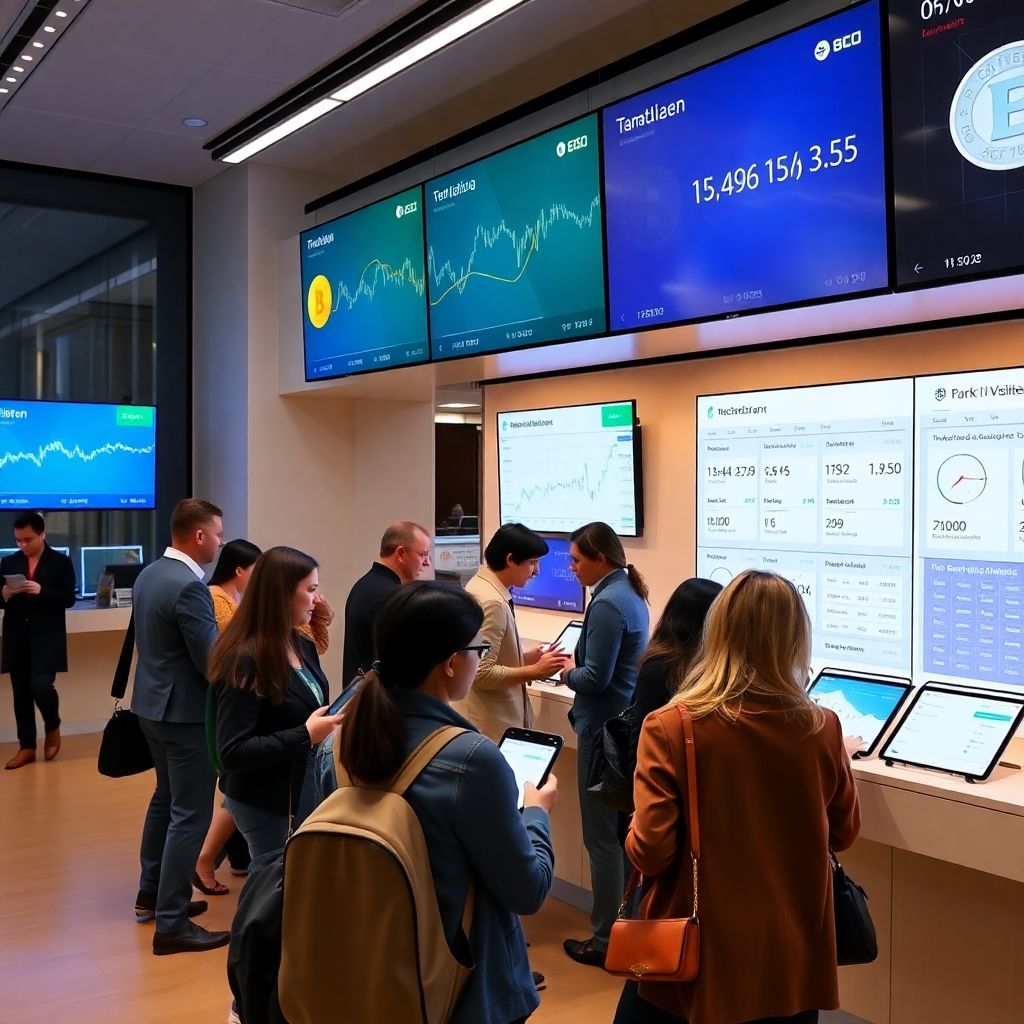
Germany’s biggest banks are turning into crypto gateways for the masses – and that could reshape how digital assets are used, regulated, and perceived across Europe.
Two of the country’s largest banking pillars – the Sparkassen network of savings banks and the cooperative Volksbanken Raiffeisenbanken – are rolling out cryptocurrency trading directly inside their existing banking apps. Instead of sending customers to independent exchanges, these institutions are building their own regulated infrastructure, bringing crypto into the same ecosystem where Germans already manage their salaries, savings, and pensions.
Together, these banking groups serve around 80 million clients. That makes this move one of the largest integrations of crypto services into traditional banking anywhere in Europe, and possibly worldwide. Only a few years ago, both networks saw cryptocurrencies as too speculative and too dangerous for their customers. Now, they are taking ownership of the process, offering in‑house services under strict regulatory oversight instead of relying on external platforms.
How Germany’s “meinKrypto” platform fits into the picture
A key part of this transition is the meinKrypto platform, introduced via DZ Bank – the central institution for Germany’s cooperative banks. MeinKrypto is designed to let local Volksbanken and Raiffeisenbanken offer direct access to major cryptocurrencies, starting with Bitcoin (BTC) and Ethereum (ETH), to millions of everyday savers.
The platform operates under the European Union’s Markets in Crypto‑Assets (MiCA) framework, the bloc‑wide rulebook aimed at bringing order, consumer protection, and transparency to the crypto sector. In December 2025, Germany’s financial regulator BaFin granted approval for meinKrypto. Following that green light, the service officially went live on 14 January, marking a concrete step from theory to implementation.
Instead of customers having to open accounts on standalone crypto exchanges, meinKrypto allows them to buy and sell digital assets through institutions they already know, using interfaces they already understand. For many, the psychological barrier to entering crypto could be dramatically reduced.
Regulated custody and parallel initiatives
Alongside meinKrypto, another major player, Boerse Stuttgart Digital, is providing crypto custody under German law. Its role is to ensure that storage and trading are handled in accordance with domestic regulations, including robust standards for safeguarding client assets, compliance, and auditing.
At the same time, DekaBank – an asset manager that serves Germany’s savings banks – is preparing to offer a similar crypto service for the Sparkassen network. While timelines and feature sets may differ, the direction is clear: retail customers across multiple banking groups will soon be able to access crypto without stepping outside the traditional financial system.
This multi‑institution approach is crucial. It signals that crypto is no longer a niche product tucked away in specialist apps. Instead, it is being embedded into the core infrastructure of one of Europe’s largest and most conservative banking markets.
Why this shift matters for Germany and beyond
On a structural level, the move represents a major convergence between decentralized digital assets and highly regulated legacy finance. Germany is not merely allowing banks to experiment; it is integrating crypto under a unified regulatory framework (MiCA) and under the supervision of BaFin.
For Germany’s crypto ecosystem, the implications are far‑reaching:
– Legitimization in the public eye: When household‑name banks offer crypto, it sends a strong signal that digital assets are no longer a fringe experiment.
– Regulatory clarity: Operating under MiCA means clear rules on custody, disclosures, and capital requirements, reducing some of the uncertainty that has plagued the sector.
– Institutional infrastructure: Banks investing in compliant trading, custody, and risk‑management systems can lay the groundwork for more sophisticated products in the future, such as crypto savings plans, structured products, or tokenized securities.
In the broader European context, Germany’s scale and reputation as a regulatory heavyweight mean that its approach is likely to influence how other jurisdictions design and implement their own banking‑crypto integrations.
The trust paradox: banks vs. independent platforms
Despite the fanfare, the initiative faces skepticism. Survey data shows that only a small fraction of Germans who already own crypto say they trust their primary banks more than independent platforms when it comes to digital assets. Many early adopters are wary of large institutions, preferring self‑custody or native crypto services that align with the sector’s original ethos of decentralization.
This creates a trust paradox:
– Non‑users and cautious savers may feel safer entering crypto via a familiar bank logo.
– Existing crypto users may distrust banks’ motives, fee structures, or technical competence, and prefer to stay with specialized exchanges or wallets.
The banking sector’s challenge will be to win over both groups: reducing complexity for beginners while offering enough transparency, control, and competitiveness to appeal to more experienced users.
Concerns about risk perception and volatility
Academics and consumer advocates have not remained silent. Co‑Pierre Georg, professor at the Frankfurt School of Finance & Management, has warned that the involvement of established banks could distort how new investors perceive risk.
When products are offered inside the same app where people manage their savings accounts or mortgage payments, there is a danger that customers assume a similar level of safety. Cryptocurrencies, however, remain highly volatile and can suffer steep drawdowns or even total loss in extreme cases.
Georg’s core concern is that the “legitimizing effect” of well‑known banks may lull inexperienced clients into underestimating:
– Price volatility
– Market manipulation risks
– Technological and operational failures
– The possibility of sudden regulatory shifts
He has described the development as opening the “floodgates” to cryptocurrency markets via savings and cooperative banks – a process that could pull in people who might not fully understand what they are buying.
Trading volumes tell a nuanced story
Even with these concerns, Germany maintains a strong position in global retail crypto trading. In the first quarter of 2026, the country remained within the top ten nations by retail trading volume.
However, volumes have slipped compared to the previous year. Retail trading value declined about 20% year‑on‑year, from 31.7 billion dollars in Q1 2025 to 25.3 billion dollars in Q1 2026. This drop mirrors broader global trends, as markets cooled following earlier bull runs, and investors recalibrated their risk appetite.
The timing of the banks’ entry is notable. They are moving into the space not at the height of speculative mania, but in a period of relative consolidation. That could help shift crypto’s narrative from fast‑money speculation toward longer‑term, more measured participation.
What this means for everyday German customers
For an average German retail customer, the practical consequences of these changes will be significant:
– Crypto purchases could become as simple as making a domestic bank transfer.
– Onboarding processes like KYC will be unified with existing bank records, reducing friction.
– Account overviews might show crypto balances alongside checking, savings, and investment accounts.
This seamless integration lowers barriers and could transform crypto from a specialist pursuit into a standard financial option, similar to buying foreign currencies or mutual funds. At the same time, it raises expectations: customers will assume bank‑grade service, security, and recourse mechanisms, which may be challenging to provide in a market where underlying assets are inherently volatile.
Implications for regulation and investor protection
From a regulatory standpoint, Germany’s approach is a live test case of how traditional oversight mechanisms can be extended to digital assets. Under MiCA and BaFin’s supervision, banks will need to:
– Provide clear risk disclosures and transparent pricing
– Implement robust safeguards against fraud and money laundering
– Maintain capital buffers and operational resilience in crypto operations
– Ensure that customer assets are segregated and properly protected
If executed well, this could set a higher industry standard and marginalize less compliant providers. But it also raises questions: will tight regulation push some activity into unregulated or offshore venues? And how will regulators balance innovation with the need to protect inexperienced investors?
Strategic motivations for the banks
The decision by Sparkassen, Volksbanken Raiffeisenbanken, and partner institutions is not purely reactive. Several strategic drivers are at play:
– Customer retention: Younger clients increasingly expect digital‑first, diversified financial products. Without crypto services, banks risk losing them to fintechs and exchanges.
– New revenue streams: Trading, custody, and advisory services in crypto can generate fees at a time when traditional banking margins are under pressure.
– Positioning for tokenization: Offering Bitcoin and Ethereum today helps banks build the infrastructure and expertise needed for tokenized securities, digital bonds, and on‑chain financial instruments tomorrow.
By acting now, German banks are trying to ensure they remain central players as finance becomes more digital and more programmable.
Potential ripple effects on Europe’s crypto landscape
Germany’s banking shift is likely to influence policy and competition across the continent. Other EU banks will be watching closely:
– If German banks successfully onboard large numbers of retail users with relatively few incidents, competitors may feel compelled to offer similar products.
– If problems arise – such as waves of customer complaints after market crashes – regulators elsewhere may adopt a more cautious approach.
In the long run, Germany’s experiment may help answer a fundamental question: can fully regulated, bank‑mediated crypto services coexist with the open, borderless ethos that defined the industry’s early years?
The bottom line
Germany’s largest banking networks are no longer sitting on the sidelines of the crypto market. By embedding regulated trading and custody services – via platforms like meinKrypto and partners such as Boerse Stuttgart Digital and DekaBank – they are making digital assets accessible to around 80 million clients.
The move could accelerate mainstream adoption, deepen market liquidity, and set new standards for compliance and security. At the same time, it amplifies concerns about risk perception, financial literacy, and the possibility that inexperienced savers might treat volatile assets as if they were traditional, lower‑risk products.
Whether this experiment ultimately strengthens or destabilizes Germany’s crypto ecosystem will depend on how responsibly banks implement these services, how clearly they educate their customers, and how effectively regulators enforce the rules laid out in the MiCA framework. What is clear already is that crypto in Germany has entered a new phase – one where banking giants, not just specialist platforms, are shaping its future.